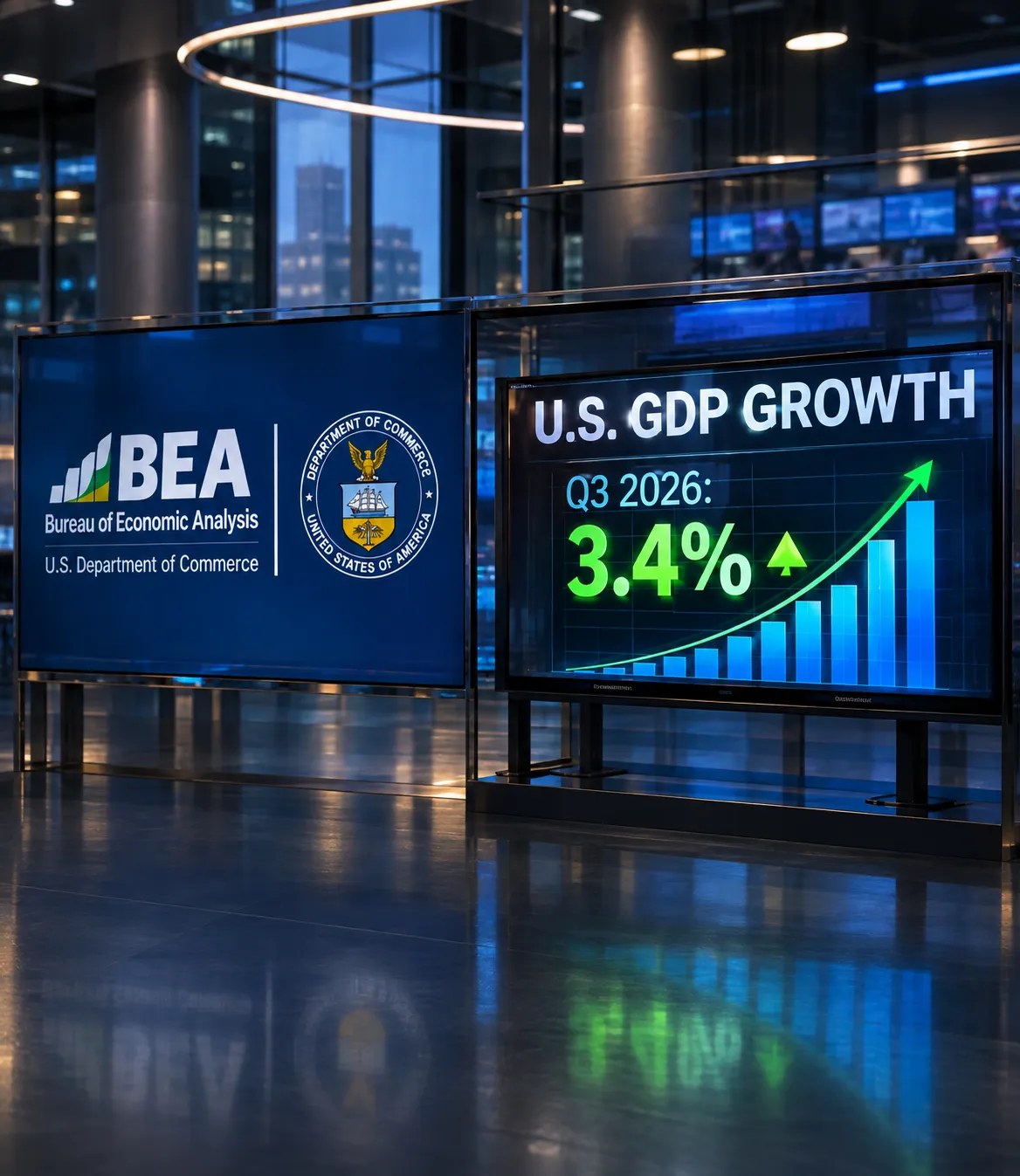
U.S. GDP growth accelerated to 3.4% annually in the third quarter of 2026, supported by strong consumer spending and a surge in business investment tied to artificial intelligence. The economy expanded faster than the 2.2% recorded in the previous quarter, despite high gasoline prices and persistent concerns about household affordability.
The Commerce Department’s advance estimate, released October 29, showed that businesses and consumers remained important drivers of economic activity. Investment, government spending and household purchases contributed to growth, while rising imports and declining exports weighed on the overall figure.
AI Investment Helps Accelerate U.S. GDP Growth
Business investment was one of the strongest contributors to the third-quarter expansion. Companies increased spending on equipment, particularly computers and related information-processing hardware. The figures reflect continued demand for computing infrastructure as technology companies expand their artificial intelligence capabilities.
Nonresidential fixed investment rose 12.7% annually, while spending on information-processing equipment increased sharply. The expansion illustrates how AI infrastructure projects are influencing economic activity beyond the technology industry, including equipment manufacturing and capital investment.
However, the investment boom also raises questions about future returns. TechAmerica.ai has previously examined the economics of AI infrastructure spending, including whether future revenue can justify the industry’s growing capital commitments.
Consumer Spending Remains Resilient Despite High Prices
Consumer spending increased 3.8% annually during the quarter, helping sustain the broader expansion. Americans continued to purchase goods and services even as elevated energy costs pressured household budgets. Health care, restaurants and accommodation services were among the contributors to spending growth.
Higher fuel prices did not prevent the economy from expanding, but affordability remains a concern. Strong spending figures also do not mean that every household is experiencing improved financial conditions. Consumers face different pressures depending on income, housing costs and transportation needs.
The underlying measure of private domestic demand also remained strong. Real final sales to private domestic purchasers, which combine consumer spending and private fixed investment, increased 4.9%, up from 4.6% in the second quarter.
Imports and Housing Investment Weigh on Growth
Not every part of the economy strengthened. Imports increased in the third quarter, while exports declined, reducing international trade’s contribution to GDP. The increase in imported capital goods also reflected demand for equipment used by American businesses.
Housing investment remained another weak area, declining 3.3% as elevated mortgage rates continued to discourage construction and purchases. The weakness contrasted with strong investment in business equipment and technology infrastructure.
Private inventories contributed to the expansion, particularly in wholesale trade and manufacturing. Inventory growth can support GDP in the short term, although its contribution may change when businesses adjust stock levels in subsequent quarters.
Inflation and the Economic Outlook
The GDP report also showed a slowdown in quarterly price increases. The personal consumption expenditures price index rose 2.1% annually, down from 5.0% in the previous quarter. The core measure, excluding food and energy, rose 2.5%, down from 3.3% previously.
Those figures suggest some moderation in inflation during the quarter, although they do not eliminate concerns about consumer prices. According to The Conference Board’s analysis, weaker inflation-adjusted disposable income toward the end of September could constrain consumer spending in the months ahead.
The third-quarter results present a mixed picture of the U.S. economy. Strong consumer demand and AI-related investment are supporting expansion, but weakness in housing, international trade and household purchasing power creates potential risks. The figures also highlight the growing importance of technology investment to economic performance.
The 3.4% growth rate remains preliminary. The Bureau of Economic Analysis is scheduled to publish its second estimate on November 25, incorporating more complete economic data. Any revisions will help clarify how much of the third-quarter expansion came from sustained private demand rather than temporary changes in inventories and trade.