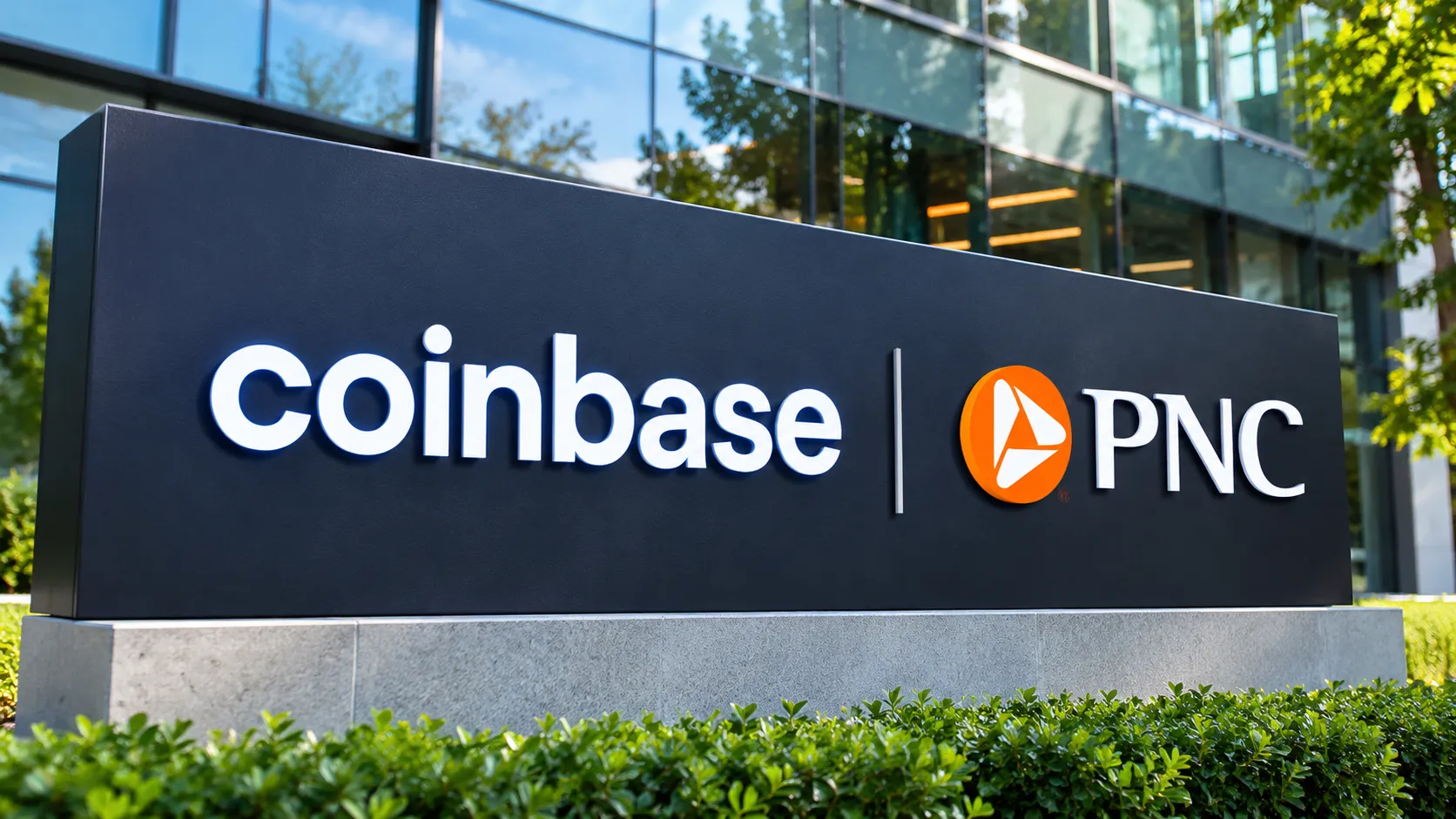
PNC Coinbase stablecoin payments are entering a limited pilot as PNC Bank expands its partnership with cryptocurrency exchange Coinbase. Announced on Nov. 9, 2026, the service lets eligible corporate and institutional clients receive USDC payments that automatically convert to U.S. dollars.
The new option uses Coinbase payment infrastructure and operates on the Ethereum blockchain. PNC says it could help businesses receive funds faster, particularly for international transactions, while keeping their money within traditional bank accounts.
How PNC Coinbase Stablecoin Payments Work
Under the arrangement, eligible businesses can accept payments in USDC, a dollar-backed stablecoin issued by Circle. Coinbase provides the payment technology, while PNC converts incoming USDC into dollars at a one-to-one rate and deposits the funds into a designated PNC account.
According to PNC’s official announcement, the service is designed to complement its existing faster payment options. Businesses can receive blockchain-based payments without needing to retain the incoming funds as cryptocurrency.
Stablecoins are digital tokens designed to maintain a stable value relative to an underlying asset, usually a national currency. USDC is designed to track the U.S. dollar, making it suitable for payment transactions where predictable settlement values matter.
Why Faster International Payments Matter
Traditional cross-border payments can involve several banks, different processing schedules and currency conversion procedures. These steps may delay access to funds, especially when transactions cross national banking systems.
Blockchain transfers can operate outside conventional banking hours, potentially reducing the time needed to move funds between participants. However, faster blockchain transfers do not necessarily guarantee immediate availability in a bank account. Conversion, compliance checks and other banking procedures may still affect processing times.
For corporate treasury departments, the potential advantage is receiving digital payments while maintaining dollar-denominated bank balances. This approach could reduce the operational burden of managing stablecoin holdings directly, although actual savings and settlement improvements remain to be demonstrated.
PNC Expands Its Existing Coinbase Partnership
The payment pilot builds on a relationship established in July 2025, when PNC selected Coinbase’s institutional cryptocurrency infrastructure. That agreement was intended to support digital asset services for eligible bank customers, while PNC would provide banking services to Coinbase.
The latest announcement extends that cooperation beyond cryptocurrency investment services into business payments. Instead of focusing on buying or holding digital assets, the new service addresses how companies collect money from customers and commercial partners.
Tom Lang, PNC’s head of Treasury Management Product and Operations, said the initiative allows the bank to explore new payment capabilities with its clients. Coinbase infrastructure executive Alec Lovett described the collaboration as an example of traditional banking and digital asset technology coming together.
Availability Remains Limited During the Pilot
PNC is initially making the service available to selected corporate and institutional banking customers. The bank has not announced a general launch date, participation fees or a timetable for expanding access to additional businesses.
The announced service specifically supports incoming USDC payments on Ethereum. PNC has not confirmed broader support for other stablecoins or blockchain networks within this program. It also has not announced a comparable outbound stablecoin payment service.
Businesses considering the technology will need to evaluate transaction costs, operational controls and payment compliance requirements. The pilot’s results should more clearly indicate whether stablecoin settlement delivers meaningful advantages over existing banking options.
For now, PNC’s move marks another step toward integrating blockchain payment infrastructure with conventional corporate banking. Its wider significance will depend on how reliably the service operates and whether businesses find sufficient value to adopt it beyond the initial pilot.