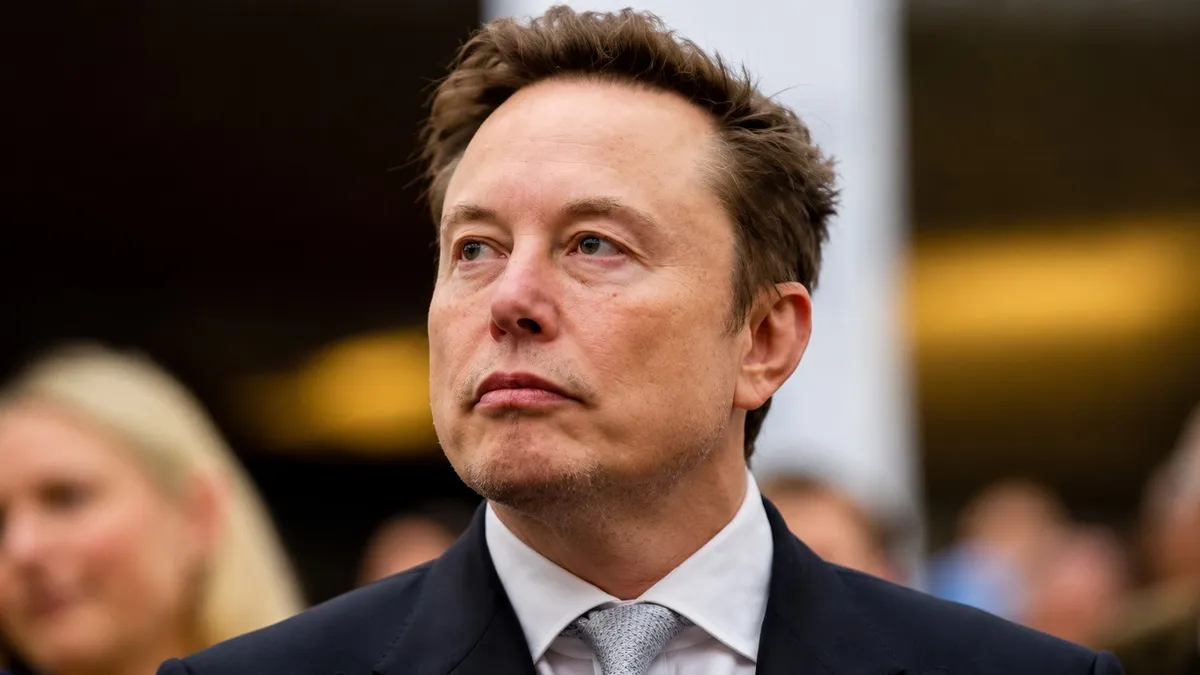
A potential SpaceX-Tesla merger could give Elon Musk majority voting control over a combined company without requiring him to meet the performance targets attached to his compensation packages. Barclays analysts estimate that Musk could control 56% of shareholder votes while owning approximately 37% of the merged business.
The distinction matters because Musk’s compensation arrangements at SpaceX and Tesla treat voting rights differently. SpaceX has granted him voting authority over certain shares before he earns their economic value. Tesla, meanwhile, generally requires performance milestones before Musk can direct the votes attached to his 2025 award.
The companies have not announced a merger agreement. Musk said during a SpaceX earnings call in October that their boards had established special committees to consider a potential transaction. Any combination would still depend on its structure, valuation and necessary approvals.
How a SpaceX-Tesla Merger Could Change Voting Control
Barclays’ analysis assumes SpaceX would acquire Tesla at valuations broadly consistent with their current market sizes. Under that scenario, Musk’s estimated economic ownership would be substantially smaller than his voting authority. The difference comes from SpaceX’s dual-class share structure.
Some SpaceX shares associated with Musk carry ten votes for every vote attached to ordinary shares. Tesla does not have an equivalent dual-class arrangement. Combining the businesses could therefore extend Musk’s existing voting advantage across a much larger corporate group.
The proposed structure would also change the relationship between ownership and influence. An investor holding most of the economic interest in a company would not necessarily have comparable voting power. That distinction could become central to how shareholders evaluate any merger proposal.
Why Musk’s Tesla Compensation Would Not Immediately Pay Out
Tesla shareholders approved Musk’s 2025 CEO Performance Award in November 2025. The package contains approximately 423.7 million restricted shares divided into 12 tranches. Each tranche ordinarily requires Tesla to achieve both a market-capitalization milestone and an operational milestone.
The first valuation target is $2 trillion, with subsequent targets extending to $8.5 trillion. Operational requirements include ambitious goals involving vehicle deliveries, autonomous driving, humanoid robots and financial performance. Tesla’s 2026 proxy statement confirms that none of the tranches had been earned when the document was filed.
However, the agreement contains provisions for a change in control. If SpaceX acquired Tesla in a qualifying transaction, the operational requirements could be removed from the calculation of certain awards. Musk would still need to satisfy the applicable market-value thresholds.
According to Reuters, Tesla was valued at approximately $1.6 trillion when its November 3 report was published. A qualifying merger valuation would need to reach at least $2 trillion before Musk could receive an award under those provisions. Even then, the payout would represent only a portion of the widely discussed potential $1 trillion package.
SpaceX Already Gives Musk Extensive Voting Power
SpaceX’s compensation structure creates a different outcome. Musk currently controls approximately 85% of its voting rights, according to Reuters. That authority includes votes associated with performance-based awards whose economic benefits remain conditional.
The SpaceX incentives include targets tied to company valuation, establishing a human settlement on Mars and developing large-scale space-based computing infrastructure. These requirements remain relevant to whether Musk ultimately receives the financial benefits of his awards, even though he already has voting rights.
This arrangement helps explain why a merger could be more consequential for corporate governance than for Musk’s immediate compensation. His existing SpaceX voting position could translate into majority control of the combined company without automatically delivering the value of his unearned shares.
What a Merger Would Mean for Tesla Shareholders
For Tesla investors, a possible merger raises questions beyond the exchange value of their shares. They would need to assess how voting rights, board representation and corporate accountability would operate within the combined company.
SpaceX and Tesla also serve different markets. SpaceX operates in launch services, satellite communications and space infrastructure. Tesla’s activities include electric vehicles, energy storage, autonomous driving and robotics. Combining them could create opportunities for shared technology development, but those possibilities would need to be evaluated against integration costs and operational risks.
A merger involving companies controlled by the same executive would also require careful consideration of potential conflicts of interest. Independent directors would need to assess whether the terms fairly reflect each company’s value and its shareholders’ interests.
The transaction structure would be especially important because the Barclays voting estimate is hypothetical. Different exchange ratios, equity classes or changes to existing voting arrangements could produce a substantially different result.
Could SpaceX Rewrite Musk’s Compensation Terms?
Another unresolved question concerns how Musk’s SpaceX awards would be treated after a merger. Unlike Tesla’s compensation agreement, the SpaceX arrangement provides less explicit guidance about a corporate combination.
Executive-compensation specialists interviewed by Reuters said SpaceX’s board could potentially revise performance conditions following a transaction. Adjustments might reflect the valuation, financial targets and operational responsibilities of a substantially larger organization.
Any revision would depend on the governing agreements and applicable approval requirements. The possibility of an amendment does not establish that the board intends to weaken existing conditions or accelerate Musk’s economic rewards.
What Happens Next?
The immediate question is whether discussions between SpaceX and Tesla lead to a formal transaction proposal. Investors would need information about the exchange ratio, proposed voting structure, shareholder approvals and treatment of outstanding compensation awards before assessing the financial consequences.
For now, majority voting control remains a possible outcome, not a confirmed result. The estimates underscore how a corporate merger could reshape Musk’s authority independently of his performance-based pay. The underlying compensation terms and expert interpretations were examined in a November 3 Reuters investigation.