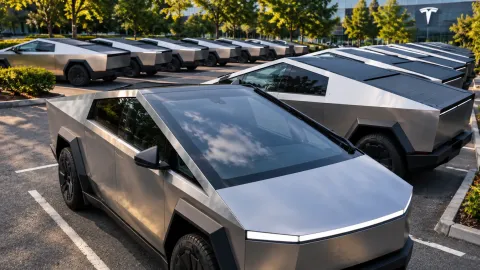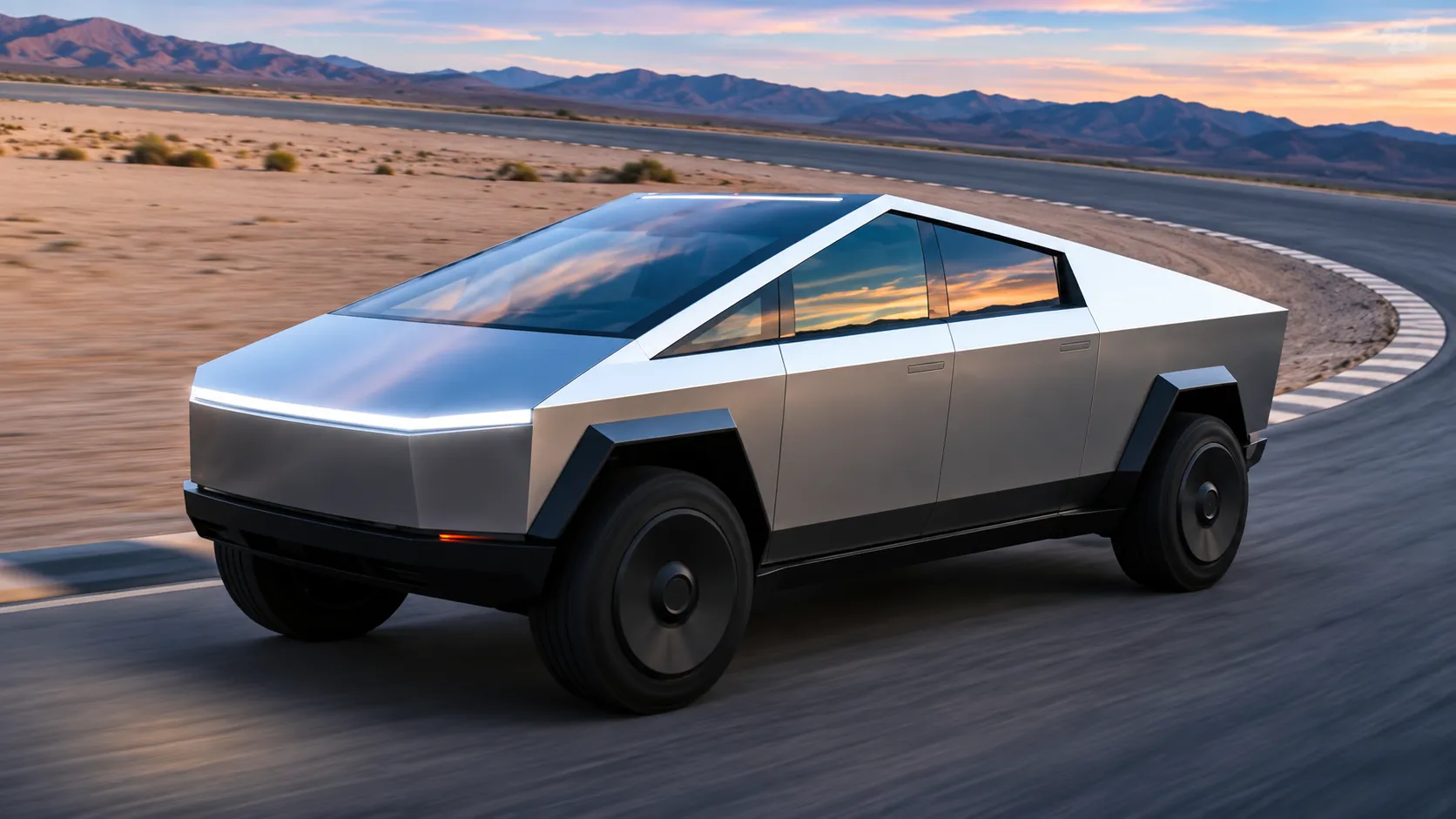
Tesla plans to wind down Cybertruck production at its Texas Gigafactory around mid-2027, shifting manufacturing capacity toward its Cybercab autonomous vehicle. CEO Elon Musk announced the decision on November 6, 2026, marking a major change in the automaker’s strategy after disappointing electric pickup sales.
The company has not confirmed whether Cybertruck production will end permanently or move to another location. Tesla’s Austin facility is the only known factory equipped to produce the pickup’s specialized components. That leaves the vehicle’s long-term future uncertain.
Tesla Cybertruck Production Shift Follows Weak Sales
The Cybertruck entered customer deliveries in late 2023 after years of anticipation surrounding its unconventional design. Tesla positioned the electric pickup as a competitor to traditional trucks from Ford and General Motors. However, demand has fallen well below Musk’s earlier expectations.
Data from automotive research firm Kelley Blue Book, cited by Reuters, shows Tesla sold approximately 20,237 Cybertrucks in the United States during 2025. That represented a 48% decline from 38,965 vehicles in 2024. Musk had previously discussed the possibility of annual Cybertruck sales reaching 250,000 units.
The difference between those projections and actual demand raises questions about the economics of maintaining a dedicated production operation. Tesla must balance manufacturing investment against sales volumes, particularly when other vehicle programs compete for factory capacity.
Cybertruck Recalls and Design Challenges
The Cybertruck’s distinctive stainless-steel exterior helped establish its identity but also introduced manufacturing and regulatory challenges. Its angular body and unusual construction required specialized components, limiting opportunities to transfer production to existing vehicle assembly lines.
The electric pickup has also experienced repeated safety recalls. According to the National Highway Traffic Safety Administration, the model has been involved in 11 recalls since customer deliveries began. Some problems required physical repairs, while others could be addressed through software updates.
One significant issue involved exterior trim panels that could detach while driving. Tesla acknowledged the problem and outlined a physical replacement procedure in its Cybertruck recall guidance. Additional recalls have addressed lighting, mechanical components and other safety concerns.
International expansion presented another obstacle. The Cybertruck’s heavy construction and sharp-edged exterior made compliance with European pedestrian-safety regulations particularly difficult. These restrictions limited its potential reach beyond the American pickup market.
Why Tesla Is Prioritizing Cybercab Manufacturing
Tesla’s production decision reflects its growing emphasis on autonomous transportation. The Cybercab is a purpose-built electric robotaxi designed without conventional driving controls, including a steering wheel and pedals.
Musk envisions the vehicle operating within a wider autonomous ride-hailing network. Unlike the Cybertruck, which targets individual vehicle buyers, Cybercab is intended to support transportation services built around self-driving technology.
Tesla began offering paid Cybercab rides in Austin in September 2026, although the service remains limited. The company also faces regulatory scrutiny over whether the vehicle complies with applicable federal motor vehicle safety standards. The National Highway Traffic Safety Administration opened an audit of its certification process in September.
Repurposing manufacturing capacity could help Tesla expand Cybertruck production without relying entirely on new factory construction. However, higher output will not automatically translate into widespread commercial adoption. Regulatory approval, operational reliability and customer demand remain important uncertainties.
Cybertruck Technology Could Continue Beyond the Pickup
Although the manufacturing outlook has changed, Tesla has not suggested that every engineering development associated with the Cybertruck will disappear. The vehicle introduced technologies that could influence future electric and autonomous models.
Its distinctive features include steer-by-wire controls, rear-wheel steering, and a low-voltage electrical architecture. Tesla’s official Cybertruck specifications also describe its electric powertrain, towing capabilities and integrated power outlets.
Cybertruck lead engineer Wes Morrill described the pickup as a technology development platform whose work would continue through Cybercab. That suggests Tesla sees value in the engineering program even as it reassesses the vehicle’s commercial prospects.
However, the two models serve different purposes. Cybertruck was designed for personal transportation and utility, while Cybercab targets autonomous passenger services. Shared engineering concepts do not mean the vehicles will use identical components or manufacturing processes.
What Happens to the Cybertruck in 2027?
The immediate question is whether Tesla will relocate Cybertruck production or discontinue the pickup entirely. Musk has not announced another manufacturing location, and no replacement production plan has been confirmed.
The decision also introduces uncertainty for prospective buyers and existing owners. Tesla has not announced changes to Cybertruck service, warranty coverage or parts availability resulting from the planned manufacturing wind-down.
For Tesla, the broader significance extends beyond one vehicle. The company is redirecting attention toward autonomous transportation at a time when its unconventional electric pickup has struggled to achieve expected sales volumes.
Cybertruck production is scheduled to wind down around mid-2027, but the outcome remains unresolved. Whether the pickup survives elsewhere or becomes a discontinued model, the decision shows how Tesla’s manufacturing priorities are shifting toward Cybercab and its larger autonomous-vehicle ambitions.