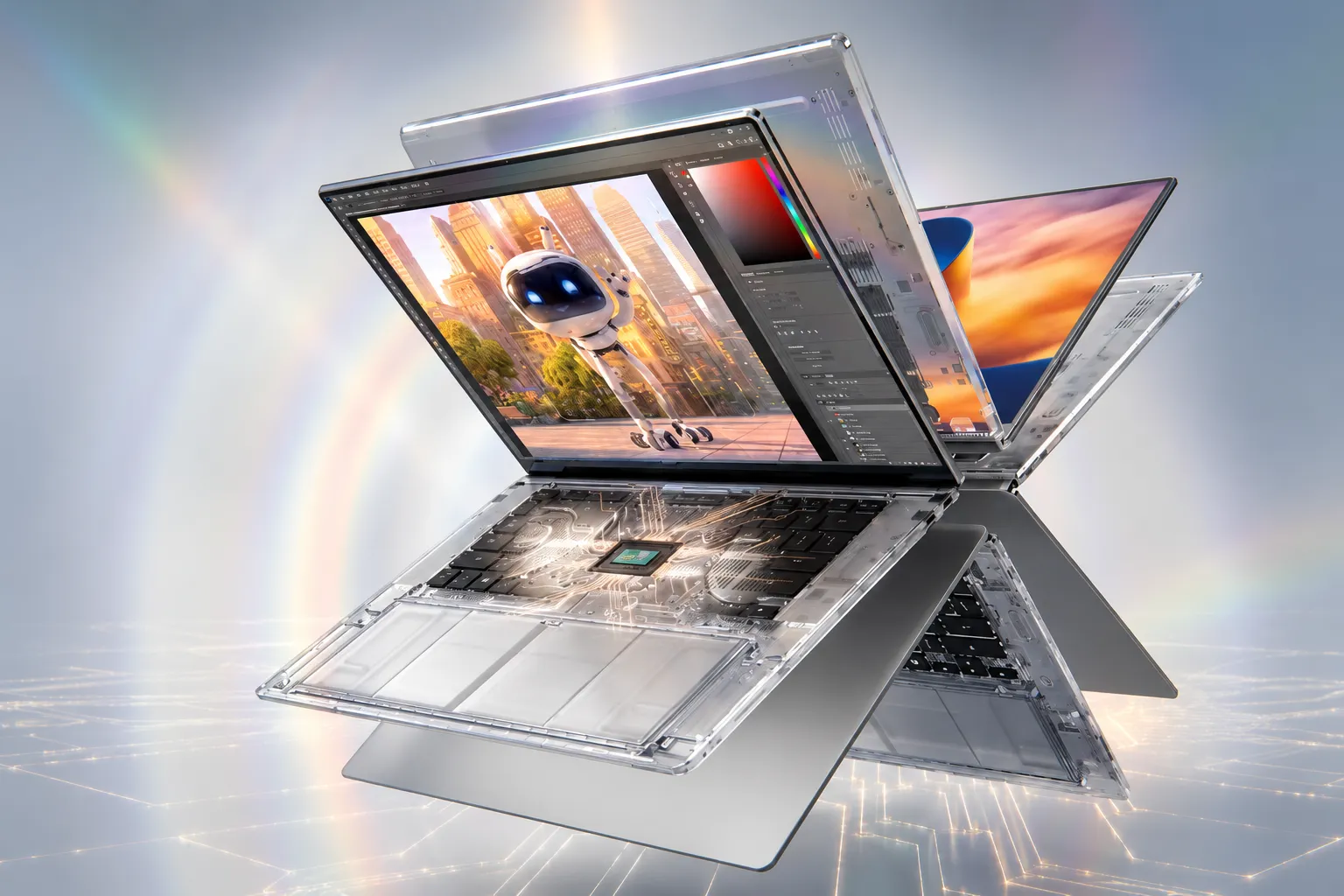
Nvidia RTX Spark laptops bring a new processor architecture to premium Windows computers. The Arm-based platform combines Blackwell graphics with up to 128GB of unified memory. It also supports demanding AI models running locally. Early testing shows impressive GPU performance, but the CPU is less competitive.
Asus, HP, Lenovo, Microsoft, Dell, and MSI are introducing machines built around RTX Spark. They primarily target developers, creative professionals, and AI enthusiasts. Their hardware and displays look promising, but prices are high. Battery endurance under heavy workloads and software compatibility also remain concerns.
RTX Spark Hardware and Laptop Designs
Nvidia’s RTX Spark N1X platform pairs an Arm-based Grace CPU with integrated Blackwell RTX graphics. The flagship version has 20 CPU cores and 6,144 CUDA cores. A lower configuration offers 18 CPU cores and 5,120 CUDA cores. Both run Windows 11 and share LPDDR5X memory between the CPU and GPU.
Memory capacity is a major advantage. High-end systems support up to 128GB, giving developers room for larger AI models and complex creative projects. Nvidia also supports CUDA, TensorRT, DLSS, and other established RTX technologies. These features matter more to specialized workloads than routine office tasks.
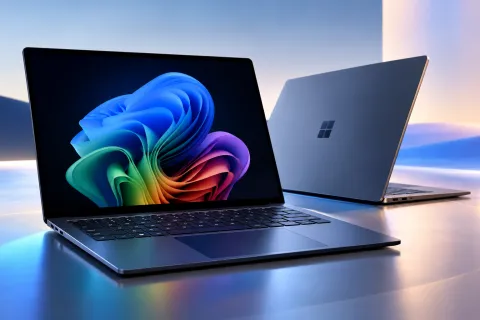
Manufacturers have made different hardware choices. The Asus ProArt P16 offers a 16-inch, 120Hz OLED touchscreen and configurations with up to 128GB of memory. HP’s OmniBook Ultra 16 also targets demanding professional work. Microsoft’s Surface Laptop Ultra pairs Nvidia graphics with a 15-inch mini-LED touchscreen.
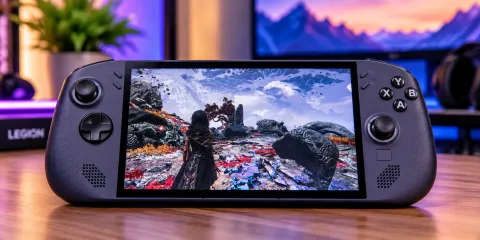
Lenovo takes a different approach with its Yoga 9n 2-in-1. Its 16-inch OLED touchscreen and convertible design suit stylus users and flexible work setups. These Nvidia RTX Spark laptops share a platform but aren’t identical experiences. Their displays, memory options, and designs can differ substantially.
The launch also expands Nvidia’s role in personal computing. TechAmerica.ai previously covered Nvidia’s push into AI-powered PCs and its partnerships with major manufacturers.
Nvidia RTX Spark Laptops: GPU Strength and CPU Limitations
RTX Spark’s clearest strength is graphics performance. Early benchmarks show its integrated Blackwell GPU competing with some dedicated laptop graphics processors. Results are strongest when software uses Nvidia’s acceleration technologies. Performance still varies considerably between applications.
In PC Gamer testing, an Asus ProArt P16 averaged 66 frames per second in Black Myth: Wukong. The benchmark ran at 1080p with high settings. That result competed with two RTX 5070 gaming laptops. The Asus nevertheless lagged in several other games.
Those mixed results reveal the platform’s limits. DLSS and frame generation can boost performance in supported games. They cannot eliminate every CPU bottleneck or compatibility problem. Dedicated gaming laptops are still the safer choice for buyers focused mainly on games.
CPU performance is less convincing. Windows Central’s benchmarks showed the 20-core N1X delivering competitive multicore results. Single-core performance trailed several leading processors. Apple’s higher-end M-series chips also retained advantages in important CPU workloads. Nvidia was more competitive in graphics and AI acceleration.
These results give Nvidia RTX Spark laptops a specific appeal. They suit GPU-heavy work better than for buyers who demand top performance in every application.
Windows on Arm Compatibility Has Improved
Windows on Arm now supports more mainstream software than earlier generations did. Many productivity and creative applications have native Arm versions. Microsoft’s Prism technology also translates instructions from numerous x86 and x64 programs. That expands the software available to RTX Spark owners.
As Microsoft’s documentation explains, Prism helps existing Windows applications run on Arm hardware. It does not translate traditional x86 or x64 drivers. Those drivers need compatible Arm versions.
This can affect professional tools, specialist peripherals, and some games. Multiplayer titles that require particular anti-cheat systems may present additional problems. Anyone considering Nvidia RTX Spark laptops should check essential applications and accessories before purchasing.
Local AI Offers Potential, but Not Everyone Needs It
Nvidia’s bigger opportunity lies beyond conventional gaming. RTX Spark can run substantial AI workloads directly on the laptop. Developers can experiment with local inference, coding assistants, image generation, and AI agents. This reduces dependence on remote services for supported tasks.
Unified memory is particularly useful for large models. Their requirements can exceed the dedicated graphics memory found in conventional laptops. Nvidia claims up to one petaflop of FP4 AI performance. That is a low-precision computing figure, not a measure of overall laptop speed.
Local processing gives users greater control over data and enables certain offline workflows. But installing models and configuring agents takes technical knowledge. Resource management can also be complicated. Cloud AI services will remain more convenient for many everyday users.
Battery Life and Pricing Remain Difficult Compromises
Battery endurance is another concern. ARM architecture does not guarantee long runtime when demanding hardware is active. Gaming, rendering, and local AI inference consume far more energy than browsing or editing. Owners may need external power for sustained heavy workloads.
PC Gamer reported approximately 86 minutes of gaming battery life from its Asus ProArt P16 test system. This doesn’t reflect typical productivity endurance. It does show the cost of demanding GPU activity on battery power.
Pricing raises the stakes further. The initial Nvidia RTX Spark laptops start around $2,599 in the United States. High-memory versions can cost several thousand dollars more. HP announced a starting price of $3,199.99 for its OmniBook Ultra 16. That puts these machines firmly in premium territory.
Buyers at these prices have strong alternatives. They can choose Intel or AMD laptops with dedicated Nvidia graphics, or Apple’s MacBook Pro. Those systems may offer better CPU performance, battery life, or compatibility for particular tasks. RTX Spark stands apart through CUDA acceleration and substantial unified memory in a portable Windows machine.
Final Verdict
RTX Spark marks an important step for Windows on Arm. Blackwell graphics deliver credible performance, particularly for GPU acceleration and local AI. Several manufacturers now offer different platform designs. That gives specialized buyers more choice.
The compromises remain significant. CPU speed trails important competitors in some workloads. Heavy tasks strain battery life, and specialized software can still present compatibility problems. Premium pricing makes those shortcomings harder to ignore.
Nvidia RTX Spark laptops make the most sense for AI developers, researchers, and creators needing CUDA and generous unified memory. General productivity users and dedicated gamers will often find better value elsewhere. This first generation points toward a promising future, but it remains a specialized purchase.