2025 Tech Layoffs by Company: Major Announcements
The technology industry’s 2025 restructuring reached far beyond a handful of household names. Microsoft, Intel and Amazon made some of the largest announcements. Still, job losses, planned reductions and business closures also emerged among software providers, gaming companies, retailers, electric-vehicle businesses and smaller startups. The pattern spread across North America, Europe, Israel, India, and other markets. Causes varied: weak demand, acquisitions, financial distress, organizational changes, and, in some cases, a shift toward artificial intelligence.
A year-end report from Challenger, Gray & Christmas counted 154,445 technology-sector job-cut announcements for 2025. Layoffs. fyi recorded 122,606 affected workers across 333 events involving 278 companies. The figures use different methods and should not be added together. Neither total means that every announced departure occurred before December 31.
This review covers company and organization names in a December 22, 2025 industry tracker, including later-year announcements and smaller firms often missing from high-level summaries. It does not claim to enumerate every technology layoff worldwide. Company filings and official statements are linked where available; other entries are identified as reported, proposed or unconfirmed when primary confirmation is unavailable.
January 2025: A wide range of smaller companies and major platforms
At the start of the year, Meta outlined performance-related workforce changes, while Amazon cut communications roles. Stripe reportedly eliminated about 300 positions even as it planned to hire elsewhere, showing why a layoff announcement doesn’t necessarily mean a company’s total headcount will decline over the full year. Wayfair announced plans to exit its German operations, a move expected to affect as many as 730 roles.
Financial pressure and business closures also marked January. Cushion, Pandion and Level shut down or moved toward closure; SolarEdge Technologies planned another reduction amid weak solar-market conditions. Aurora Solar, a separate solar-software business, also announced cuts. Other reported reductions affected Placer.ai, the location-analytics provider, and digital-content companies Pocket FM and Textio.
Smaller cases included job reductions at Icon, the construction technology company; Altruist, a wealth technology platform; and Aqua Security, a cybersecurity business. These announcements varied considerably in size and certainty. They should not be described as a single coordinated technology-industry restructuring.
February 2025: Enterprise software, cybersecurity, retail technology and aerospace
Two especially well-documented February plans came from Workday and Autodesk. Workday’s SEC filing described plans to eliminate about 1,750 positions, or 8.5% of its workforce. Autodesk said it would cut about 1,350 positions as it reorganized sales operations. HP Inc. also continued changes under an earlier cost-reduction program, while Redfin disclosed a roughly 450-position restructuring affecting its rentals operations in an SEC filing.
Several technology services and security employers reported cuts, including Okta, Sophos, Sprinklr, Zendesk, Sonos, Skybox Security and Logically. Dayforce, Commercetools and Unity appeared in reporting about smaller or not fully quantified reductions. Salesforce reportedly eliminated positions even as it pursued AI-related hiring, underscoring the need to distinguish which teams were shrinking from which were expanding.
Google also offered voluntary exit arrangements in parts of its organization; such offers should not count as completed involuntary layoffs without subsequent confirmation. February’s other affected businesses cut across several industries. GrubHub disclosed a large reduction after its sale to Wonder Group, and General Motors was winding down substantial operations at its autonomous-vehicle business, Cruise. Blue Origin planned a sizable workforce reduction. Reports also covered eBay, Nautilus, Expedia, Starbucks, JustWorks, Bird and online travel or marketplace-related employers. Some layoffs affected technology teams within companies whose primary businesses were not conventional software development.
Outside the largest U.S. employers, staff reductions or closures were reported at Vendease, Zepz and HerMD, as well as cybersecurity and software businesses with international operations. These international cases should be described individually, not folded into an unsupported U.S.-only job-cut total.
March 2025: Battery manufacturing troubles and global restructuring
Swedish battery producer Northvolt filed for bankruptcy after failing to secure financing needed to stabilize its business. The crisis threatened thousands of jobs and stemmed from difficult funding and manufacturing conditions. Block separately announced a reorganization involving 931 employees; its chief executive said the cuts were not intended to replace those people with AI. Hewlett Packard Enterprise, often abbreviated HPE, also disclosed a plan affecting about 2,500 positions. HPE is not the same company as HP Inc.
The month’s reported reductions extended to the software and digital-services businesses Brightcove, Acxiom, Otorio, ActiveFence, D-ID, Zonar Systems, LiveRamp and Rec Room. Wayfair identified further technology-team reductions. TikTok faced possible reductions in Dublin, while India’s Ola Electric and ANS Commerce encountered employment changes or business shutdowns.
Industrial and consumer businesses were also involved. Siemens announced a wider global plan that included automation and charging businesses, and HelloFresh faced changes at a U.S. distribution site. Sequoia Capital closed its Washington policy office, a much smaller event than the manufacturing reductions but still part of the month’s employment news. NASA announced office closures and reorganizations; these actions should not be treated as confirmed company layoffs, because NASA is a government agency.
April 2025: Intel’s overhaul and difficult conditions for startups
Intel’s restructuring dominated the discussion in April. Its subsequent annual regulatory filing described a plan to reduce core Intel headcount by about 15% from the level at the end of the second quarter. Do not add earlier media estimates to that company-reported change as though each figure represented a separate round of cuts. Other major technology employers making changes included Google, Meta and Microsoft, although some April Microsoft coverage concerned plans still being discussed rather than cuts then confirmed.
Electronic Arts and its Respawn Entertainment studio were affected by gaming-sector reductions. NetApp was reportedly trimming staff, and cloud publishing company Automattic announced a roughly 16% workforce reduction. Canva faced a much smaller round of cuts to its technical writing team. Contact-center software maker Five9 and enterprise technology businesses were also represented in April reporting.
Among consumer marketplaces, Cars24, Turo and Expedia adjusted headcount or strategic priorities. In India, Zopper and GupShup reportedly reduced staff. The German logistics startup Forto also made substantial cuts, while Chinese technology services company Wicresoft reportedly wound down an operation that supported Microsoft’s outsourcing work. General Motors reduced roles at an electric-vehicle factory. The reasons ranged from spending controls to changes in product or operating plans.
May 2025: Microsoft, CrowdStrike, Chegg and consumer services
Microsoft announced a major workforce reduction in May, affecting more than 6,000 roles. Security company CrowdStrike disclosed a plan affecting roughly 500 positions, about 5% of its global workforce. Education technology company Chegg outlined cuts affecting 248 roles in its quarterly announcement, amid business pressures including changes in how students access online information.
Consumer and digital-service businesses faced separate pressures. Amazon made a smaller reduction in its devices group; Match announced its own reorganization; and telehealth platform Hims & Hers outlined job cuts. In technology sectors further from mainstream software, General Fusion announced a sizable reduction while security startup Deep Instinct made a smaller adjustment. British climate-technology company Beam reportedly closed operations. These were not all consequences of generative AI, and the underlying business circumstances need to remain distinct.
June 2025: Location software, dating apps and electric vehicles
TomTom said on June 30 that it would eliminate approximately 300 roles as it reshaped its sales and support functions. Bumble’s June SEC filing described a planned reduction of roughly 240 employees, about 30% of its workforce. The two publicly documented plans illustrate different strategies, even though both companies were seeking more efficient operations.
Rivian reported another workforce adjustment as electric-vehicle manufacturers confronted changes in market demand. Competition intelligence company Klue reportedly made significant reductions, while Google adjusted a division associated with television products. Intel’s foundry operation also faced further staffing changes. Playtika cut additional gaming positions, and video startup Airtime reportedly reduced a large share of its smaller team. Microsoft made further cuts after its major May announcement; the June event should not be confused with the larger July round.
July 2025: A second large Microsoft round and smaller software cuts
Microsoft announced approximately 9,000 additional reductions in July, following its May cuts. Recruit Holdings’ employment platforms, Indeed and Glassdoor, announced plans affecting around 1,300 roles. Data-labeling company Scale AI reportedly reduced about 200 employees and ended work with roughly 500 contractors; the contractor figure is not a second count of direct employee layoffs.
The month also brought reported changes at Atlassian, Consensys, Lenovo, ByteDance and Eigen Lab. Consumer publishing startup Zeen reportedly ceased operations. Intel continued workforce reductions, including actions affecting facilities in Oregon. These examples show that job losses affected mature technology firms as well as companies building newer AI and blockchain products.
August 2025: Cloud, media software and digital commerce
Cisco disclosed planned reductions affecting employees in California. Oracle issued notices tied to multiple office locations, while application-security company F5 cut jobs in Washington state. Restaurant365 reported a smaller reorganization, and Peloton announced another cost-reduction program. Kaltura also said it was reducing headcount as part of an efficiency effort.
Digital marketing business Yotpo substantially reduced staffing while withdrawing from parts of email and text-message marketing. AI coding company Windsurf lost jobs after changes to its ownership and leadership. Amazon reorganized its Wondery podcast division and eliminated roles. These episodes stemmed from different operational decisions, even as investors kept rewarding companies expanding in AI.
September 2025: Some employers explicitly cited AI
Freelance marketplace Fiverr disclosed an approximately 250-person restructuring tied to a more AI-focused operating model. That was a relatively direct example of a company identifying AI as part of its strategy. By contrast, other firms attributed their plans to operating costs or organizational changes. Just Eat discussed job reductions while increasing automation; Salesforce and Oracle reported separate changes affecting teams in the United States.
Recruitment business ZipRecruiter, conversational AI company GupShup, and electric-vehicle maker Rivian also announced cuts or closure plans. At xAI, reports described removing about 500 data-annotation workers. Because some of those workers worked under contract, articles should distinguish workers or contractors from permanent staff rather than automatically counting them as ordinary employee layoffs.
October 2025: Amazon’s corporate reduction and new chip-industry plans
In its October 28 message to employees, Amazon announced an approximately 14,000-role reduction across its corporate workforce. Applied Materials told regulators it expected to cut about 4% of its global workforce. These were two of the month’s most significant documented announcements, although not every affected employee necessarily departed during October.
Other reported reductions affected Meta’s AI-related organizations, Rivian’s automotive operations, Google’s cloud design group and Paycom’s back-office functions. Handshake, the early-career recruiting platform, and business-software provider Smartsheet also reportedly made cuts. These different business lines make it misleading to present one reason as the explanation for the entire month’s layoffs.
November 2025: Multiyear plans alongside immediate layoffs
HP Inc. announced a plan affecting an estimated 4,000 to 6,000 global positions, with actions expected to continue through fiscal 2028. Synopsys separately disclosed a plan affecting about 10% of its workforce following the Ansys acquisition, with most actions planned for fiscal 2026. Both belong in a chronology of announcements made in 2025, not a list of jobs definitively eliminated before the end of that year.
Other November reports concerned sales-team changes at Apple, restructuring at Pipe, cybersecurity workforce cuts involving Deepwatch and Axonius, and the threatened shutdown or reduction of Monarch Tractor operations. MyBambu filed plans to close a local operation. The tracker also included a separate Hewlett-Packard entry for campus-level reductions; it refers to HP, not an entirely new company. Intel’s long-running restructuring generated additional notices of local job losses. Reports that Playtika might cut 700 to 800 jobs should remain marked as unconfirmed at that point; a new, different 15% plan was formally announced in January 2026.
December 2025: Smaller events and reductions scheduled for 2026
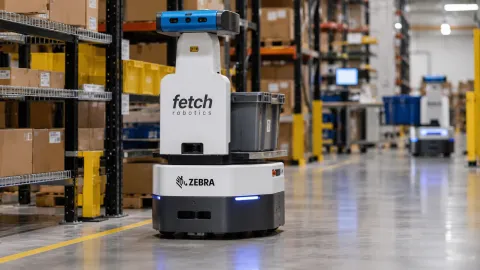
Late-year reports covered Zebra Technologies’ plan to wind down its autonomous mobile robotics operation, along with cuts at sales data provider Lusha, AI chip startup Tenstorrent, payments company Payoneer, photography platform VSCO and autonomous-driving supplier Mobileye. Hospital-at-home startup Inbound Health closed, providing another reminder that business shutdowns differ from partial workforce reductions.
Amazon also appeared in December coverage because it slated 84 positions in Washington state for termination in February 2026. That notice is relevant to the December announcement chronology but should not be described as 84 completed December departures. Similarly, reports of a potential shutdown or a planned future reduction should be distinguished from completed employee separations.
What the full 2025 record shows
The 2025 tech layoffs were not confined to Silicon Valley or to artificial intelligence businesses. The documented and reported events covered U.S. technology hubs, operations in Europe and other international markets, plus companies in semiconductors, retail, payments, healthcare, gaming, logistics and manufacturing—some entries concerned contractors, proposals, or closures rather than completed employee layoffs. Larger tracking databases contain still more companies than the organizations summarized here.
In its 2025 year-end analysis, Challenger reported 54,836 planned job cuts across industries in which employers cited AI as a reason. That number does not count technology jobs definitively replaced by AI, and it should not be added to the industry’s 154,445 announced cuts. Individual layoffs stemmed from automation and reorganizations, bankruptcies, acquisitions, and weak demand.
Readers following the next year of restructuring can consult TechAmerica.ai’s separate 2026 technology layoffs coverage. This article remains a 2025 chronology, with future-effective actions expressly identified as such.