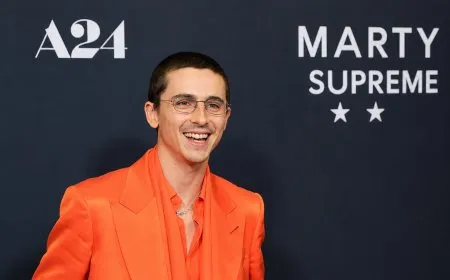

The You Can See Everything documentary brings comedian Nathan Fielder face-to-face with Elizabeth Holmes, the convicted founder of Theranos. What begins as an attempt to document her final days before prison becomes an examination of truth, identity and deception. Directed by Fielder and Lance Oppenheim, the A24 film opened in theatres October 16.
Holmes and her husband, Billy Evans, approached A24 in 2023, hoping a documentary might improve her public image. Filming began roughly a month before she entered federal prison to serve an 11-year sentence for investor fraud. Rather than presenting a straightforward portrait, the filmmakers question whether Holmes genuinely believes she did nothing wrong.
Holmes maintains her innocence throughout the film, despite her conviction for misleading investors about Theranos’ blood-testing technology. The public can also access Theranos trial evidence through an interactive digital recreation of her former workspace. Fielder approaches her denials through uncomfortable conversations that frequently blur sincerity and satire.
You Can See Everything Documentary Challenges Holmes’ Public Persona
Fielder’s unusual interviewing style draws on techniques familiar from his comedy series “Nathan for You.” The show featured elaborate business experiments that exposed the absurdity of questionable commercial ideas. One famous episode involved opening Dumb Starbucks, a coffee shop parody that attracted widespread attention and raised trademark questions.
In the documentary, Fielder jokingly compares his fictional business schemes with the real fraud case against Holmes. She rejects the comparison, insisting that Theranos was a legitimate company. Their exchanges reveal the tension between Fielder’s deliberately constructed television persona and Holmes’ insistence on her own authenticity.
That tension becomes central to the film. Fielder’s audience is accustomed to questioning whether his awkward behaviour is genuine or carefully performed. Holmes presents a different uncertainty: whether her continued denials reflect sincere belief, deliberate image management or something more complicated.
A Disputed New York Times Quote Becomes Central
One revealing dispute involves a 2023 New York Times profile published shortly before Holmes entered prison. Discussing dramatisations of her life, Holmes reportedly described the fictional version of herself as a character she created.
Holmes and Evans dispute that wording. They claim she actually referred to a character created by other people, rather than acknowledging her own manufactured public identity. Evans tells Fielder that evidence supports their version.
Fielder repeatedly asks to see that evidence, but Evans never provides it. The disagreement becomes a recurring example of the documentary’s central problem: determining which version of events to trust.
The original profile also drew criticism for emphasising Holmes’ personal circumstances and her separation from her children. The film reveals that Holmes and Evans were dissatisfied with its portrayal despite those sympathetic elements.
Amanda Seyfried Returns to Elizabeth Holmes’ Story
The documentary takes an unexpected turn after Holmes begins serving her sentence. Unable to record conversations inside the prison, Fielder searches for another way to reconstruct their interactions. He eventually recruits Amanda Seyfried, who portrayed Holmes in Hulu’s acclaimed miniseries “The Dropout.”
Seyfried watches footage showing Holmes reacting to her television portrayal. During a particularly emotional scene involving former Theranos executive Sunny Balwani, Holmes turns away and begins crying. The moment places the real woman opposite a fictional interpretation of her actions.
Fielder then works with Seyfried to recreate conversations from his prison visits. Because recording devices are prohibited, he must reconstruct dialogue from memory. Seyfried performs the reconstructed exchanges while helping him examine Holmes’ statements and behaviour.
The process exposes another limitation of documentary filmmaking. Even a carefully reconstructed conversation depends on imperfect recollection, interpretation and performance. Seyfried’ss involvement adds another perspective without necessarily resolving the questions surrounding Holmes.
Billy Evans and an AI Version of Elizabeth Holmes
Evans becomes an increasingly prominent figure as the documentary progresses. His efforts to manage Holmes’ image sometimes create additional tension with the filmmakers, who question his explanations and intentions.
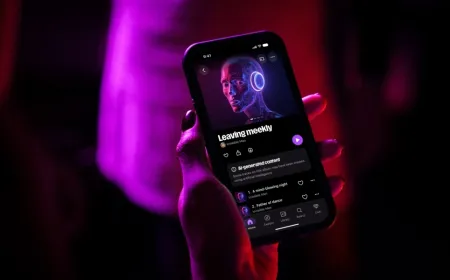
One particularly unusual development involves an AI-generated representation of Holmes. Evans creates a lifelike digital avatar displayed on a large vertical screen. He brings the device into family settings, including meals with their children, simulating her presence while she remains incarcerated.
The technology adds another layer to the film’s exploration of identity. Holmes is represented simultaneously through archival footage, fictional performances, remembered conversations and an artificial recreation. Each version reflects decisions made by someone other than Holmes herself.
Evans’ confrontational behaviour also complicates the audience’s interpretation of his wife. Some scenes suggest a controlling relationship, while others leave open questions about how much Holmes understands or supports his actions. The film offers no definitive explanation for their private motivations.
Ultimately, You Can See Everything is less concerned with revisiting the facts of the Theranos fraud than examining its central figure. Holmes continues to dispute her guilt, while Fielder and Seyfried struggle to interpret her responses. The documentary leaves the legal judgment intact but challenges viewers to consider how much anyone can know about a person who has spent years under public scrutiny.