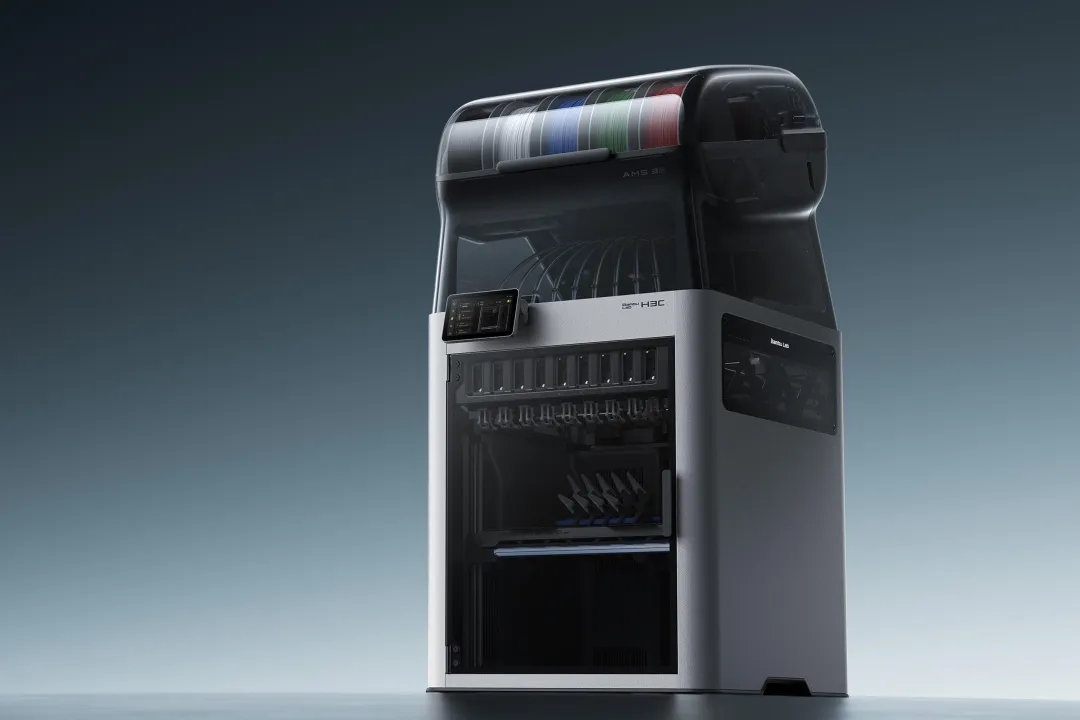
The Bambu Lab H3C brings a different approach to multicolor 3D printing. Instead of repeatedly feeding different filaments through one nozzle, it uses nine independently heated print tools. The design allows rapid material changes, different nozzle sizes and combinations of rigid and flexible materials.
Launched November 3, 2026, the H3C starts at $2,499 in the United States. Its integrated filament storage system also includes drying capabilities. The Hardware offers substantial creative flexibility, although its size, price and early reliability concerns deserve careful consideration.
Nine Print Tools Change How Multicolor Printing Works
The H3C’s main innovation is Swaptek, a tool-changing system developed by Bambu Lab. Each tool has a dedicated filament path, heater and nozzle. Materials remain loaded instead of being repeatedly withdrawn and reinserted.
According to Bambu Lab’s technical explanation, a complete material change takes less than six seconds under specified conditions. The mechanical tool swap itself takes approximately 3.4 seconds. Active preheating prepares the next nozzle before the current tool finishes printing.
This arrangement addresses two common problems with conventional multicolor printers: lengthy material changes and wasted filament. Traditional single-nozzle systems often purge leftover material before switching colors. The H3C reduces that process but does not eliminate waste.
Independent testing suggests the difference can be substantial. Tom’s Hardware reported faster multicolor printing and considerably less purged filament than a conventional multicolor machine. However, its results reflect specific models and settings rather than a universal performance advantage.
Color Mixing and Flexible Materials Expand Creative Options
The printer’s nine tools are not limited to nine distinct colors. Bambu Lab introduces Full Spectrum Color Mixing using layered deposition and five base colors. This method creates additional visual shades without requiring a separate filament spool for every color.
The technology layers different colored materials to produce the intended appearance. It does not blend molten pigments inside a conventional mixing nozzle. Results depend on the model, layer arrangement and compatible filament.
Another important feature is support for different nozzle diameters within one print. Users can combine a 0.2mm nozzle for fine details with larger nozzles for faster material deposition. Bambu Studio provides software controls for planning these mixed-diameter operations.
The FlexFeed extruder also supports both 1.75mm and 2.85mm filament. The included configuration has eight standard tools and one dedicated 2.85mm tool.
The larger filament diameter is particularly useful for soft thermoplastic polyurethane, or TPU. Flexible filament can buckle when pushed through conventional extrusion systems. Bambu Lab claims its design handles TPU as soft as 75A at up to three times the usual flow rate.
That improvement could benefit wearable products, protective components and flexible mechanical parts. For example, TechAmerica.ai previously covered 3D-printable gaming accessories that users can customize. The H3C extends such possibilities to more complex combinations of materials.
Integrated Filament Storage Is a Practical Advantage
Bambu Lab includes its AMS 3H filament management system with the H3C. It holds nine spools in enclosed storage compartments and automatically routes material into the corresponding print tools.
Two compartments provide heated filament drying at temperatures reaching 85 degrees Celsius. Drying can operate during printing, subject to material compatibility. This is particularly valuable for moisture-sensitive engineering filaments.
Additional AMS units can expand the supported filament selection to 24 spools. However, that configuration requires separate Hardware. Material changes through an additional AMS can also introduce conventional loading and purging delays.
The printer supports a 330 × 320 × 325mm build volume. Its nozzles reach 350 degrees Celsius, while the heated bed reaches 120 degrees. Active chamber heating supports temperatures up to 65 degrees.
These capabilities accommodate common materials such as PLA, PETG and TPU. They also support engineering filaments, including ABS, polycarbonate, and certain fiber-reinforced materials.
Such versatility makes the H3C more than a decorative model printer. It can support prototypes that require different mechanical properties within a single component.
Independent Testing Reveals Strengths and Early Problems
The H3C introduces considerable mechanical complexity alongside its convenience features. Nine print tools require reliable docking, calibration and temperature management. The automated systems must perform consistently throughout lengthy jobs.
In its early review, Tom’s Hardware reported strong multicolor results and effective flexible-filament printing. However, the reviewer encountered a clicking stepper motor and a filament tube that interfered with tool movement. The machine was also running prerelease firmware during testing.
TechRadar’s testing highlighted the benefits of mixed nozzle sizes and multi-material projects. Its reviewer also described a learning curve involving the machine’s software and more advanced printing techniques.
These findings suggest that the Hardware is promising but not entirely effortless. Software refinements may improve the experience, although future updates cannot be assumed to resolve every problem.
Physical size is another concern. The printer weighs approximately 36.28 kilograms with its filament system. Its top-mounted storage requires substantial vertical clearance for convenient spool access.
The H3C also uses fused-filament fabrication rather than resin printing. TechAmerica.ai’s earlier resin printer coverage explored the fine detail available from that technology, alongside its cleanup demands. Different printing methods still offer distinct advantages and compromises.
Bambu Lab H3C Price and Buying Considerations
The H3C launched at $2,499 in the United States before applicable taxes. European pricing starts at €2,499 including taxes, while the UK price is £2,199.
Those prices include the printer and AMS 3H system. Bambu Lab also offers higher-priced configurations containing additional filament, furniture and accessories.
According to the official launch announcement, the H3C supports optional crafting tools and additional accessories. Buyers should verify which accessories are currently available before budgeting for expanded functionality.
The H3C competes with other premium multi-tool systems, including Bambu Lab’s H2C and Prusa’s INDX platform. Its distinguishing features include the nine-tool architecture, integrated filament management and flexible-material capabilities.
However, owners who mostly print single-color PLA objects may not benefit enough to justify the investment. Even less expensive multicolor printers can satisfy many decorative and hobby projects.
Pros and Cons of the Bambu Lab H3C
Pros:
- Nine independently heated print tools enable rapid material switching.
- Reduced filament purging during multicolor printing.
- Integrated nine-spool storage with two heated drying compartments.
- Support for mixed nozzle sizes and soft TPU materials.
- Large enclosed build volume and high-temperature printing capabilities.
Cons:
- $2,499 starting price limits accessibility for casual users.
- Large and heavy construction requires substantial workspace.
- Early independent testing identified mechanical and software issues.
- Advanced multi-material workflows introduce a learning curve.
- Some advertised capabilities require separately purchased accessories.
Final Verdict: Impressive Flexibility With a Premium Price
The Bambu Lab H3C represents a compelling step forward in desktop multi-material printing. Its tool-changing architecture addresses genuine limitations of conventional multicolor machines. Integrated filament drying and support for mixed nozzle sizes further strengthen its appeal.
However, the H3C is not necessarily the best choice for every maker. Its substantial cost, large physical footprint and early mechanical concerns create meaningful compromises.
Experienced users producing complex prototypes, flexible assemblies or detailed multicolor models have the strongest reasons to consider it. Beginners and occasional hobbyists may find better value in simpler printers.
The H3C’s greatest achievement may be making ambitious multi-material workflows more practical. Whether it becomes a dependable long-term investment will depend on software refinement, mechanical reliability and continued independent testing.