The Home Assistant Connect AUX-2 is a $69 smart home accessory that connects older electronics to modern automation systems. Launched November 11, 2026, by Nabu Casa, the compact device combines Bluetooth connectivity, audio streaming, serial equipment control and Power over Ethernet in one box.
About the size of a deck of cards, the AUX-2 can connect traditional speakers, environmental sensors and compatible electronics to an existing Home Assistant installation. It runs open-source ESPHome software and supports both wired Ethernet and 2.4GHz Wi-Fi.
Early hands-on testing found its Bluetooth integration and audio streaming relatively straightforward to configure. More advanced functions, including serial equipment control, require compatible hardware and additional setup.
Home Assistant Connect AUX-2 Features and Connectivity
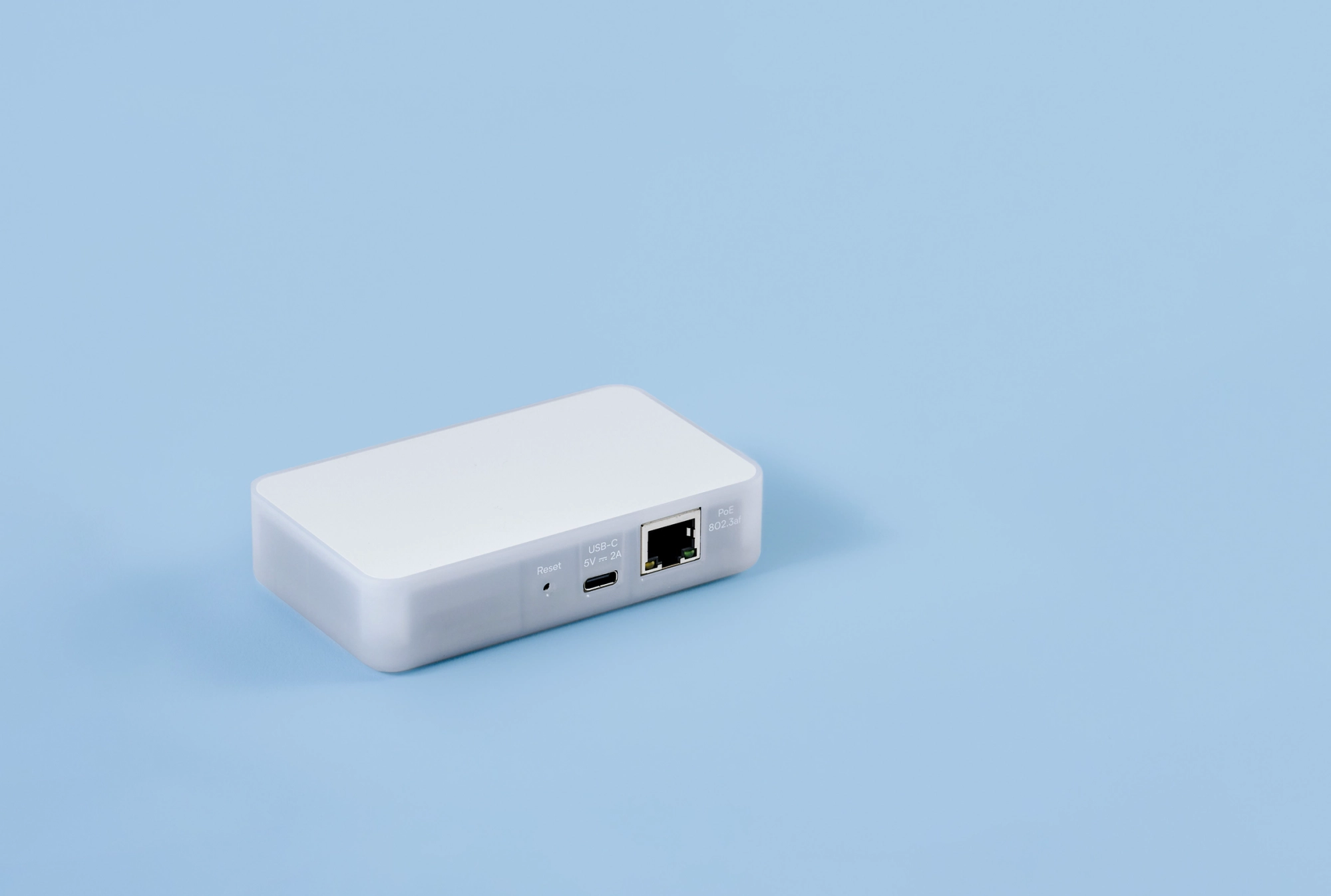
The AUX-2 is built around an ESP32-S3 microcontroller and includes a USB-A port, USB-C power connection, Ethernet, two RS-232 serial ports, a Grove connector and a combined analog and optical audio output.
Its Ethernet connection supports Power over Ethernet, so a single cable provides network connectivity and power. Users can alternatively power the device through USB-C and connect over Wi-Fi.
Nabu Casa’s official hardware specifications confirm support for Home Assistant 2026.9 or later. The device connects through ESPHome, which provides encrypted communication and allows software updates without replacing the hardware.
The USB-A port supports a Home Assistant Connect ZWA-2 adapter, letting users place their Z-Wave radio away from the computer running Home Assistant. Experimental Zigbee support is also available with a compatible ZBT-2 adapter, although Thread connectivity is not supported.
Bluetooth Proxy Connects Smart Home Sensors
One of the AUX-2’s most practical functions is its Bluetooth proxy. The device can receive information from compatible Bluetooth sensors and forward it to Home Assistant over the network.
This is useful when temperature sensors, humidity monitors and other Bluetooth accessories are too far from the main smart home computer to maintain a reliable connection.
For example, placing the AUX-2 near a refrigerator or garage can improve communication with Bluetooth temperature sensors. Home Assistant can then use those readings to trigger notifications when temperatures exceed configured limits.
Initial hands-on testing demonstrated reliable communication with Bluetooth temperature sensors through several walls and a refrigerator. However, wireless performance will vary with building materials, distance and interference.
The device’s role as a Bluetooth proxy should not be confused with Bluetooth audio streaming. Its Bluetooth radio supports smart home devices, while music playback uses the dedicated wired audio output.
Older Speakers Gain Multiroom Audio Streaming
The AUX-2 can also bring traditional stereo equipment into a networked audio system. Its 3.5mm output supports analog audio, and it also offers optical S/PDIF connections, allowing users to connect compatible amplifiers, receivers, and powered speakers.
Audio playback uses Music Assistant and the Sendspin streaming protocol. Together, these technologies allow compatible speakers to play music from supported streaming services and local audio libraries.
The system can synchronize audio across different speakers, although reliable multiroom playback depends on the equipment, integrations and network configuration.
The AUX-2 does not contain a speaker amplifier. Passive speakers therefore require a separate amplifier, and you may need to purchase audio cables separately.
Serial Connections Extend Automation to Older Equipment
Two RS-232 serial ports let the AUX-2 communicate with compatible televisions, AV receivers, projectors, climate equipment, and other electronics that support serial commands.
Instead of relying on a manufacturer’s cloud service, Home Assistant can send supported commands through the device’s local network connection.
This lets users switch an AV receiver’s input, adjust compatible equipment, or incorporate older electronics into existing automation routines.
However, an RS-232 connector does not guarantee compatibility. The equipment must have a suitable Home Assistant integration, and users may need device-specific cables or configuration.
Nabu Casa explains these requirements in its technical documentation.
Open-Source Software Offers More Flexibility
ESPHome gives the AUX-2 a customizable software foundation. More experienced users can modify its configuration, connect additional sensors through the Grove interface or install alternative firmware.
Its unlocked bootloader also lets users experiment beyond the standard factory configuration.
These capabilities distinguish the AUX-2 from smart home accessories that depend entirely on proprietary applications. They also fit a broader effort to make connected devices work across different systems.
TechAmerica previously examined smart home interoperability and reliability problems, including the difficulties users encounter when connecting devices through different communication standards.
Although users can assemble similar functions with inexpensive ESP32 development boards, the AUX-2 packages several capabilities into a ready-made product with official software integration and support.
Home Assistant Connect AUX-2 Price and Availability
The Home Assistant Connect AUX-2 launched worldwide on November 11, 2026, with a suggested price of $69 in the United States and €59 in Europe. Regional prices may vary by retailer and applicable taxes.
It requires an existing Home Assistant installation and is not intended to replace the main automation server. Its usefulness also depends on compatible sensors, audio equipment or serial-controlled devices.
For households already using Home Assistant, the AUX-2 provides a convenient way to extend wireless coverage, reuse traditional audio equipment and connect electronics that lack modern smart home features. Its appeal lies less in introducing new technology than in combining established open-source capabilities into a single, accessible device.