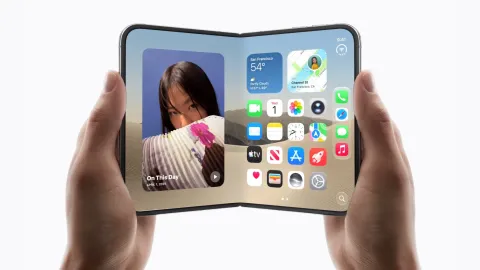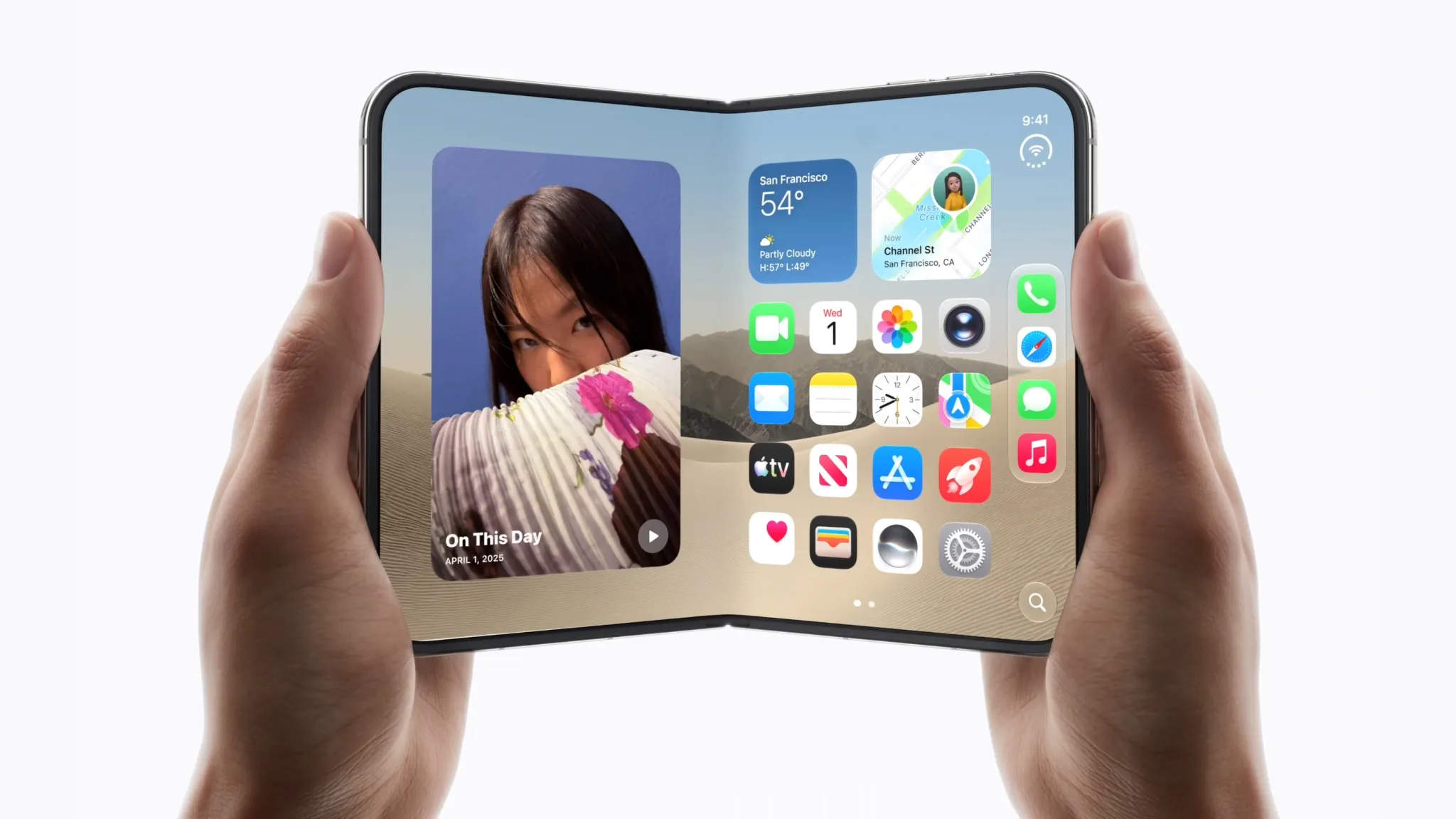
Apple’s iPhone Duo is gaining camera-based facial unlocking through the iOS 27.3 developer beta. Early independent testing suggests the feature makes the foldable phone faster and more convenient to use, although it cannot replace Touch ID.
This hands-on assessment of iPhone Duo face unlock examines recognition speed, low-light performance, and security limitations. The feature uses the existing front camera and requires no additional hardware.
iPhone Duo Face Unlock Hands-On: How It Works
The new setting, called “Unlock with Front Camera,” allows users to unlock the iPhone Duo by looking at its outer display.
Unlike traditional Face ID, the system relies on the standard selfie camera rather than Apple’s infrared TrueDepth sensor array.
Setup requires users to turn their heads in four directions while the camera registers their facial appearance. Independent testing found that enrollment took approximately five seconds.
Once configured, unlocking typically takes about half a second, making it noticeably more convenient than reaching for the side-mounted fingerprint sensor.
Apple originally designed the iPhone Duo around Touch ID. Its official launch announcement explains how the side-button sensor supports authentication when the device is folded or unfolded.
Face Unlock Performs Surprisingly Well in Low Light
Independent hands-on testing found that the feature worked reliably in moderately dim environments, including outdoor conditions after sunset.
Recognition became less dependable in particularly dark areas where the camera could not capture sufficient facial detail.
These results are encouraging for a camera-based system, but they do not match the reliability of infrared facial recognition.
The feature also performed well during everyday movement, including initial setup aboard a moving bus.
Security Limitations Compared With Face ID
Apple warns users that camera-based unlocking is less secure than Touch ID or Face ID.
Unlike Face ID, the new feature does not use an infrared depth map to verify facial geometry.
During independent testing, a photograph successfully fooled the system once in more than 20 attempts. After an unsuccessful spoofing attempt, the phone required Touch ID for the next unlock.
These findings illustrate why ordinary camera recognition is unsuitable for every authentication task.
Apple’s iPhone Duo technical specifications confirm that Touch ID remains the supported method for Apple Pay purchases.
Face Unlock Cannot Replace Touch ID for Payments
The new feature works only for unlocking the phone from its lock screen.
Users must still authenticate with Touch ID or a passcode when making Apple Pay payments, installing applications or accessing protected account functions.
Apple also limits facial unlocking to 45 minutes. Once that interval expires, users must authenticate again with Touch ID or their passcode.
This requirement provides an additional security check but reduces the convenience of facial unlocking throughout the day.
Inner Display Camera Does Not Support Face Unlock
One notable limitation is that facial unlocking works only through the iPhone Duo’s outer camera.
The under-display selfie camera inside the unfolded phone cannot be used for the feature.
Apple has not publicly explained this restriction. Camera quality could be a factor, but that remains unconfirmed.
TechAmerica’s analysis of the iPhone Duo foldable technology explains the device’s dual-display design, camera arrangement, and side-mounted authentication hardware.
The restriction means users opening the device directly to its larger display must continue using Touch ID.
When Will iPhone Duo Face Unlock Become Available?
Camera-based facial unlocking is currently available in the iOS 27.3 developer beta.
A broader rollout could arrive with the public release of iOS 27.3, potentially in December 2026. Apple has not confirmed a final release date.
The update follows early feedback about the foldable phone’s authentication experience. TechAmerica previously covered Apple’s original iPhone Duo launch and its decision to use Touch ID instead of Face ID.
Verdict: A Useful Convenience Feature With Clear Trade-Offs
The iPhone Duo’s new facial unlocking option addresses a practical inconvenience without requiring new hardware.
Early testing suggests it works quickly and handles ordinary lighting conditions well. However, limited security, periodic fingerprint verification and the lack of inner-camera support remain drawbacks.
For routine unlocking, the feature could make Apple’s foldable phone considerably easier to use. Touch ID remains essential for sensitive actions and stronger authentication.