During the first 11 months of 2026, TikTok underwent a major change in its U.S. ownership structure, expanded its shopping business across Europe, and introduced new artificial intelligence tools as the social media platform continued to adapt to government regulation and changing user behavior.
The company established a majority American-owned joint venture in January, introduced local discovery features and expanded commerce and advertising services. Later developments included government-device policy changes, AI-powered shopping assistants and additional safeguards against misleading AI-generated videos.
By November 21, TikTok had also introduced new tools to help creators identify unauthorized AI-generated likenesses and give parents greater visibility into how teenagers use the platform.
January: TikTok Establishes New U.S. Ownership Structure
TikTok announced the establishment of TikTok USDS Joint Venture LLC on January 23, 2026, completing a major step in restructuring its American operations following years of national security concerns.
The new company was established under a September 2025 executive order intended to address U.S. legislation governing applications controlled by foreign adversaries.
According to TikTok’s official announcement, the joint venture is majority American-owned and responsible for securing U.S. user data, the recommendation algorithm, software systems and content moderation decisions.
ByteDance retained a 19.9% stake in the joint venture. The company’s announcement identified three managing investors, each holding 15%.
TikTok said the arrangement would allow more than 200 million Americans and 7.5 million U.S. businesses to continue accessing its global platform.
The company also described safeguards covering data protection, cybersecurity audits and the operation of its recommendation technology in a U.S. cloud environment.
The restructuring did not make TikTok an entirely American-owned company. It created a distinct operating structure for covered U.S. activities while maintaining defined global connections.
TikTok Signs FIFA World Cup 2026 Content Agreement
Earlier in January, TikTok announced a partnership with FIFA to support content distribution surrounding the 2026 World Cup.
The January 8 agreement designated TikTok as FIFA’s preferred platform for the tournament, with plans for additional original content, creator access and a dedicated World Cup hub.
According to the official agreement announcement, participating media rights holders could receive additional opportunities to share approved content and selected livestream material.
The agreement also included measures intended to protect tournament footage against unauthorized distribution.
The partnership reflected TikTok’s continuing efforts to expand beyond ordinary short-form entertainment into sports information and event-based content.
February: Local Feed Brings Neighborhood Discovery to TikTok
On February 11, the new U.S. TikTok joint venture announced Local Feed, a feature designed to help users discover nearby restaurants, stores, events and local services.
The feature places locally relevant posts in a dedicated area of the application, using location, subject matter and publication timing to organize content.
In its official announcement, TikTok said posts from private accounts and accounts belonging to users younger than 18 would not appear in Local Feed.
The company also described location controls intended to give users more visibility into how location information is used.
Local Feed represented a broader role for TikTok in local information discovery, particularly for small businesses and services that depend on nearby customers.
April: TikTok Reports European Content Moderation Results
TikTok continued publishing information about content moderation under the European Union’s Digital Services Act.
In an April 29 transparency report, the company said approximately 178 million people in the European Union used TikTok each month.
The report covered moderation actions involving videos, livestreams, advertisements, product listings and other content.
It also described the increasing use of automated systems to identify material that violates platform policies.
These disclosures are part of TikTok’s regulatory reporting obligations and explain how the company applies its moderation rules.
May: TikTok World Introduces AI Advertising Technology
TikTok announced new business and advertising tools during its TikTok World 2026 product event.
The developments included additional AI-supported creative production, advertising formats and systems for managing campaigns through automated workflows.
One technical announcement involved a Model Context Protocol server for TikTok Ads, allowing developers to build authorized AI agents that interact with advertising systems.
According to TikTok’s official product announcement, supported functions included campaign development, performance analysis and workflow management.
The company also introduced tools to generate advertising videos and connect users with commercial experiences inside the platform.
These announcements described a mix of newly introduced products and features that still need to roll out. They did not establish that every advertiser immediately received identical access.
June: TikTok Shop Launches in Eight More EU Countries
TikTok expanded its European e-commerce operations on June 15, introducing TikTok Shop in eight additional European Union member states.
The new markets included Poland, the Netherlands, Belgium, the Czech Republic, Austria, Greece, Portugal and Hungary.
The company confirmed the launch in its European transparency report, published August 31.
The expansion allowed eligible merchants to sell through supported videos, livestreams and product listings while connecting shopping activity to content discovery.
TikTok also described plans for cross-border selling through its Sell Across Europe arrangements, allowing participating merchants to reach customers in additional supported markets.
The launch represented a significant expansion of TikTok’s commerce operations in the European Union, where platform activity is also subject to consumer protection and digital services regulations.
July: TikTok Expands AI-Generated Content Transparency
TikTok continued developing methods to identify videos created or substantially modified using artificial intelligence.
In July, the company described wider use of AI-generated content labels, digital credentials and invisible watermarking technology.
These systems are intended to help users understand when content has been created or modified using AI tools.
Some detection methods rely on information embedded in media files, while others use technical signals designed to remain associated with generated content.
Such systems have limitations. Content can be edited, converted or distributed through other applications, making reliable identification more difficult.
TikTok also introduced an AI literacy hub to help users recognize synthetic content and understand how AI-generated media can be used.
August: U.S. Government Changes TikTok Device Guidance
A major U.S. policy development followed on August 10, when the Office of Management and Budget rescinded its earlier guidance concerning TikTok on federal government devices.
The decision followed a July 17 legal opinion concluding that TikTok was no longer a covered application under the relevant federal government-device law.
The official OMB memorandum stated that the previous implementation guidance was rescinded and that TikTok could be used on government devices.
The action represented a change in federal administrative guidance following the restructuring of TikTok’s American operations.
It should not be interpreted as eliminating every government security requirement or every legal issue involving the platform.
August and September: TikTok Addresses AI Copyright and European Regulation
On August 17, ByteDance and the Motion Picture Association announced a framework intended to strengthen intellectual property safeguards for AI-generated video and image models.
The agreement followed disputes concerning the use of copyrighted creative material in generative AI systems.
The parties described measures intended to protect intellectual property while supporting authorized creative applications.
Separately, TikTok published another European transparency report on August 31 covering the first half of 2026.
The company reported 189 million monthly users across the European Union and approximately 104 million removals involving content that violated its policies during the reporting period.
TikTok said automated systems handled 94.1% of violating content without human review. These figures are company-reported moderation statistics, not independently measured figures for all online platforms.
October: TikTok Introduces AI Shopping Assistant and Buy Direct
TikTok announced new shopping and advertising capabilities on October 5, including a conversational Shopping Assistant and an in-app checkout feature called Buy Direct.
Shopping Assistant is designed to answer product questions, retain context during shopping conversations, and help users find information about availability, sizing, and delivery.
Buy Direct lets users purchase eligible products from participating merchants without leaving the TikTok experience.
According toTikTok’ss official announcement, the company also introduced AI-supported lead generation and additional advertising automation features.
TechAmerica.ai previously reported on TikTok’s AI Shopping Assistant and one-click checkout, including how the features connect content discovery with purchasing.
The announcement reflected TikTok’s strategy of linking video recommendations, product research and transactions within the same application.
Feature availability depended on merchant participation and the rollout of individual tools.
TikTok Expands Advertising Automation and Commerce Services
The October announcement also introduced additional tools that let advertisers use AI to manage campaigns and analyze performance.
TikTok described an expanded advertising network, automated search advertising options and new ways to select creative material for campaigns.
The company also outlined agent-based systems intended to help businesses answer customer questions and manage incoming sales inquiries.
These tools build on TikTok’s advertising infrastructure, but the company’s announcements do not guarantee the same performance improvements for every advertiser.
TikTok also continued expanding local discovery and commercial information services.
TechAmerica.ai previously covered TikTok’s Must Eat restaurant discovery feature, which brought community-based dining recommendations into a more structured experience.
October: TikTok Shop Prepares for Holiday Shopping
TikTok announced additional holiday shopping plans on October 14, including promotional activity scheduled for November 11 through November 30.
In its official holiday commerce update, the company said U.S. LIVE Shopping sales had more than doubled during the first half of 2026 compared with the same period a year earlier.
The platform also identified increased shopping-related searches and interest in categories such as fashion, collectibles and gifts.
Those figures came from company data and should not be interpreted as independently audited retail market totals.
November: TikTok Adds AI Likeness Detection and Content Checks
On November 19, TikTok announced new tools intended to provide more information about AI-generated images and videos.
The company introduced a public transparency tool that allows users to check whether an image or video was created or edited using TikTok’s AI creation features.
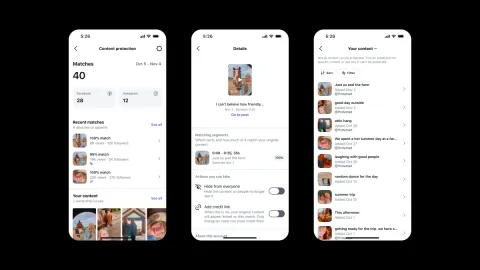
TikTok also began rolling out Likeness Detection globally, an opt-in feature that helps eligible creators identify AI-generated material that may use their appearance without permission.
According to TikTok’s official announcement, the feature allows eligible users to review potential matches and report content that violates platform policies.
The company said it had labeled more than 5 billion AI-generated videos through its detection, labeling and credential systems.
The transparency tool is designed to detect specific TikTok AI creation signals. It should not be described as a universal detector capable of identifying every AI-generated image or video.
TikTok Redesigns Family Pairing for Parents
TikTok also announced a redesigned Family Pairing experience on November 19, giving parents more information about their teenagers’ activity on the platform.
The updated controls offer clearer views of screen time and account interactions, including changes in follower connections and blocked accounts.
In its official announcement, TikTok said the changes were intended to support conversations between parents and teenagers while maintaining age-specific protections.
The company discussed the features further during its November 20 Safety and Innovation Forum, alongside AI transparency and educational initiatives.
The updates arrived as online platforms continued to face scrutiny over youth safety, privacy, and the effects of recommendation systems. TikTok’s 2026 Changes Extend Beyond Short-Form Video
From January through November 21, TikTok’s major developments involved a new U.S. operating structure, expanded shopping services, AI-based commercial tools and additional safety controls.
The U.S. joint venture changed how the platform manages covered American data and recommendation systems. European expansion increased its commerce reach, while shopping assistants and advertising agents introduced new ways for businesses to interact with users.
The company’s November safety announcements also reflected the growing difficulty of distinguishing authentic media from content created or modified using AI.
These developments did not eliminate the challenges associated with content moderation, privacy, commercial transactions or platform governance.
By November 21, TikTok had become a wider platform for entertainment, information discovery, shopping and advertising, with government regulation and AI safety playing an increasingly important role in its operations.