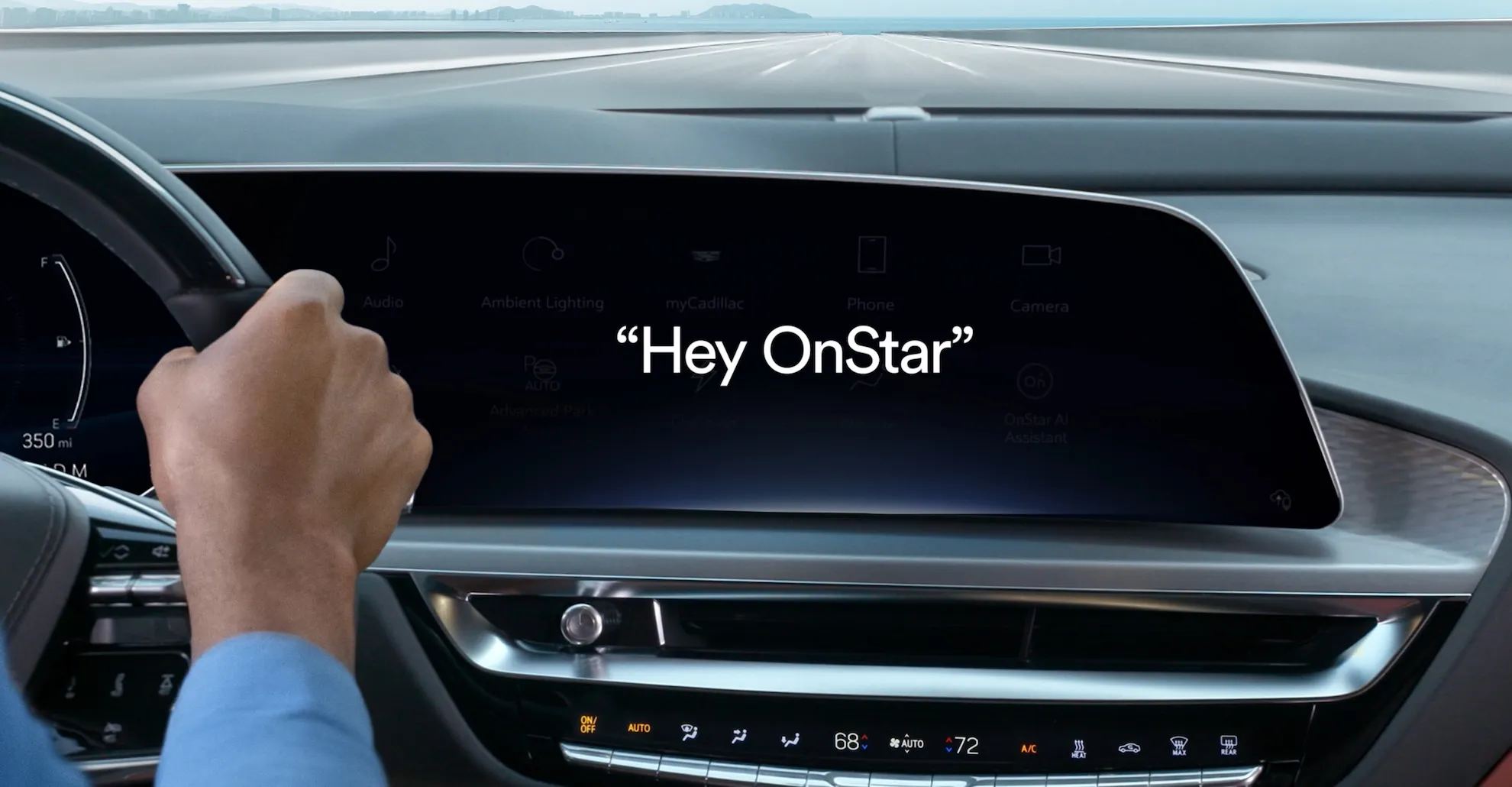
General Motors is introducing the OnStar AI Assistant, starting with the 2027 Cadillac Lyriq electric SUV. The system will offer personalized assistance, voice-controlled vehicle functions, and connected-camera features. GM announced the overhaul Wednesday at its GM Forward event in New York.
The assistant will arrive in the coming months, with additional GM vehicles to follow. The company also plans to introduce a redesigned OnStar mobile app in 2027. It will replace OnStar Guardian and the existing Buick, Cadillac, Chevrolet and GMC vehicle apps.
OnStar AI Assistant brings new vehicle controls
The new system represents a major expansion of OnStarGM’s's connected-car service launched 30 years ago. Previously focused on emergency assistance and roadside support, OnStar is becoming a platform for personalized vehicle interactions.
Drivers can control climate settings with voice commands and ask questions about specific vehicle features. The assistant also provides proactive support based on vehicle information.
Connected cameras will offer live views and record safety-related events. Owners can configure automatic recording when the vehicle detects a potential incident, such as aggressive horn honking. Recordings can then appear in the OnStar mobile app.
GM previously introduced Google Cloud’s Dialogflow technology to improve voice assistance. It also announced plans to bring Google Gemini into its vehicles. The latest system gives GM greater control over its vehicle-specific AI experience.
The rollout is part of a broader software transformation involving AI development tools and centralized vehicle computing. Other automakers are making similar investments, including Volvo’s expanded Nvidia partnership for future automated driving systems.
GM addresses privacy concerns with new controls
The expansion follows regulatory scrutiny of how GM handles customer information. In January 2026, the Federal Trade Commission finalized an order restricting certain data-sharing practices involving GM and OnStar.
The order prohibits sharing certain driving and location information with consumer reporting agencies for five years. It also requires greater transparency and explicit consent for specified data collection and sharing activities.
GM says customers will control which information they share through the updated platform. Connected Camera recordings will be encrypted and subject to retention limits. According to the automaker, neither GM nor OnStar can access those recordings.
Third-party data sharing will require consent for the relevant features. Customers can withdraw permission, although doing so may limit access to certain services.
The new privacy controls will be important as GM expands OnStar beyond emergency assistance. The company must now demonstrate that personalized AI features can operate alongside meaningful customer control over vehicle data.