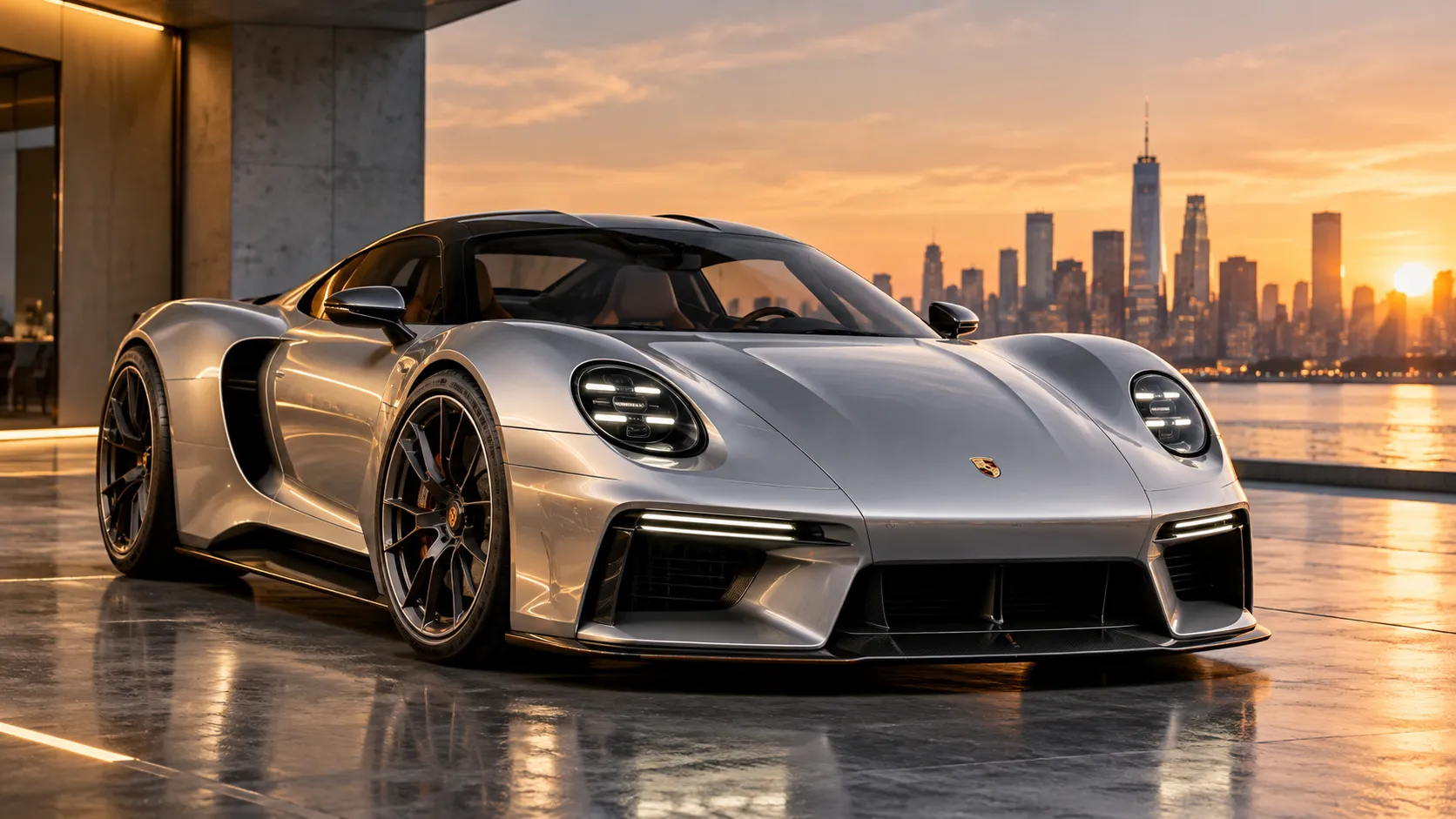
Porsche Mission S previews a new generation of supercars positioned above the iconic 911. Unveiled in New York on October 15, 2026, the mid-engine concept introduces Porsche’s latest design direction. It blends classic sports-car styling with a cockpit built around physical controls and fewer screens.
The vision model forms part of Porsche’s Sportwagenschmiede ’35 strategy. The company plans to develop a dedicated mid-engine supercar platform as a permanent addition to its lineup. However, production timing, pricing, and performance specifications remain unconfirmed.
Porsche Mission S Introduces a New Supercar Platform
The Mission S brings together design elements from several historic Porsche models. Its rounded headlights and prominent fenders recall the 911. The low front takes inspiration from the GT1, while the roofline references the 959.
A continuous design line connects the front and rear lighting elements. The car also features an integrated active rear wing and lightweight wheels. Its cooling system takes inspiration from the legendary Porsche 917 racing car.
According to Porsche’s official announcement, the concept previews a broader supercar platform rather than a limited-production hypercar. That distinction matters because Porsche intends to establish a permanent model range above the 911.
The mid-engine configuration gives designers more freedom to shape the car’s proportions. It also supports the low roofline and wide stance. Porsche has not confirmed which engines or electrified powertrains could power future production models.
The Mission S uses specially developed exterior and interior finishes. Its colors include Firn White Metallic, Light Red Metallic, Black Chrome, and Special Black. These finishes reference the company’s motorsport history without recreating a specific classic model.
A Driver-Focused Interior With Fewer Digital Screens
Inside, Porsche takes a different approach from the increasingly screen-heavy automotive industry. The Mission S has no permanent central touchscreen or fixed passenger display. Instead, drivers can use a retractable smartphone system compatible with MagSafe technology.
The dashboard contains five circular instruments behind the steering wheel. An analog rev counter sits at the center, supported by a digital display. The instrument arrangement changes according to the selected driving mode.
Traditional switches and push-pull controls handle essential driving and comfort functions. Porsche also retains its familiar ignition-key position to the left of the steering wheel. These details emphasize direct interaction rather than touchscreen navigation.
The updated My Porsche app provides additional connectivity and information features. It can also display digital versions of historic Porsche instruments. Drivers therefore retain access to modern functions without relying on a large permanent dashboard screen.
The seats and interior architecture follow the same philosophy. An integrated seatbelt buckle and repositioned adjustment controls support the cockpit’s minimalist design. Porsche says the goal is to strengthen the connection between driver and vehicle.
Porsche Plans a Permanent Supercar Lineup Above the 911
The Mission S represents an important development in Porsche’s long-term product strategy. Previous flagship models, including the Carrera GT and 918 Spyder, were produced in limited numbers. Porsche now wants a permanent supercar offering above its established sports car range.
The new platform could give Porsche flexibility to introduce different performance-focused models. However, the company has not announced production variants or confirmed technical specifications. Its initial presentation focuses on design, architecture, and driver experience.
Other automakers are also exploring new approaches to high-performance vehicles. TechAmerica.ai recently covered the Tesla Roadster prototype, which demonstrated a more experimental approach to sports car engineering. Porsche’s concept instead emphasizes its racing heritage and familiar driving controls.
Porsche selected a pier in Queens, New York, for the Mission S premiere. The location has historical significance for the company. Photographers captured images of the Porsche 550 Spyder at the same location in 1953.
The event connected Porsche’s earliest lightweight sports cars with its future ambitions. More than seven decades later, the Mission S draws on similar design principles while exploring modern automotive technology.
For now, the Mission S remains a vision model, not a confirmed production vehicle. Its biggest contribution is a clearer picture of Porsche’s future supercar strategy. Powertrain details, performance figures, and production dates will determine how that vision reaches customers.