Rivian AI Assistant technology is joining the automaker’s $5.8 billion partnership with Volkswagen Group. The expansion adds voice-based artificial intelligence to a collaboration originally focused on vehicle software and electrical systems.
Rivian disclosed the licensing arrangement in its third-quarter earnings presentation Thursday. The company will provide Volkswagen with elements of its internally developed AI voice assistant.
Rivian did not disclose licensing fees, payment terms or which Volkswagen vehicles will receive the technology.
Rivian AI Assistant Expands Volkswagen Partnership
The companies established their joint venture in November 2024 to develop electrical architecture and software for future Volkswagen vehicles. The agreement initially committed to an investment of up to $5 billion.
Volkswagen later increased its planned investment to up to $5.8 billion by 2027. The partnership operates through a separate company focused on developing software-defined vehicle technology.
Volkswagen’s upcoming ID EVERY1 electric hatchback is expected to be the first model using the joint venture’s software and electrical architecture. It could also become an early candidate for Rivian’s voice assistant, although neither company has confirmed that possibility.
The technology could eventually reach other vehicles across Volkswagen Group. However, Volkswagen has not announced a deployment schedule or specific markets for the licensed AI features.
Rivian Brings Its Voice Assistant to More Vehicles
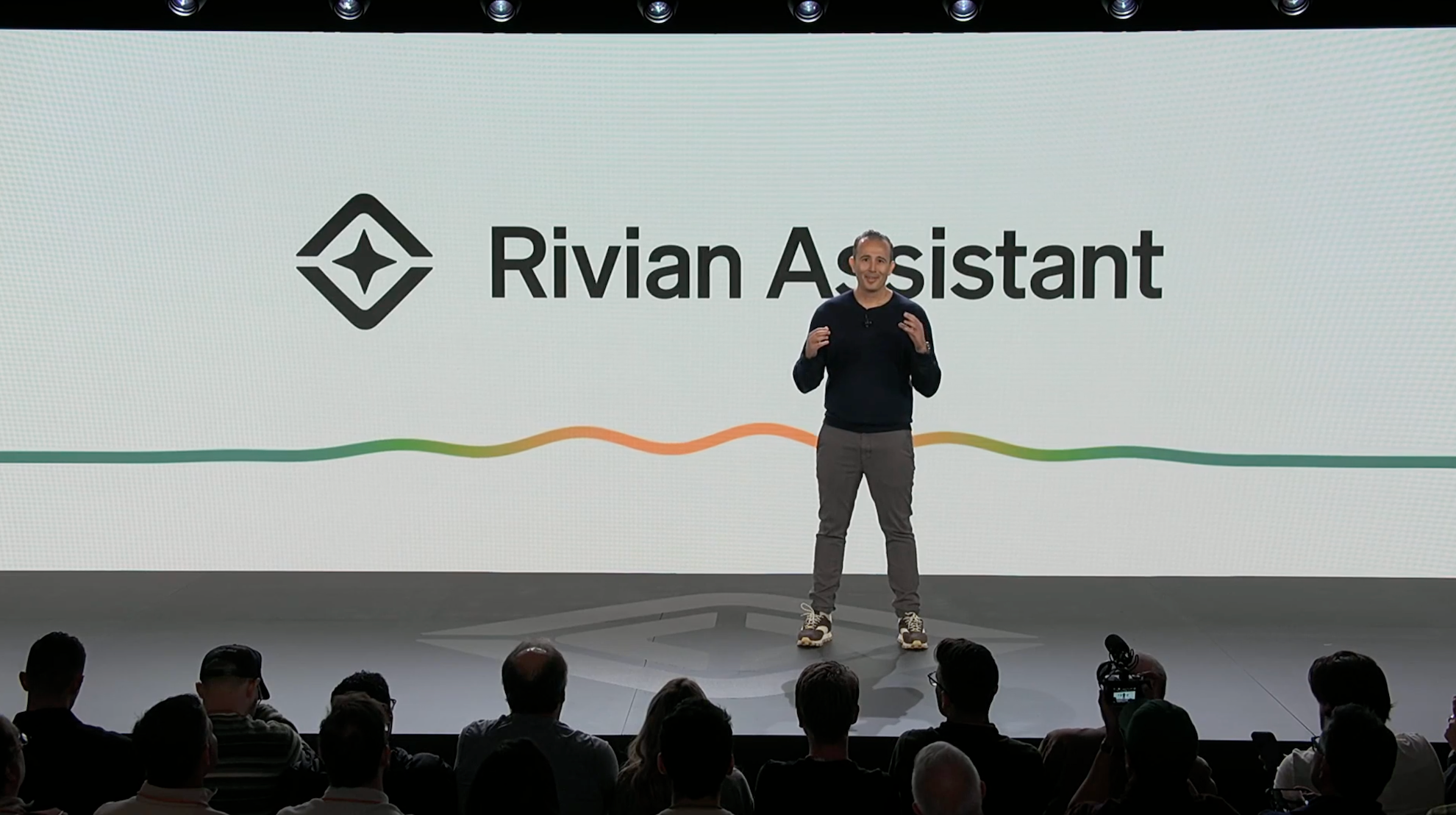
Rivian spent approximately two years developing its AI assistant before demonstrating the technology in 2025. The rollout began in May 2026 for the R1S SUV and R1T pickup.
In October, the company expanded the assistant to its R2 SUV. The vehicle also helped Rivian achieve record third-quarter deliveries as production at its Illinois factory increased.
The assistant provides hands-free voice controls and integrates with Rivian’s vehicle software. Its development reflects the company’s strategy of controlling more of the technology used in its vehicles.
Software Integration Supports Rivian’s Technology Strategy
Rivian has extensively redesigned the electrical systems in its R1 vehicles. The updated architecture reduced the number of electronic control units from 17 to seven while simplifying wiring and processing systems.
The changes allow vehicle functions to share computing resources more efficiently. Rivian also controls its sensors, displays, lighting and audio systems, enabling broader over-the-air software updates.
Its latest RivianOS 2 platform brings updated graphics, navigation features and AI capabilities across supported consumer vehicles. The company argues that developing hardware and software together improves its ability to introduce new functions.
Volkswagen’s investment gives it access to this technology as it develops its next-generation electric vehicles. The latest AI licensing agreement expands that relationship beyond the original electrical architecture and software development work.
For Rivian, the arrangement also creates another opportunity to commercialize technology it developed internally. The financial contribution from AI licensing remains unclear because the companies have not disclosed its commercial terms.