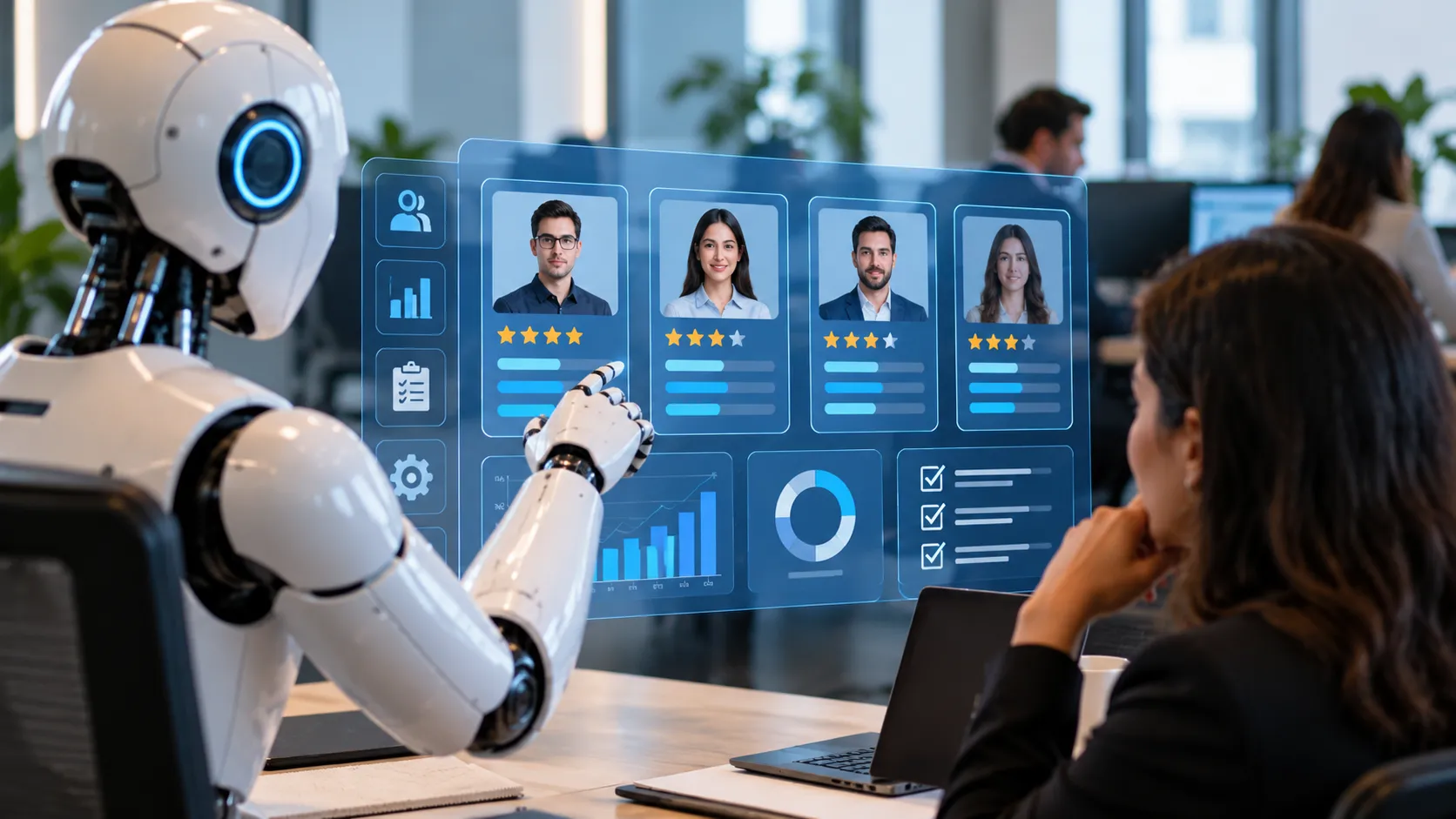
AI employee evaluations are getting harder for managers, even as companies adopt artificial intelligence to boost productivity. A new survey found that 53% of senior leaders struggle to identify employees’ original contributions after adopting AI.
The findings come from a Nielsen survey of 1,701 directors and senior managers across seven countries. Work-management software company Monday.com commissioned the research.
Despite these difficulties, enthusiasm remains strong. The company’s 2026 AI report found that 94% of respondents were excited about improving work with AI. However, 47% said they now spend more time reviewing and guiding their teams’ output.
AI employee evaluations are becoming more complicated
AI-generated work often arrives polished and ready for review. That makes it difficult for managers to distinguish employee expertise from work completed by automated systems.
The survey found that 78% of leaders have changed how they evaluate employees since adopting AI. Traditional measures such as productivity and time management remain important. However, managers increasingly consider employees’ ability to use AI effectively.
These skills include writing effective prompts, identifying tasks to automate, and experimenting with new workflows. Managers must also assess whether employees understand the work AI produces.
Michal Miller Levi, head of market research and customer insights at Monday.com, said organizational processes are struggling to keep pace with AI development. Individual managers may benefit from the technology while facing greater responsibility for overseeing its use across teams.
Similar challenges have emerged elsewhere. A recent Anthropic workforce study found that employees increasingly supervise AI agents rather than complete every task themselves. Meeting time also increased despite reported productivity improvements.
AI-assisted performance reviews raise bias concerns
Managers also use AI to support their decisions. According to the survey, 46% use the technology to review their decisions, while 39% use it to draft performance reviews.
This introduces questions about fairness and accountability. AI-generated assessments may reflect patterns found in training data rather than an employee’s actual performance.
A February 2026 research paper on performance evaluation examined whether large language models reproduce human assessment biases. Researchers found that AI often mirrored human rating patterns when clear, objective standards were unavailable.
However, the study also identified potential benefits. When models received objective performance information, they produced more accurate evaluations than human raters under the tested conditions.
Separate research published in PNAS Nexus examined gender and racial bias in AI-assisted resume evaluations. The study found that several models gave lower scores to Black male candidates with qualifications comparable to those of other applicants.
Although that research concerned hiring rather than workplace performance reviews, it illustrates potential fairness risks in AI-assisted employment decisions.
Managers face more tools and AI agents
AI adoption is also increasing workplace software complexity. The survey found that 57% of managers reported using more software tools after introducing AI. Only 29% described their organizations’ AI infrastructure as fully optimized and centralized.
Businesses had expected AI to consolidate applications and simplify operations. Instead, many are managing additional integrations, disconnected systems, and employees using unapproved AI tools.
The growing problem of enterprise AI sprawl has also attracted cybersecurity companies. These businesses are developing tools to discover, monitor and control AI agents operating across corporate systems.
Another challenge is emerging as companies deploy agents that can complete tasks independently. The survey found that 58% of managers expect to oversee more AI agents than human employees within the next year.
However, 46% worry about losing control over agents’ actions. Another 35% fear being held responsible for decisions autonomous systems make.
Managers must determine which tasks agents can perform, review their output and intervene when necessary. This adds oversight responsibilities even as automation reduces routine work.
Levi said managers generally want human involvement in important decisions rather than giving agents unrestricted independence.
The findings suggest that workplace AI adoption is outpacing many organizations’ ability to adjust their management practices. For businesses, improving productivity now requires clearer evaluation standards, stronger oversight and better coordination between employees and AI systems.