NVIDIA introduced a new generation of artificial intelligence computing systems, expanded its data center business and reported record revenue during the first 11 months of 2026. The year also brought a major leadership upheaval when founder Jensen Huang resigned as chief executive officer in November.
The company’s Vera Rubin platform moved from its January announcement into production and customer shipments, while additional technologies targeted robotics, autonomous vehicles, scientific computing and AI agents. NVIDIA also expanded its involvement in financing large computing facilities, increasing scrutiny of its financial exposure to customers and infrastructure projects.
On November 17, NVIDIA reported $115.8 billion in quarterly revenue, more than double the comparable figure a year earlier. Colette Kress, who became interim CEO after Huang’s departure, presented the results as the company continued searching for permanent leadership.
January: NVIDIA Introduces the Rubin AI Computing Platform
NVIDIA opened 2026 by introducing its Rubin platform at CES in Las Vegas on January 5.
The architecture combined six major components: the Vera CPU, Rubin GPU, NVLink 6 Switch, ConnectX-9 SuperNIC, BlueField-4 DPU and Spectrum-6 Ethernet Switch.
According to NVIDIA’s official announcement, the components were designed together to improve how large-scale AI systems train models, transfer data and generate responses.
NVIDIA described substantial potential reductions in AI inference costs compared with its previous-generation Blackwell systems. These were company performance projections tied to particular workloads and configurations, not guaranteed savings for every customer.
Rubin also represented a shift toward selling more integrated computing platforms. Large AI installations require GPUs, CPUs, networking, memory, storage and software to operate efficiently as one system.
January: Robotics and Physical AI Expand at CES
NVIDIA also announced new physical AI technologies on January 5, including models and development tools for robots and autonomous machines.
The announcement described software, simulation tools, and computing systems intended to help developers train robots to interpret visual information and perform physical tasks.
These technologies address a different problem from ordinary conversational AI. A robot must connect perception and planning to movement while operating under physical and safety constraints.
NVIDIA expanded its Jetson, Isaac and other robotics technologies to support that development, while emphasizing simulation and testing before deployment.
The demonstrations did not show that general-purpose humanoid robots could reliably perform every industrial or household task.
February: Fiscal 2026 Revenue Reaches $215.9 Billion
NVIDIA reported results for the fourth quarter and full fiscal year 2026 in February.
Annual revenue reached $215.9 billion, up 65% from the preceding fiscal year. Data Center revenue accounted for $193.7 billion.
The company’s official financial announcement showed how demand for AI computing infrastructure had become the principal driver of its business.
NVIDIA’s fiscal 2026 ended January 25, 2026. These figures therefore included business activity from 2025 and should not be described as revenue generated exclusively between January and December 2026.
March: GTC 2026 Expands NVIDIA’s AI Platform
NVIDIA used its March GTC conference to introduce a broad collection of technologies for data centers, developers, gaming and autonomous systems.
Major announcements included the Vera Rubin NVL72 platform, Vera CPU, BlueField-4 storage architecture, new AI factory designs, and updated tools for agent-based computing.
The company also announced DLSS 5, an AI-powered graphics technology intended to improve visual fidelity in supported games.
According to the official GTC announcement archive, NVIDIA expanded its work in robotics, industrial simulation, autonomous driving and open AI development.
These launches involved both hardware and software. Some products entered production, while other capabilities were announced for later availability.
Vera Rubin Targets Large-Scale AI Factories
At GTC, NVIDIA detailed a more integrated Vera Rubin configuration combining 72 Rubin GPUs and 36 Vera CPUs with high-bandwidth interconnects and specialized networking components.
The company said the system could substantially improve processing efficiency for large mixture-of-experts models and demanding AI inference workloads.
Mixture-of-experts models activate selected parts of a neural network for particular operations. Their performance depends heavily on how computing resources and inter-processor communication are managed.
High-speed interconnects such as NVLink reduce communication bottlenecks between GPUs, while networking and storage technologies help feed those systems with data.
NVIDIA’s published efficiency comparisons apply to specified configurations and should not be interpreted as universal performance gains across all AI models.
Autonomous Driving and Industrial AI Become Larger Priorities
NVIDIA announced additional adoption of its DRIVE Hyperion platform for advanced automated driving development during GTC.
The company’s technology combines computing hardware, sensor processing, simulation and software intended for autonomous vehicle systems.
NVIDIA’s official announcements identified partners including BYD, Geely, Isuzu and Nissan.
The platform was designed to support work toward Level 4 autonomous driving, which permits automated operation within defined conditions without requiring continuous human intervention.
Automaker adoption of development technology does not mean every customer vehicle immediately gains Level 4 capability. Vehicle certification, validation and regional operating requirements remain separate issues.
May: NVIDIA Reports $81.6 Billion in Quarterly Revenue
On May 20, NVIDIA reported first-quarter fiscal 2027 revenue of $81.6 billion, up 85% from the comparable quarter a year earlier.
The official earnings announcement attributed growth to continued demand for AI computing and accelerated infrastructure deployment.
The result covered the quarter ending April 26, 2026.
NVIDIA’s financial disclosures also showed growing dependence on large AI infrastructure customers, making industry-wide capital spending and purchasing decisions important to future revenue.
Summer: Vera Rubin Production and Cloud Infrastructure Expand
NVIDIA continued developing Vera Rubin manufacturing and system integration during June and July.
The company announced progress in its full production ramp and expanded the surrounding platform to include systems for storage, networking and AI agent workloads.
Its production announcement described Rubin as part of an integrated AI factory architecture.
Unlike a conventional standalone accelerator, a large AI factory combines processors, racks, network switches, storage infrastructure and power-management systems.
Customers must also provide cooling, electrical capacity and physical facilities. This makes data center construction timing a significant factor in hardware deployment.
August: Quarterly Revenue Climbs to $96.2 Billion
NVIDIA reported second-quarter fiscal 2027 revenue of $96.2 billion on August 26, up 106% from a year earlier.
The company’s earnings release showed that demand for AI processing remained strong during the quarter ending July 26.
At the same time, NVIDIA’s SEC disclosures described continuing export restrictions affecting advanced chips supplied to certain international markets.
The company said U.S. authorities had granted limited licenses for selected H200 shipments to specific customers in China beginning in February, but Chinese restrictions limited its ability to complete those sales.
NVIDIA warned that export controls could affect its revenue, supply chain and competitive position.
NVIDIA Develops New AI Infrastructure Financing Models
During 2026, NVIDIA also expanded discussions with financial institutions about funding large computing facilities.
The proposed approach involved attracting institutional capital to projects that purchase and operate AI computing equipment.
TechAmerica.ai previously examined NVIDIA’s proposed $500 billion AI infrastructure financing framework, including the role of equipment residual values and outside investors.
The figure represented an intended financing scale rather than a completed investment by NVIDIA or cash already deployed.
Financing structures tied to GPU assets also introduce risks. Their viability depends on customer demand, equipment utilization, borrowing costs and the resale value of computing systems.
September and October: AI Infrastructure Spending Faces Scrutiny
NVIDIA continued announcing infrastructure and computing partnerships during the fall as customers expanded AI data center capacity.
The company also authorized a substantial expansion of its share repurchase program.
In September, NVIDIA’s board approved an additional $150 billion in buyback authorization, according to its subsequent quarterly disclosure.
The authorization permits the company to repurchase shares under specified terms but does not require it to spend the full amount immediately.
Meanwhile, the economics of AI infrastructure attracted increased attention because suppliers may invest in customers that also purchase their technology.
Those relationships can support expansion, but they require careful distinction between hardware revenue, investment commitments and contingent financial guarantees.
November: NVIDIA Board Opens Independent Investigation
On November 8, NVIDIA’s board announced an independent investigation after reports that a foreign intelligence effort had targeted founder and CEO Jensen Huang.
According to the official board statement, independent directors and outside counsel would oversee the review.
The board said it had no reason at that time to believe national security or NVIDIA’s confidential information had been compromised.
The investigation was therefore an inquiry into reported circumstances, not a completed finding that a security breach or unlawful conduct had occurred.
November 12: Jensen Huang Resigns as NVIDIA CEO
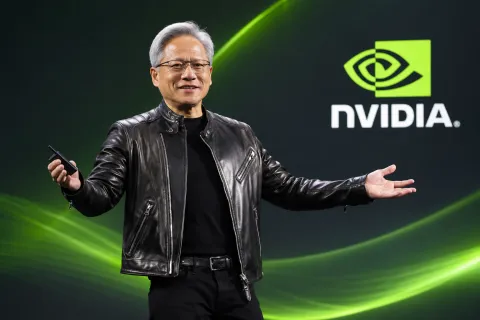
NVIDIA announced on November 12 that Jensen Huang had resigned as president, chief executive officer, and board member, effective immediately.
The official announcement named Colette Kress, NVIDIA’s executive vice president and chief financial officer, as interim CEO.
Kress was also expected to continue serving as CFO while the board searched for a permanent chief executive.
The company appointed Harvey C. Jones as its first board chair.
Huang had led NVIDIA since its founding. His departure marked a major leadership change at a company central to the global expansion of AI infrastructure.
TechAmerica.ai previously covered NVIDIA’s leadership transition and its implications for earnings, China and AI spending.
November: Scientific Computing Advances at SC26
NVIDIA used the SC26 supercomputing conference in November to introduce additional computing hardware and software for scientific research.
The announcements included Rubin HPC, a GPU configuration intended for simulation, engineering and data processing.
The company also expanded its Vera CPU platform and announced additional work on scientific AI models and development tools.
These products targeted workloads such as physical simulation, computational science, and increasingly complex research applications.
Scientific computing and large language model inference have overlapping hardware requirements but different computational characteristics. NVIDIA’s announcements addressed both categories through specialized platform components.
November 17: NVIDIA Reports $115.8 Billion in Quarterly Revenue
On November 17, NVIDIA reported fiscal third-quarter 2027 revenue of $115.8 billion, up 103% from the corresponding quarter a year earlier.
Data Center revenue reached $107.6 billion, up 110% year over year. Net income under U.S. generally accepted accounting principles reached approximately $65.3 billion.
According to NVIDIA’s official earnings report, Vera Rubin NVL72 systems had begun shipping, with installations operating at selected cloud infrastructure partners.
The company forecast approximately $130 billion in revenue for its next fiscal quarter, plus or minus 3%.
That figure was guidance for a future period, not revenue already earned.
NVIDIA also said its outlook did not assume Data Center computing revenue from China, reflecting continued uncertainty surrounding export controls and market access.
AI Financing Remains a Focus Under Colette Kress
After the leadership transition, NVIDIA continued to discuss how AI infrastructure projects would be financed and how guarantees would apply.
TechAmerica.ai reported on NVIDIA’s tighter approach to neocloud financing guarantees after the November earnings call.
The distinction between direct investment and a financial guarantee is important. A guarantee may create potential obligations under specified conditions without requiring immediate payment of the full guaranteed amount.
Independent financing, completed infrastructure and actual customer demand remain important factors in evaluating these arrangements.
NVIDIA’s 2026 Strategy Combines Computing Growth With New Risks
Between January 1 and November 21, NVIDIA made substantial progress in AI computing technology and reported exceptional growth in its Data Center business.
The Vera Rubin platform moved from announcement to early commercial shipments, while robotics, scientific computing and accelerated graphics remained important areas of development.
At the same time, export controls, infrastructure financing commitments and leadership changes introduced new uncertainties.
The November transition placed Colette Kress in charge while an independent board investigation continued and directors searched for permanent leadership.
By November 21, NVIDIA’s business had become increasingly central to building large AI computing facilities. Its future results would depend not only on chip performance but also on energy infrastructure, customer financing, international restrictions and the company’s ability to sustain its product roadmap under new management.