Apple has officially announced OLED MacBook Pro models, bringing touchscreen support to the Mac for the first time. Announced October 28, 2026, the new 14-inch and 16-inch laptops feature tandem OLED displays, M5 Pro and M5 Max processors, and a thinner design. U.S. prices start at $2,899, with availability beginning November 6.
The announcement marks a significant change for Apple’s professional laptop lineup. For years, the company kept touchscreens exclusive to devices such as the iPad and iPhone. The new MacBook Pro adds direct screen interaction while retaining traditional keyboard and trackpad controls.
Apple OLED MacBook Pro Introduces PROLED XDR Display
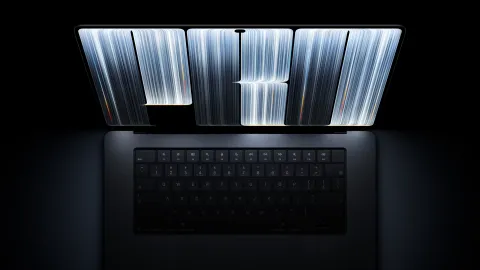
The biggest upgrade is Apple’s new PROLED XDR display, which replaces the LCD technology used in existing MacBook Pro models. It uses tandem OLED technology, combining two light-emitting layers to improve brightness and display performance.
According to Apple’s official announcement, the screens support up to 2,000 nits of peak HDR and SDR brightness. The company also specifies a 10,000,000:1 contrast ratio and a variable refresh rate reaching 120Hz.
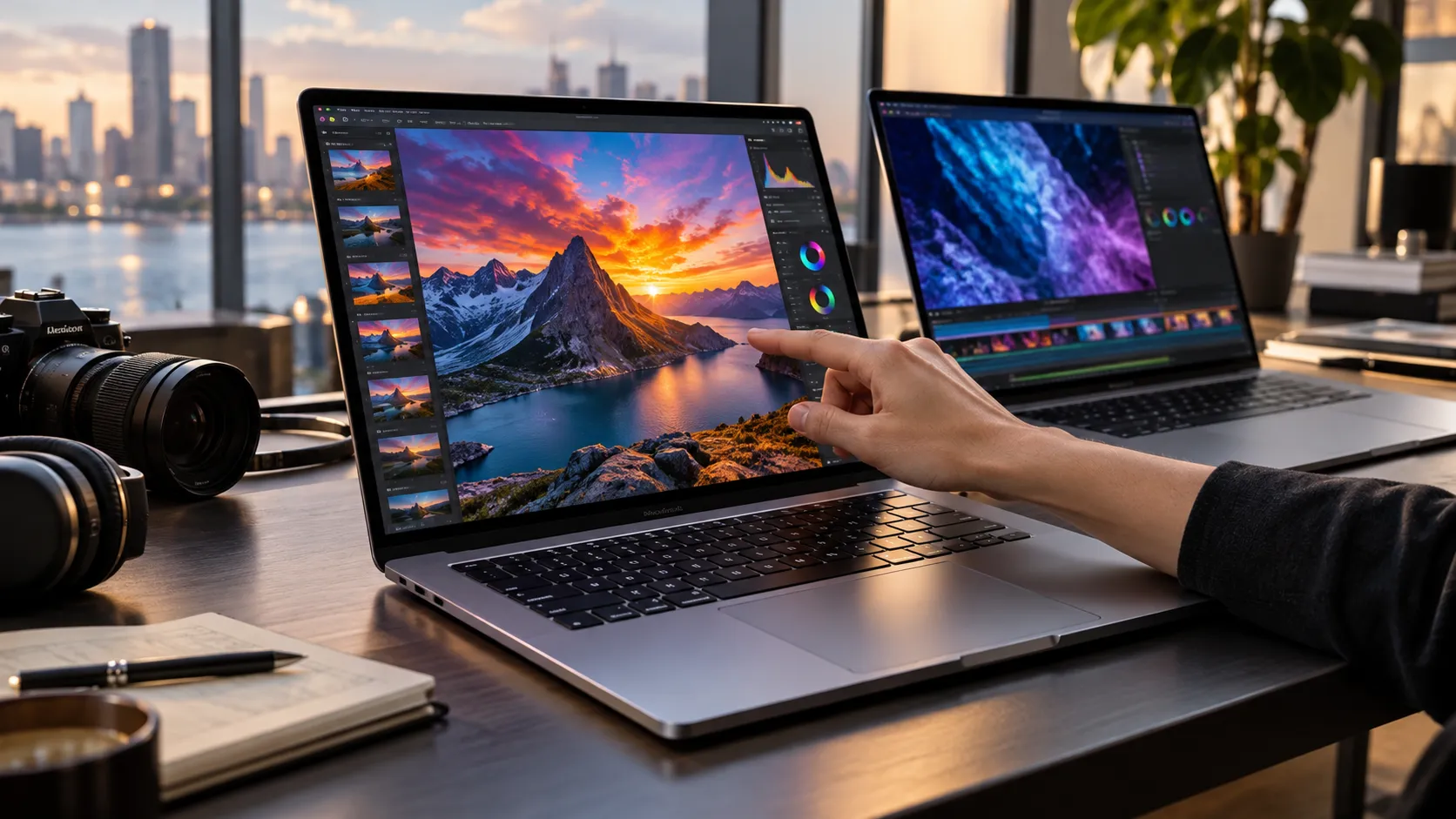
The displays cover both P3 and Adobe RGB color gamuts. This broader color support targets professional photography, video editing, and design work. OLED technology also enables deeper blacks through individually controlled pixels.
The 14-inch model features a 14.2-inch display, while the larger version measures 16.3 inches. Both include thinner bezels and Apple’s Dynamic Island, replacing the traditional MacBook Pro display notch.
Dynamic Island provides space for Live Activities, Spotlight, and Siri AI. However, the laptops continue using Touch ID for secure authentication. Apple has not introduced Face ID on these models.
Touchscreen Support Changes How Mac Users Work
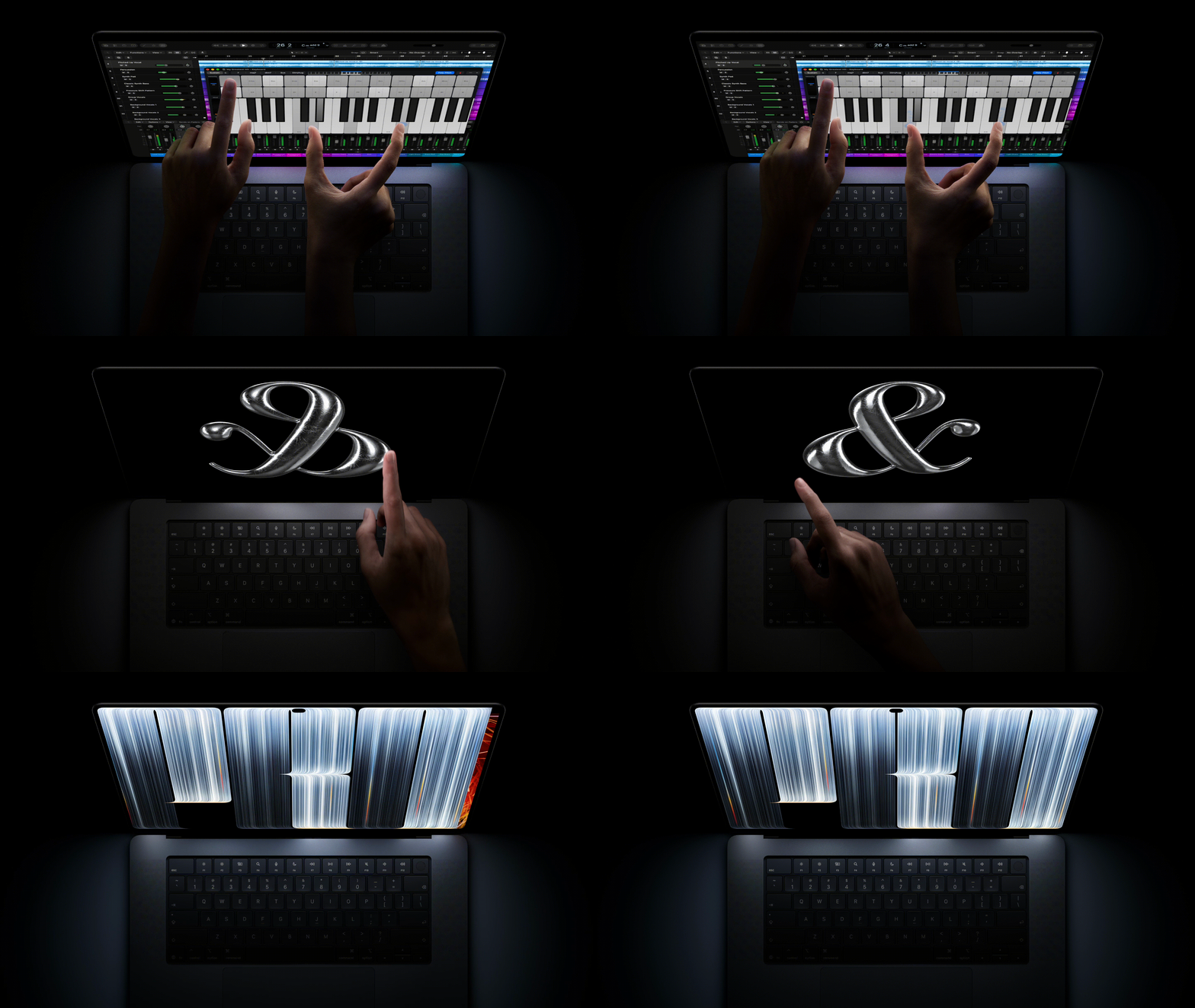
The new MacBook Pro introduces touch controls without replacing familiar macOS interactions. Users can scroll through webpages, zoom into images, move presentation slides, and arrange windows directly on the display.
Apple has integrated touch sensors into the display panel rather than adding a separate touch layer. The company says this approach reduces input latency. A redesigned hinge also improves screen stability during touch interactions.
The feature extends to professional applications. Graphic designers can manipulate artwork directly on the screen, while musicians can interact with virtual instruments. Developers can also test touch functionality in compatible applications.
Apple’s creative applications are receiving optimizations for the new hardware. Final Cut Pro supports touch-based editing gestures, while Logic Pro offers an interactive on-screen keyboard. Pixelmator Pro also supports direct drawing and selection.
Existing applications can interpret touch inputs through macOS automatically. However, not every application will offer a dedicated touchscreen interface immediately. Developers can use updated system APIs to introduce more advanced interactions.
Apple has not announced Apple Pencil compatibility for the new laptops. Touch therefore expands navigation and creative controls, but buyers should not assume the MacBook Pro offers the same stylus experience as an iPad.
M5 Pro and M5 Max Power the New MacBook Pro
Both models are available with Apple’s M5 Pro and M5 Max processors. The chips target demanding applications, including software development, video production, 3D rendering, and artificial intelligence workloads.
Apple says the processors deliver improved CPU and graphics performance, along with faster unified memory. The M5 Max is intended for particularly intensive professional tasks. These include complex animation projects and large AI models running locally.
Each GPU core incorporates a Neural Accelerator to help process AI workloads. The processors also feature enhanced shader cores and third-generation hardware-accelerated ray tracing.
The laptops support up to 128GB of unified memory and 16TB of storage, depending on configuration. Those capacities could benefit users working with large media libraries, development environments, or memory-intensive AI applications.
However, Apple’s performance statements are manufacturer claims. Independent testing will be needed to establish sustained performance, thermal behavior, and improvements over earlier MacBook Pro configurations.
Thinner Design, Improved Audio and Connectivity
Apple has redesigned the chassis to reduce weight and thickness. The 14-inch model weighs approximately 3 pounds, while the 16-inch version weighs around 4 pounds. Both are lighter than their predecessors.
The thermal system has also been revised. Apple says its redesigned cooling architecture helps maintain performance while directing warm air away from the display.
Audio improvements include a six-speaker system with redesigned woofers and tweeters. Apple claims the speakers deliver 50% deeper bass than the previous generation. Dolby Atmos and Spatial Audio remain supported.
Connectivity includes three Thunderbolt 5 ports, HDMI, an SDXC card slot, MagSafe charging, and a headphone jack. Wireless connections support Wi-Fi 7 and Bluetooth 6.
The laptops also feature a 12MP Center Stage camera and studio-quality microphones. Depending on the processor, users can connect up to three or four external displays.
Apple advertises up to 24 hours of battery life under its specified testing conditions. Fast charging can restore up to 50% battery capacity in approximately 30 minutes with a compatible power adapter.
Apple OLED MacBook Pro Price and Release Date
Apple opened preorders on October 28, 2026, with general availability scheduled for November 6. The new models are offered in 14-inch and 16-inch sizes with M5 Pro or M5 Max processors.
The 14-inch MacBook Pro with M5 Pro starts at $2,899 in the United States. The 16-inch version starts at $3,399. Buyers choosing M5 Max will pay at least $4,499 for the smaller model or $4,799 for the larger version.
Education pricing is available for eligible customers. Additional memory and storage configurations increase the purchase price. Apple’s MacBook Pro product page has full configuration details.
Should Buyers Choose the New OLED MacBook Pro?
The new models primarily target users who need professional performance alongside improved display technology. Photographers, filmmakers, designers, and developers may benefit from the wider color support and touchscreen capabilities.
The biggest buying consideration is price. The OLED models cost substantially more than entry-level Mac laptops. Customers who mainly browse the web, write documents, or handle routine office work may not need their advanced features.
Existing MacBook Pro owners should also consider whether OLED and touch support justify upgrading. Users satisfied with their current performance may find limited practical benefit from replacing a recent machine.
Apple’s decision to introduce touchscreens represents a notable shift in Mac hardware design. Combined with tandem OLED displays and M5-series processors, the new MacBook Pro introduces capabilities previously unavailable in the lineup.
The laptops arrive November 6, 2026. Their long-term value will depend on display quality, application support, battery endurance, and real-world performance. Independent testing will help determine how much these changes improve professional workflows.