The Touchscreen MacBook Pro is one of Apple’s biggest laptop updates in years, yet its most anticipated feature feels surprisingly familiar. Introduced on October 28, 2026, the redesigned laptop combines a tandem OLED display with touchscreen controls, Dynamic Island, and a lighter body. Despite these changes, it still looks and feels like a MacBook Pro.
Early hands-on impressions suggest the new PROLED XDR display is the greatest improvement. Touch adds another way to navigate macOS, but it does not fundamentally change the laptop experience. With prices starting at $2,899, buyers have plenty to consider beyond the touchscreen.
Touchscreen MacBook Pro Keeps the Familiar macOS Experience.
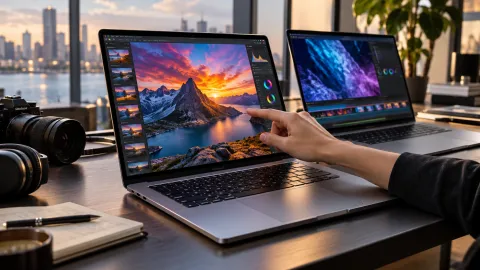
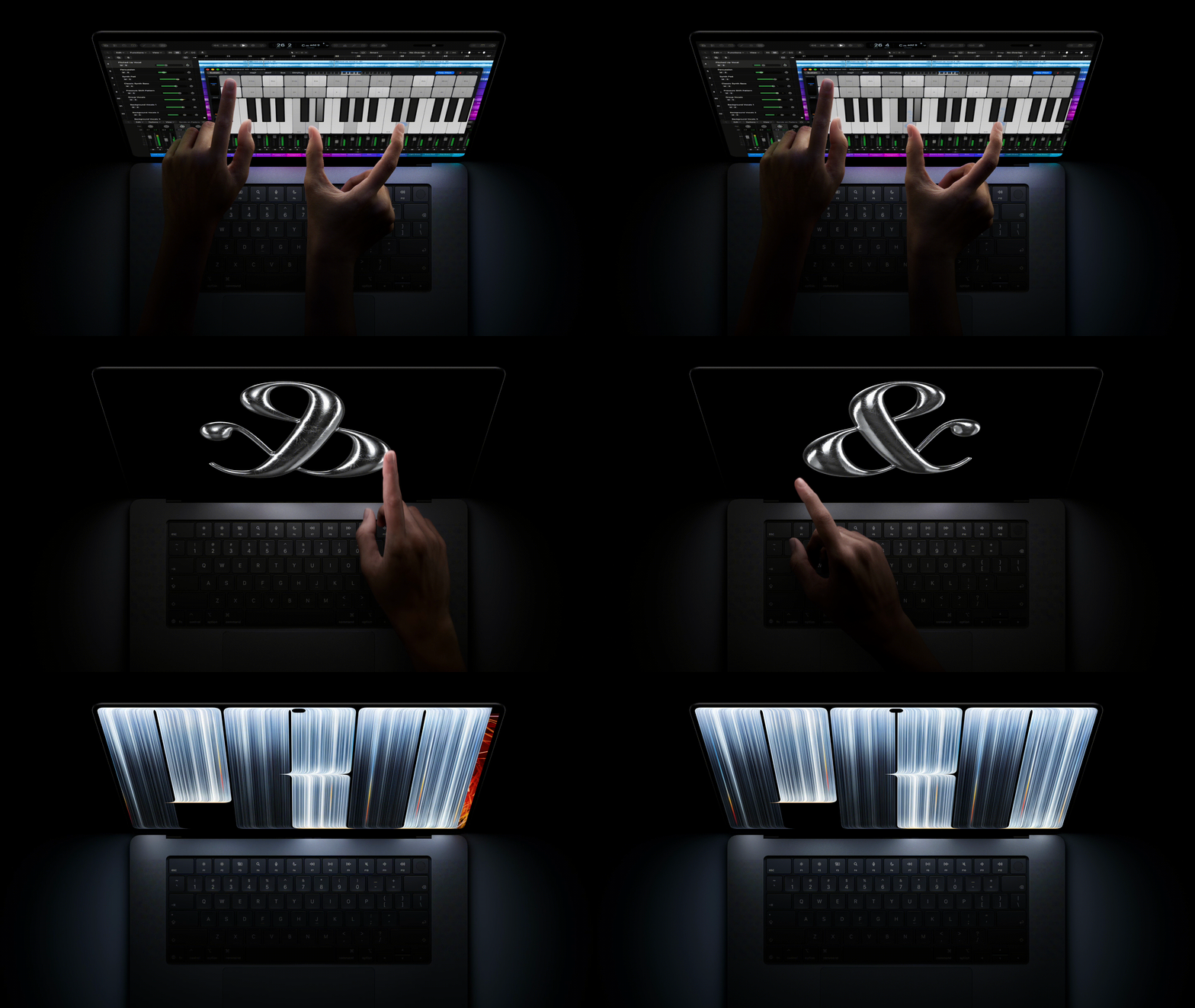
Apple has introduced touch controls without abandoning the traditional keyboard and trackpad. Users can scroll through webpages, pinch to zoom into photographs, rearrange windows, and drag files directly on the display.
According to Apple’s official announcement, touch sensors are integrated into the display panel to reduce input latency. A redesigned hinge also provides greater stability when users interact with the screen.
macOS 27 supports these interactions while retaining its desktop-oriented interface. Existing applications can interpret taps as clicks, and developers can introduce more advanced gestures through updated APIs.
However, many everyday touch gestures duplicate actions already available through the trackpad. In its hands-on assessment, Ars Technica found the touchscreen responsive but not particularly transformative. The publication reported that most demonstrated tasks could also be completed using conventional controls.
The laptop does not support Apple Pencil, and its display cannot fold into a tablet configuration. These limitations distinguish it from convertible Windows laptops and Apple’s iPad lineup.
PROLED XDR OLED Display Makes the Bigger Impression
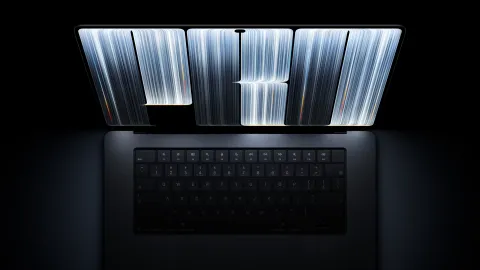
The new PROLED XDR display replaces the mini-LED technology used in earlier MacBook Pro models. Its tandem OLED construction delivers deeper blacks and greater contrast while supporting professional color workflows.
Apple specifies up to 2,000 nits of peak brightness, a 10,000,000:1 contrast ratio, and an adaptive refresh rate reaching 120Hz. The display also covers the P3 and Adobe RGB color spaces.
These specifications make the laptop especially appealing to photographers, video editors, and designers: precise color reproduction and strong contrast matter more in these workflows than basic touchscreen navigation.
Ars Technica’s early impressions highlighted the OLED panel’s brightness, contrast, and color quality. However, comprehensive testing is still needed to evaluate sustained brightness and color accuracy.
TechAmerica.ai previously covered the OLED MacBook Pro launch, including the display technology, M5 processors, and professional features.
Lighter Construction Without a Radical Redesign
Apple has reduced the weight of both models. The 14-inch version weighs approximately 3 pounds, while the 16-inch model weighs around 4 pounds.
Despite the slimmer construction, the laptops retain their familiar keyboard, trackpad, and port selection. Connectivity includes Thunderbolt 5, HDMI, an SDXC card slot, and MagSafe charging.
Dynamic Island replaces the traditional display notch. It provides access to Live Activities, Spotlight, and Siri AI without occupying as much visual space as the previous cutout.
Apple has also restored the illuminated logo on the laptop lid. The design detail adds a nostalgic element without affecting the device’s practical capabilities.
In Engadget’s early assessment, the reduced weight stood out as a meaningful improvement. The publication also found that the familiar keyboard and trackpad helped preserve the existing MacBook Pro experience.
Touchscreen MacBook Pro Pricing Raises the Stakes
The redesigned laptops use Apple’s M5 Pro and M5 Max processors. They support demanding creative applications, professional development tools, and local AI workloads.
Preorders opened October 28, with availability beginning November 6, 2026. US starting prices range from $2,899 for the 14-inch M5 Pro model to $4,799 for the 16-inch M5 Max configuration.
That premium matters because Apple also offers less expensive MacBook Pro models. The company’s 14-inch M6 MacBook Pro starts at $1,999, although it retains the earlier display technology.
Buyers focused on processing power should compare configurations carefully. The OLED touchscreen models offer additional display and design improvements, but those features may not justify the higher cost for every user.
Final Assessment
Apple’s first touchscreen MacBook Pro delivers a substantial hardware upgrade without reinventing laptop interaction. The OLED display, lighter construction, and Dynamic Island are meaningful improvements, while touch adds convenience to familiar workflows.
The absence of Apple Pencil support and a convertible design limits its versatility. Early demonstrations also suggest that conventional keyboard and trackpad controls will remain essential.
For creative professionals who prioritize display quality, the new MacBook Pro looks promising. However, the touchscreen alone is unlikely to justify an upgrade. Its everyday value will become clearer after comprehensive independent testing.