































Google Sends TPU Into Space as Project Suncatcher Tests Orbital AI Computing
Google launches its first TPU into orbit for Project Suncatcher as it studies whether lower Starship launch costs could make space-based AI data centres viable.
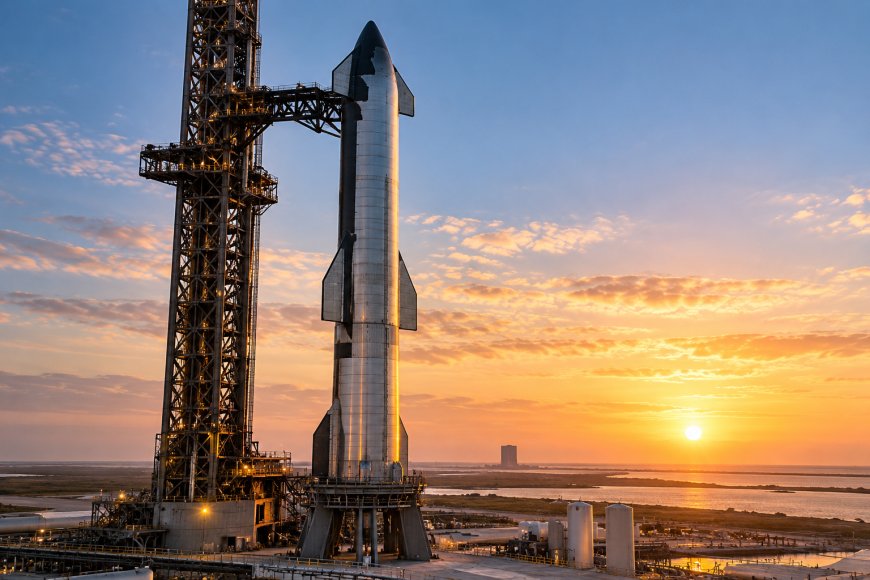
Google has sent one of its Tensor Processing Units into space for the first time as part of Project Suncatcher, an effort exploring whether large-scale AI computing could eventually move into orbit.
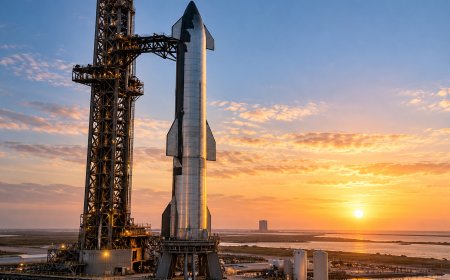
The prototype satellite, built by Planet Labs, launched aboard a SpaceX rocket from California. Its main job is to test whether Google’s TPU hardware can operate reliably in space while managing power, cooling, and radiation constraints.
Once commissioned, the satellite will run the TPU in roughly 15-minute bursts to avoid overstressing its power and thermal systems. Google and Planet are also developing a more advanced demonstration for next year involving two purpose-built compute satellites connected through laser communications.
Google envisions orbital AI clusters
Project Suncatcher is aimed at a much larger long-term goal. Google has outlined an orbital data centre architecture made up of 81 satellites flying in close formation and processing AI workloads in parallel.
The company says bandwidth and latency between TPUs will be critical for running large distributed workloads in orbit. In its research on scalable space-based AI infrastructure, Google also examined how launch costs would need to fall before such systems could become practical at scale.
The analysis suggests launch prices approaching $200 per kilogram by 2035 could be possible if SpaceX continues reducing costs. Reaching a similar cost curve would require Starship to deliver about 370,000 metric tons of payload to orbit, which Google estimates could mean roughly 1,800 launches over 10 years if each mission carried 200 metric tons.
Radiation tests offer encouraging results
Google also tested how its chips respond to space radiation. After repeating particle-accelerator tests with less shielding, the company observed higher error rates. Still, it concluded the hardware should support large inference workloads during a satellite’s expected five-year life.
The results were less reassuring for extremely large training runs involving thousands of chips operating continuously for months, where even small error rates could matter more.
Google has also prepared a peer-reviewed version of its orbital data centre research for publication in Joule, adding more detail to the technical and economic assumptions behind Project Suncatcher.
For now, the prototype mission is focused on a more basic question: whether Google’s AI chips can function dependably in orbit. The answer will help determine how far the company can push its longer-term vision of satellite-based AI computing.
What's Your Reaction?
 Like
0
Like
0
 Dislike
0
Dislike
0
 Love
0
Love
0
 Funny
0
Funny
0
 Angry
0
Angry
0
 Sad
0
Sad
0
 Wow
0
Wow
0