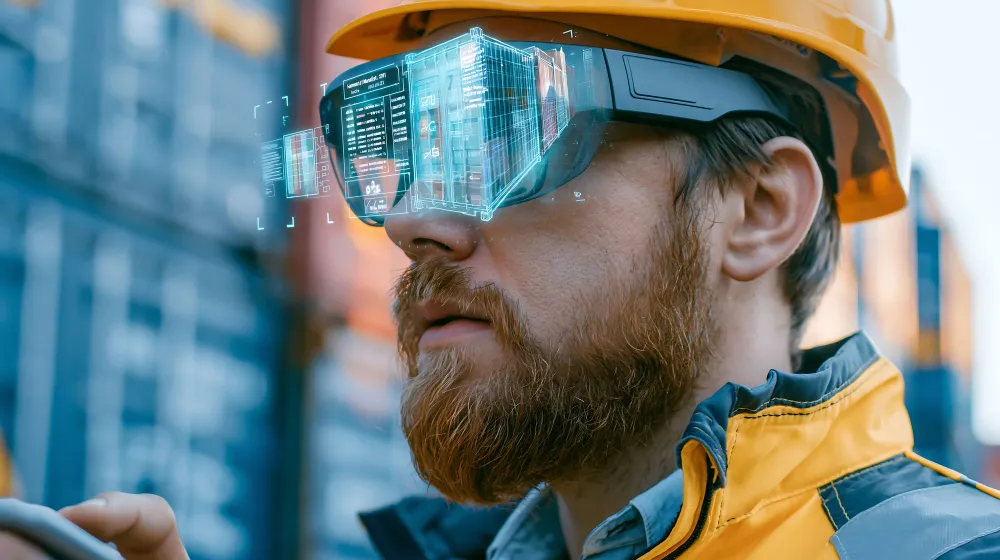
Imagine wearing smart glasses that recognize an appointment reminder, check your calendar, and offer to arrange transportation before you leave home. The device may understand what you need, but another question immediately follows: should it be allowed to book a ride without asking? That distinction between understanding a request and acting on it is becoming central to developing agentic AI wearables.
Hardware developers are exploring how artificial intelligence agents could operate through glasses, smartwatches, earbuds, and other personal devices. Unlike conventional voice assistants that primarily respond to individual commands, agentic systems may coordinate several steps toward a user-defined goal. Building that capability into a small wearable introduces challenges involving computing power, battery life, sensor accuracy, privacy, and authorization. The result must be useful without allowing software to act beyond the wearer’s intentions.
What Makes Agentic AI Wearables Different?
Traditional wearable devices generally focus on particular functions, such as displaying notifications, tracking activity, or accepting voice commands. Their software typically follows defined interactions and depends on a connected smartphone for more demanding tasks.
Agentic systems introduce a broader decision-making capability. An AI assistant may interpret a goal, identify the information needed to complete it, select available tools, and prepare or execute a sequence of actions.
For example, a user might ask a wearable assistant to help organize an upcoming business trip. The system could examine permitted calendar information, identify scheduling conflicts, retrieve transportation options, and prepare a proposed itinerary.
Completing these tasks would require more than recognizing speech. The assistant would need access to relevant applications, a way to maintain context, and safeguards governing what it can change.
Not every wearable marketed with AI capabilities is agentic. A device that summarizes notifications or answers questions may use advanced machine learning without independently coordinating actions across applications.
The distinction matters because additional autonomy creates responsibilities that ordinary information-display features do not carry.
A Wearable AI System Has More Than One Computer
Smart glasses and other compact wearables face physical limitations that do not apply to desktop computers or data centers. They have restricted space for processors, batteries, cooling components, and memory.
Many designs therefore distribute computing work across multiple locations. A wearable may collect information through microphones, cameras, or motion sensors, while a connected smartphone performs more demanding processing.
Cloud services can provide additional computing resources when the task requires larger models, access to online information, or interaction with external applications.
This arrangement creates several possible processing paths. A device might recognize a simple gesture locally, ask a nearby phone to interpret a spoken request, and use an online service to retrieve information.
Google’s Android on-device AI documentation describes how compact models can perform supported generative AI operations locally. It also identifies hardware limitations, model capabilities, and the potential role of hybrid processing.
Local inference can reduce dependence on network connectivity for supported features. However, running an AI model on a smartphone does not mean every task can run directly on a smaller wearable.
Developers must decide which operations belong on the device, which can use a companion phone, and which justify sending information to remote infrastructure.
Battery Life Can Determine Whether an AI Feature Is Useful
For a wearable, a technically impressive feature may have limited value if it significantly reduces the device’s operating time.
Continuous microphone processing, camera activity, wireless communication, and AI inference all consume electricity. The actual energy requirements depend on the sensors, processor, software, and frequency of use.
Devices worn close to the body also face thermal constraints. A processor operating under sustained demand can generate heat that must be managed within a compact enclosure.
One approach is to separate lightweight detection from more demanding analysis. A device might use a lower-power component to detect a relevant event and activate additional processing only when needed.
For example, a wearable could process a supported wake-word signal locally rather than continuously transmitting all surrounding audio to a cloud service.
Developers can also investigate model compression, specialized accelerators, and limits on background activity. Each technique involves trade-offs in recognition accuracy, processing time, or available functionality.
Evaluate energy efficiency through realistic daily use. A short demonstration may show that an AI feature works, but it does not establish that the device can provide satisfactory battery life throughout an ordinary workday.
Why Understanding the Wearer’s Surroundings Is Difficult
Wearable assistants may use multiple sensor inputs to understand context. Smart glasses can provide images, microphones can capture spoken requests, and motion sensors can help identify physical activity.
These signals can improve the information available to an AI system, but they also create opportunities for errors.
A camera may capture an object from an unusual angle. Background conversations can interfere with speech recognition. A movement that appears intentional during testing may occur accidentally during ordinary activity.
Combining sensors does not automatically resolve these problems. Developers must determine whether the information is sufficiently reliable for the intended task.
A system describing a product label may tolerate occasional recognition errors if users can easily correct them. A system providing navigation assistance around physical obstacles requires much stronger safety considerations.
Vision-language models are particularly relevant because they can interpret images alongside text instructions. TechAmerica.ai previously examined on-device vision-language models and the performance limitations of compact multimodal AI systems.
For wearable applications, unreliable visual interpretation should not automatically lead to consequential physical or digital actions.
Privacy Gets More Complicated When Devices Are Always Nearby
Wearables can collect information in situations where a conventional computer would normally be closed or put away. A device with a camera or microphone may encounter private conversations, personal documents, workplace information, and people who have not agreed to be recorded.
This creates privacy concerns beyond those of the person wearing the device. Bystanders may not know what information is being captured or whether it is transmitted elsewhere.
Designers should therefore consider visible recording indicators, clear controls for disabling sensors, and restrictions on how captured information is stored or shared.
Android’s privacy guidance recommends requesting access to sensitive information only when needed, explaining permission requests, and providing indications when applications capture audio or imagery.
These principles are relevant to wearable design, although the exact permissions and controls depend on the device’s operating system.
Local processing can reduce some privacy risks by avoiding unnecessary transmission of information to remote servers. It does not eliminate the need to protect stored data, manage access permissions, or explain how information is used.
Developers should also distinguish temporary information required to complete a task from information retained for future personalization. Users need understandable choices about what their devices remember.
Agentic AI Wearables Need Independent Permission Controls
The most consequential design decision may concern what an assistant can do after interpreting a request.
Consider a smartwatch assistant that notices an upcoming appointment and identifies a scheduling conflict. Informing the user about the conflict is different from canceling another meeting or sending messages to participants.
An AI model may generate a plausible plan without correctly understanding the user’s preferences. It may also misinterpret ambiguous instructions or information retrieved from external sources.
For that reason, applications and services should enforce authorization, rather than relying exclusively on the AI model’s judgment.
The Open Worldwide Application Security Project identifies excessive agency as a security risk when an AI system receives unnecessary capabilities, broad permissions, or insufficient restrictions on autonomous actions.
A wearable assistant that reads calendar entries does not automatically need authority to delete them. An assistant that compares purchases does not necessarily need unrestricted payment permissions.
High-impact actions, including financial transactions, sending sensitive communications, and changing security settings, should require appropriate user confirmation.
TechAmerica.ai has also examined AI agent authorization, explaining how independent access controls and narrowly scoped permissions can help prevent unauthorized actions.
The challenge for wearable designers is making these controls effective without requiring users to navigate complicated approval screens for every routine interaction.
How Developers Can Make Confirmation Feel Natural
Wearable devices often have limited display space. Some rely primarily on voice, gestures, or small touch-sensitive surfaces, making traditional approval dialogs impractical.
Developers need interaction methods that communicate what an assistant intends to do and let users approve, modify, or reject the action.
For a low-risk task, a spoken notification may be sufficient. A more consequential operation could require confirmation on a connected phone or another authenticated device.
For example, an assistant might prepare a message and read a summary aloud. The user could then review the full content before it is sent.
Clear feedback also matters after execution. The device should distinguish between preparing an action, requesting approval, completing it successfully, and encountering an error.
Without those distinctions, users may believe a task was completed when the assistant merely proposed it.
The interface should also make cancellation straightforward. A user must be able to interrupt an incorrect workflow without relying on the same AI model to recognize that it should stop.
Security Must Survive the Device’s Entire Lifetime
Wearables are connected computing products, which means their cybersecurity responsibilities continue after purchase.
A compromised device could potentially expose stored information, connected application credentials, or sensor-derived data. Risks may increase when a wearable accesses personal accounts and external services.
NIST’s April 2026 IoT manufacturer guidance recommends foundational cybersecurity activities that manufacturers should consider before selling connected products.
These include planning for device security, identifying customer requirements, and providing information that helps owners manage cybersecurity risks.
For AI wearables, relevant protections include secure software updates, authenticated connections, appropriate data protection, and procedures for responding to discovered vulnerabilities.
Manufacturers also need to consider what happens when a device is lost, sold, or no longer supported. Users should have reliable ways to revoke connected account access and remove personal information.
Security support is therefore part of the product’s long-term operating cost, not merely a feature to complete before launch.
What Hardware Developers Should Measure Before Launch
Developers cannot evaluate an AI wearable using model accuracy alone. The complete product must perform consistently under real operating conditions.
Useful evaluations include speech recognition in noisy environments, visual interpretation under different lighting conditions, network interruptions, and battery consumption during repeated AI interactions.
Tests should also examine whether the system recognizes uncertain information and avoids taking actions when essential details are missing.
Other important measurements include:
- Response latency: How quickly the device acknowledges requests and returns usable information.
- Battery performance: How AI processing affects operating time under realistic usage patterns.
- Task completion: Whether the assistant finishes authorized workflows accurately and reliably.
- Correction and cancellation: Whether users can stop or revise actions without unnecessary difficulty.
- Privacy behavior: Whether sensor permissions, data retention, and recording controls operate as described.
- Recovery from failure: How the system responds when connectivity, external services, or AI processing becomes unavailable.
Testing should involve people who are unfamiliar with the system, not only engineers who already understand its limitations.
A wearable that performs well in controlled demonstrations may struggle when users speak unclearly, move between environments, or provide incomplete instructions.
Commercial success will depend on whether the device handles these ordinary situations without creating excessive frustration or risk.
The Future of Wearable AI Depends on Trust
Agentic AI wearables could make digital assistance more immediate by allowing users to interact with software through devices they already wear. Smart glasses, watches, and earbuds may eventually coordinate tasks that currently require several applications and manual steps.
Yet greater autonomy does not automatically produce a better experience. A device that acts too readily can create privacy problems, unwanted purchases, incorrect communications, or other consequences that outweigh the convenience it offers.
The strongest designs will combine efficient hardware, dependable sensing, appropriate use of local and cloud computing, and authorization controls that remain effective when AI makes mistakes.
For hardware developers, the objective is not simply to build an assistant that can perform more actions. It is to create a product whose actions are understandable, controllable, and useful in everyday situations. The future of agentic AI wearables will depend as much on earning that trust as on advances in processors and machine learning.