Reliable Robotics has raised another $115 million, pushing its valuation above $1 billion. The Reliable Robotics Series D now totals $275 million. The California startup is developing autonomous flight technology for existing aircraft.
The latest financing includes $90 million in equity led by Nimble Partners. Silicon Valley Bank supplied another $25 million in debt. Other backers include Gideon Strategic Partners, RockCreek, Geek Ventures, Gold Hill Capital and Sparkwave Capital. Reliable has raised $380 million to date.
Based in Mountain View, the company has spent nearly a decade developing aircraft automation. Its approach differs from startups developing purpose-built aircraft, including Airbound’s autonomous delivery drones. Reliable instead focuses on technology that can be installed on existing airplanes.
Co-founder and CEO Robert Rose previously led flight software at SpaceX and worked at Tesla and Google. Co-founder and chief technology officer Juerg Frefel also spent nearly a decade at SpaceX.
Reliable Robotics Series D backs four FAA approvals.
The company is seeking four separate approvals from the Federal Aviation Administration. Its first system, called continuous autopilot engagement, would automate engine startup, taxiing, takeoff and landing. A pilot would remain in the cockpit and manage the system through a touchscreen.
Rose expects approval for that system within 18 to 24 months, although the FAA controls the certification process. A second approval would allow a pilot to operate the aircraft from a ground-control station. Rose says that step remains at least three years away.
Reliable is also seeking certification for its collision-avoidance radar. The company developed the equipment itself after established suppliers declined the project. Unlike radar with moving antennas, its solid-state design has no moving scanning parts.
Rose says the radar provides longer-range detection and higher-resolution scanning. He also expects lower costs and easier maintenance. The system is designed to identify hazards both in flight and on the ground, including nearby aircraft and infrastructure.
Rose expects radar certification by the end of 2027. Like the other targets, the timing depends on regulatory approval.
Cargo airline faces a separate approval process
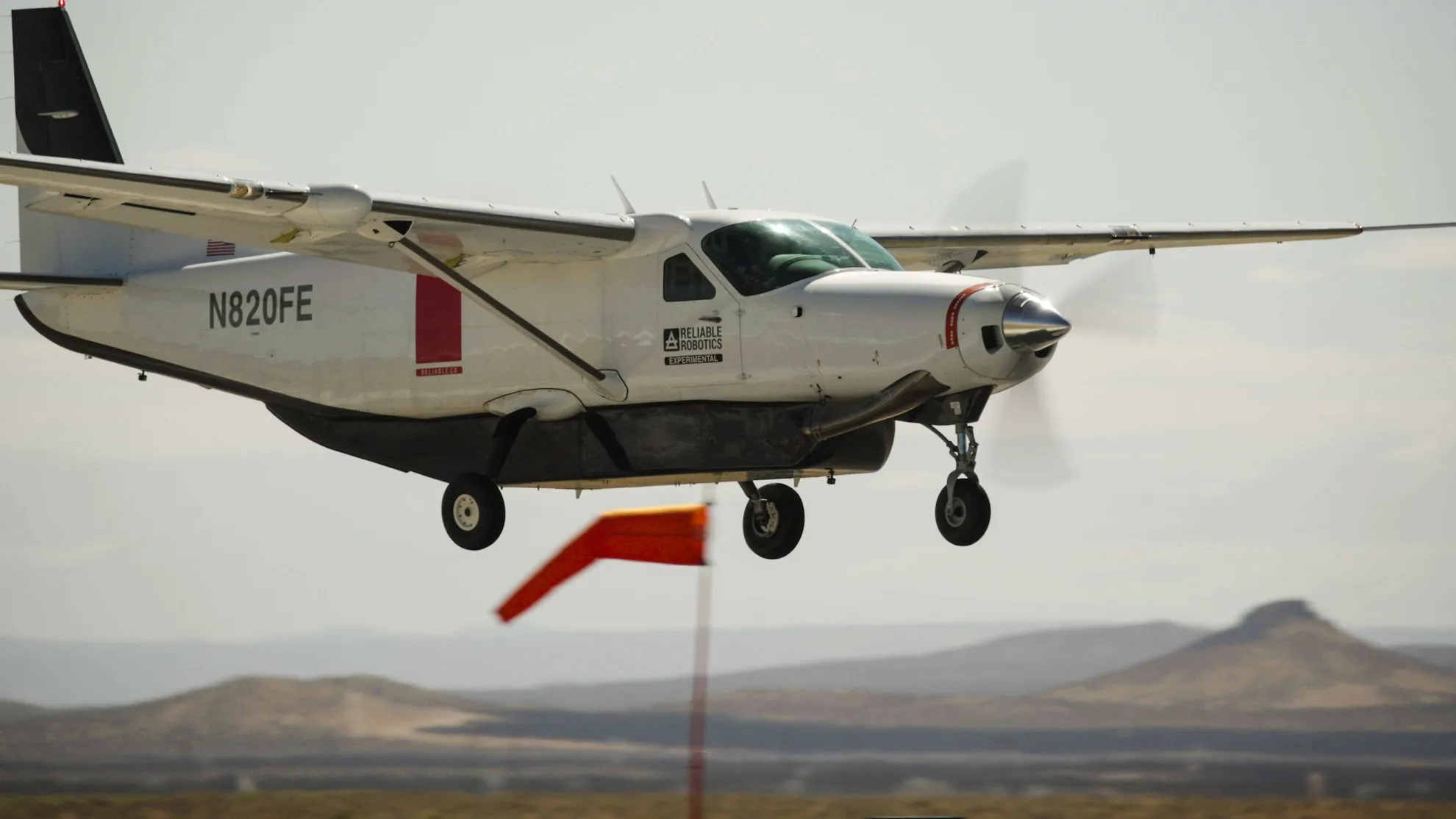
The fourth approval involves Reliable Airlines, the company’s cargo carrier based in Albuquerque, New Mexico. It operates six Cessna Caravans on cargo flights six days a week. Reliable wants the airline to become its first commercial operator using the autonomous system.
Aircraft technology and airline operations require separate FAA approvals. That means certifying the automated equipment alone would not authorize Reliable Airlines to use it commercially.
Other autonomous aviation operators have faced similar regulatory requirements. DoorDash Air received FAA Part 135 certification for commercial drone delivery operations. Its aircraft and operating model differ from Reliable’s cargo airplanes.
Nimble Partners founder John Burbank sees potential beyond Reliable’s own fleet. Burbank believes the technology could be adopted across different aircraft types rather than limited to a single purpose-built model.
Reliable’s first certification target still requires a pilot on board. Removing that pilot will demand additional approvals before commercial use.