Apple’s 2026 product and AI updates brought the company’s first foldable iPhone, a redesigned Siri assistant, and a new generation of Mac processors. Apple also entered the smart-home display market and completed its first chief executive transition in 15 years.
The developments included iPhone Duo, iPhone 18 Pro, iOS 27, M6-powered Macs and Apple HomeView. Apple expanded artificial intelligence across its devices while reporting record annual revenue.
John Ternus became CEO on September 1, succeeding Tim Cook, who moved to executive chairman. In November, Apple reported $479 billion in fiscal 2026 revenue, reflecting continued demand for its hardware and services.
January: Apple Introduces Creator Studio and a New AirTag
Apple began 2026 by expanding its creative software portfolio.
On January 13, the company introduced Apple Creator Studio, a collection of applications for video editing, music creation and graphic design.
The offering brought professional creative applications together through a subscription model. It also introduced additional tools for people working across Mac and iPad.
Apple announced an updated AirTag on January 26. The new tracker featured improvements intended to make lost items easier to locate through supported Apple devices.
On January 29, Apple reported fiscal first-quarter revenue of $143.8 billion, up 16% year over year.
According to Apple’s official earnings announcement, the iPhone business achieved its strongest quarterly performance to date.
The quarter ended December 27, 2025. Its results should not be mistaken for sales generated entirely during calendar 2026.
February: Apple Announces U.S. Manufacturing Expansion
On February 24, Apple announced plans to expand domestic manufacturing activities, including production associated with Mac mini.
The company also continued developing manufacturing partnerships for components used in its devices.
On February 26, Apple announced that selected iPhone and iPad models received approval to handle classified NATO information under specified conditions.
Such approval applies to defined security configurations and requirements. It does not mean every personal iPhone or iPad can automatically access classified information.
March: Apple Launches New iPhones, iPads and Macs
Apple introduced several hardware products in early March, expanding its smartphone, tablet and computer lineups.
On March 2, the company announced iPhone 17e and a new iPad Air powered by the M4 chip.
The following day, Apple introduced MacBook Pro models with M5 Pro and M5 Max processors. It also announced an updated MacBook Air with M5 and new Studio Display options.
On March 4, the company unveiled MacBook Neo, a new entry in its laptop lineup.
The products became available in supported markets beginning March 11.
Apple’s official availability announcement described the devices and their retail rollout.
On March 16, Apple introduced AirPods Max 2, expanding its premium headphone lineup.
April: Apple Announces a Major CEO Transition
On April 20, Apple announced that John Ternus would succeed Tim Cook as chief executive officer.
In its official leadership statement, Apple said Ternus would assume the position on September 1.
Cook would become executive chairman of the board, while Arthur Levinson would become an independent director.
Ternus joined Apple’s product design organization in 2001 and later became senior vice president of Hardware Engineering.
The announcement marked the first CEO succession since Cook took over from Steve Jobs in 2011.
The April announcement was a future leadership decision. Ternus did not become CEO until the scheduled September effective date.
April: Apple Reports $111.2 Billion in Quarterly Revenue
On April 30, Apple reported $111.2 billion in revenue for its fiscal second quarter.
The quarter ended March 28, 2026, and included strong iPhone demand and growth across major geographic markets.
Apple reported diluted earnings of $2.01 per share, up 22% from a year earlier.
Its official financial report also described the performance of its services business.
These results reflected the company’s established product and subscription operations before its September hardware announcements.
June: Apple Unveils Siri AI and iOS 27 at WWDC26
Apple introduced a new generation of artificial intelligence technology at its Worldwide Developers Conference on June 8.
The announcements included Siri AI, changes to Apple Intelligence and new software versions across its major device categories.
According to Apple’s WWDC26 announcement, Siri AI was designed to support more natural conversations and greater awareness of personal context.
The company also introduced changes to iOS 27, iPadOS 27, macOS 27, watchOS 27, visionOS 27 and tvOS 27.
Apple Intelligence expanded how supported devices could use AI to work with everyday information and applications.
Compatibility depended on the device’s processor, memory and supported software configuration.
The June announcements outlined the upcoming software generation. They did not mean every feature became available to all users during the conference.
July: Apple Reports Strong Earnings and Discusses AI Services
Apple published fiscal third-quarter results on July 30, reporting its strongest June-quarter performance to date.
The company said iPhone, Mac and Services revenue grew at double-digit rates compared with the previous year.
During the earnings period, Apple also discussed potential subscription options for more intensive Siri AI usage.
Those options were under consideration, not a confirmed universal subscription requirement.
TechAmerica.ai previously examined the issue in its report on possible Siri AI and iCloud+ pricing changes.
The distinction matters because an executive discussing a possible pricing model does not establish that the model has already launched.
September: John Ternus Becomes Apple CEO
John Ternus formally became Apple’s chief executive officer on September 1.
Tim Cook moved into the executive chairman position under the succession plan announced in April.
Ternus took over as Apple prepared a major iPhone launch and a new generation of AI-enabled operating systems.
His hardware engineering background placed a longtime product executive in charge during a period of substantial changes to Apple’s devices.
September: Apple Introduces iPhone 18 Pro and iPhone Duo
Apple unveiled iPhone 18 Pro, iPhone 18 Pro Max and iPhone Duo on September 9.
The Pro models introduced the A20 Pro processor, along with new camera and thermal-management capabilities.
According to Apple’s product announcement, the phones also supported expanded Apple Intelligence and Siri AI features.
iPhone Duo represented a separate development: Apple’s first foldable iPhone.
Its folding design required a flexible display, specialized hinge assembly and internal packaging adapted to the new form factor.
TechAmerica.ai explains those engineering challenges in its analysis of iPhone Duo foldable technology, including the display, hinge, batteries and silicon.
Apple also introduced Apple Watch Series 12, Apple Watch Ultra 4 and AirPods 5 during the September launch period.
September: iOS 27 and Siri AI Begin Rolling Out
Apple began releasing iOS 27 and other major software updates on September 14.
The updates brought Siri AI, expanded Apple Intelligence capabilities, and improved device functionality.
In its software announcement, Apple outlined compatibility requirements for supported iPhone, iPad, Mac and other devices.
Some capabilities were available immediately, while others remained subject to regional rollout, hardware requirements or beta status.
On September 18, iPhone 18 Pro, iPhone 18 Pro Max, Apple Watch Series 12, Apple Watch Ultra 4 and AirPods 5 reached stores.
October: iPhone Duo Reaches Customers
Apple opened preorders for iPhone Duo during October, ahead of its retail launch.
The company confirmed that the foldable smartphone arrived at Apple Store locations worldwide on October 23.
The launch representedApple’ss entry into a new smartphone hardware category.
Foldable phones require different approaches to display durability, hinge reliability and thermal design than conventional rigid smartphones.
For Apple, the product also created new software requirements because applications must adapt when a screen changes between folded and unfolded configurations.
October: Apple Introduces HomeView for Smart Homes
Apple unveiled HomeView on October 13, introducing a new category of hardware designed for household information, entertainment and smart-home controls.
The device combines a display, communication tools, and Siri integration for shared household use.
According to Apple’s official announcement, HomeView supports voice interactions and connections with other Apple products.
The system was designed to let users continue supported conversations and activities across devices.
Its capabilities depend on compatible services, connected home equipment and regional availability.
October: M6 Macs and PROLED XDR Display Arrive
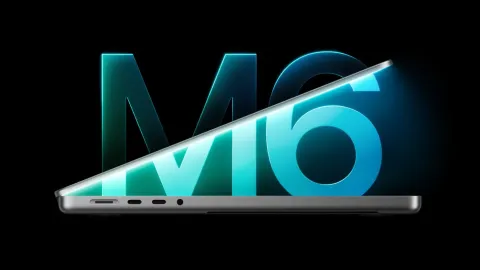
Apple introduced a 14-inch MacBook Pro powered by M6 on October 27.
The chip included expanded neural processing capabilities designed to support AI workloads running directly on the computer.
Apple also introduced an M6-powered iMac.
In its official MacBook Pro announcement, Apple described improvements involving processing performance, graphics and battery life.
TechAmerica.ai previously covered the M6 MacBook Pro launch, including its processor, connectivity and reported battery performance.
On October 28, Apple announced a separate MacBook Pro configuration with a PROLED XDR display.
The new display used advanced panel technology to improve contrast, brightness and color reproduction.
Apple introduced the PROLED XDR models with M5 Pro and M5 Max processors. They should not be confused with the M6 configuration announced the preceding day.
November: Apple Reports $479 Billion in Fiscal-Year Revenue
Apple released its fiscal fourth-quarter results on November 2.
The company reported quarterly revenue of $114.5 billion, up 12% from a year earlier.
For fiscal 2026, Apple reported approximately $479 billion in annual revenue.
According to its official financial announcement, iPhone revenue reached a September-quarter record, while Services revenue reached an all-time high.
Apple reported a quarterly gross margin of 47.9%. The figure benefited from tariff refunds.
The fiscal year ended September 26, 2026. Its annual figures therefore do not cover all sales from January through November 21.
CEO John Ternus described the new iPhone and Mac lineup as important to the company’s next operating period.
November: HomeView Goes on Sale, and Health AI Research Expands
Apple announced that HomeView became available for purchase on November 13 in selected markets.
The availability notice confirmed that customers could order through supported Apple retail channels.
Availability differed by country and product configuration.
On November 15, Apple also announced a research study examining the use of artificial intelligence in health-related applications.
AI-based health systems may help people interpret information or identify patterns. Such research must also consider accuracy, privacy and the limitations of automated recommendations.
The study announcement did not establish that any experimental capability had become a regulated diagnostic or treatment service. Apple’s 2026 Product and AI Updates Reshape Its Hardware Strategy
Apple’s 2026 product and AI updates marked substantial changes across its devices and software.
iPhone Duo introduced foldable hardware, while iPhone 18 Pro advanced processing and camera technology. Siri AI expanded the role of artificial intelligence across supported Apple devices.
The new M6 Macs emphasized local AI processing, while HomeView extended Apple’s hardware strategy into shared household computing.
Apple also completed a major leadership transition and reported record fiscal-year revenue.
By November 21, the company had introduced several new product categories and technologies. Their long-term performance will depend on software reliability, consumer adoption, hardware durability and the availability of supported AI features.