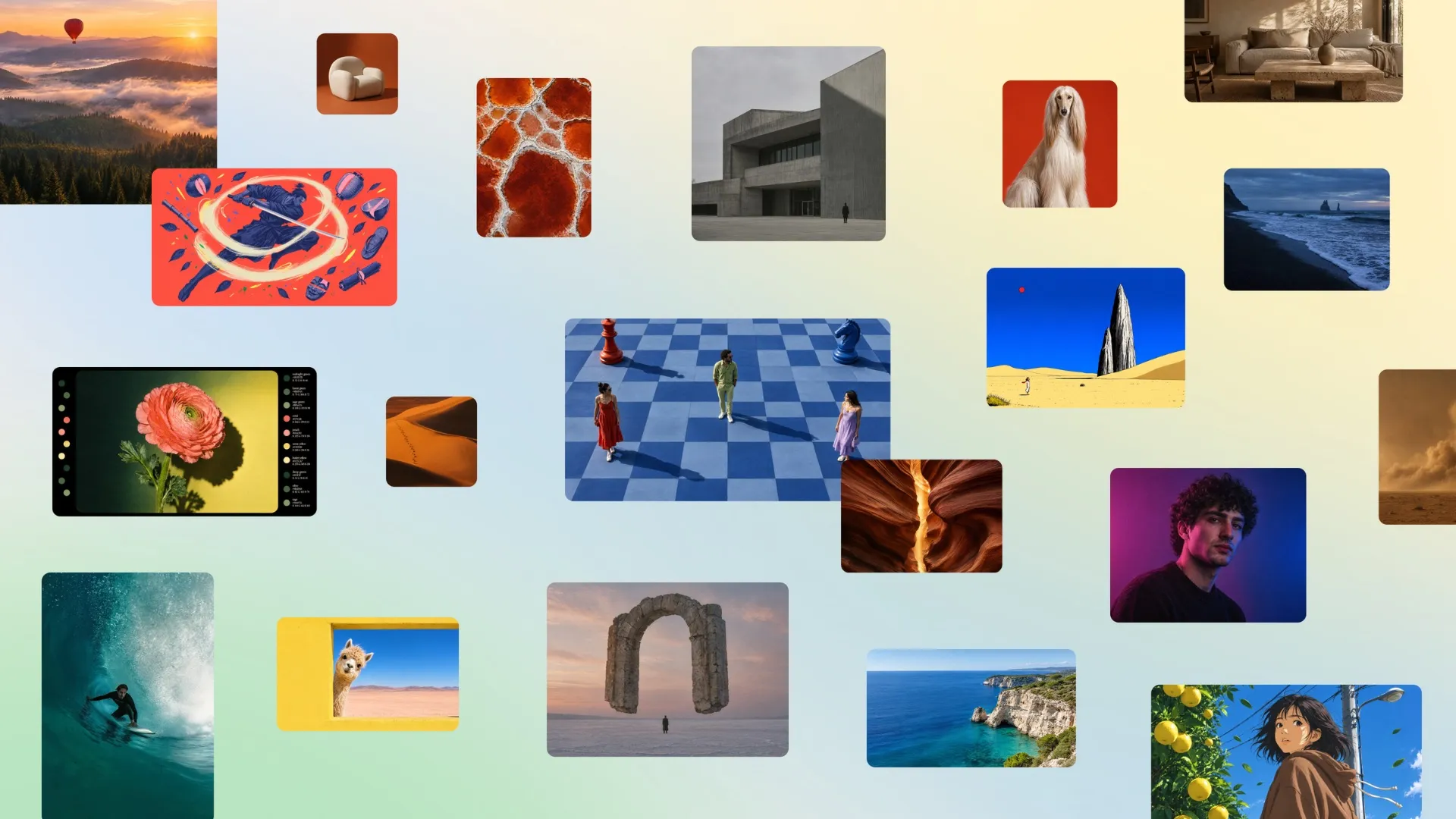
Canva has launched Canva Craft, its first in-house AI system for generating visuals. Developed by Canva Research, the model produces images up to 2K resolution across more than 30 aspect ratios.
The new system aims to improve text accuracy, object placement and editing flexibility. Canva says its architecture gives users greater control over generated designs than conventional image-generation methods.
How the Canva Craft Image Model Works
Craft uses a two-stage generation process. First, it interprets prompts and plans the composition, including object positions, relative sizes, visual hierarchy and typography.
A second model then renders the image based on that plan. Canva says this approach improves text readability and allows users to modify specific elements without changing the entire composition.
Unlike models trained primarily on photographs, Craft emphasizes human-created design templates. Its training data includes posters, presentations, social media graphics, infographics, menus and typography-focused layouts from Canva’s library.
Canva’s Magic Layers technology can also convert generated images into editable layers. This lets users adjust text, objects, and other design elements independently.
Availability and Future AI Development
Craft is available globally through Canva’s Dream Lab, and developers can access it through its public API. The company also plans to integrate with third-party assistants, including ChatGPT and Gemini, through support for Canva’s Model Context Protocol.
Researchers from Leonardo.ai, which Canva acquired in 2024, helped develop the model. Canva is also preparing two faster, more cost-efficient versions called Craft-fast and Craft-ultrafast.
Developing its own technology could reduce Canva’s reliance on external image-generation providers. The company also expects greater control over processing costs, model quality and performance.
Canva Faces Pressure to Control AI Costs
The launch follows financial pressure associated with rising AI expenses. Canva previously cut its 2026 revenue growth forecast from 30% to 20% as it adjusted its AI spending strategy.
CEO Melanie Perkins said the company had relied too heavily on expensive external models. Canva delayed certain product releases to improve its infrastructure and reduce processing costs.
Meanwhile, external investors lowered Canva’s valuation from approximately $42 billion to $34.9 billion in August. The reassessment reflected concerns about growth, competition and the economics of AI-powered design tools.
Craft represents Canva’s effort to develop more of its AI technology internally while competing with image-generation products from OpenAI, Google and other developers.