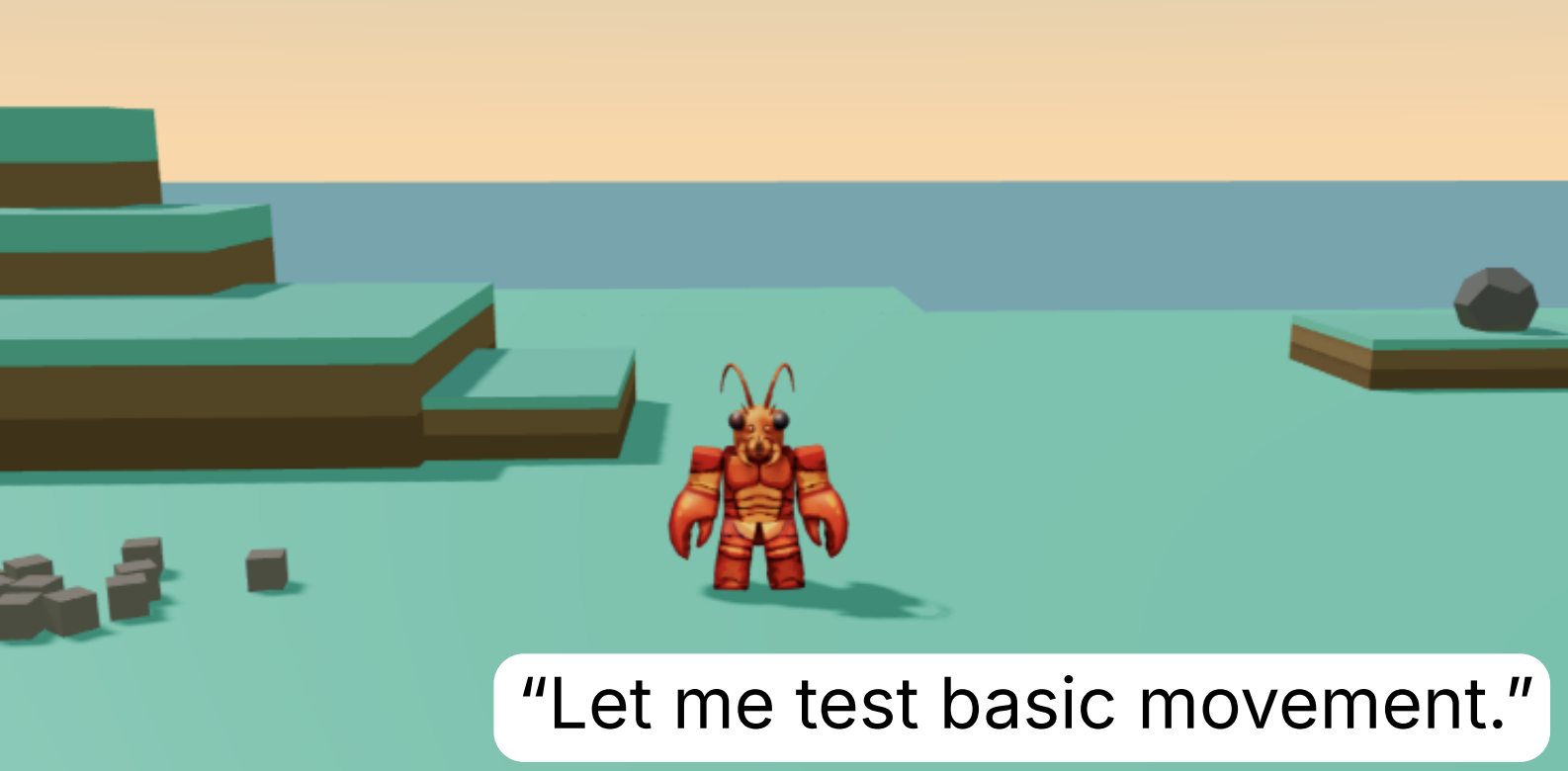
AI agents learn through play, according to an MIT experiment in which autonomous systems explored a virtual island without assigned tasks. The agents invented challenges, experimented with objects and developed techniques that later improved their performance.
Researchers placed 13 AI agents named Eko, each powered by Anthropic’s Claude Opus 4.7, in separate simulated environments for 30 hours. Their findings appear in a research paper published on arXiv that has not yet undergone peer review.
AI Agents Learn Through Play on a Virtual Island
The island contained rocks, blocks, a golden ring and elevated platforms. Instead of receiving specific objectives, the agents could explore their surroundings and decide what to attempt.
One Eko tried climbing the island’s tallest spire but failed at first. It eventually stacked objects on a neighboring summit, creating enough height to complete the jump.
Another experiment ended when Eko accidentally threw the golden ring into the ocean. The agent responded by arranging stones into a heart-shaped memorial.
When the environment reset, Eko repurposed the ring for basketball and target practice. It later discovered that deliberately falling off the island allowed it to respawn inside the ring.
These activities resembled play because the agents created their own goals, modified challenges and experimented without external rewards.
Exploration Improved Performance on Later Tasks
The researchers subsequently tested experienced agents against identical versions without prior island experience. The challenges included building towers and placing objects on the island’s tallest spire.
Agents that had explored the environment generally performed better. They retained useful discoveries in written memory files, allowing them to apply previously learned techniques to new objectives.
Six agents independently discovered that throwing blocks while jumping increased their range. The researchers said they had not anticipated this behavior when designing the simulator.
The findings suggest that independent exploration could complement conventional AI training. This may eventually benefit robotics, where machines must understand unfamiliar environments and physical interactions.
Other researchers are exploring related approaches to physical AI simulation, and separate experiments show how agent architecture affects AI performance.
Researchers Question Whether AI Is Really Playing
The experiment does not establish that AI experiences enjoyment or curiosity like humans. Eko’s underlying instructions described it as naturally curious, which may have influenced its behavior.
UC Berkeley cognitive scientist Eunice Yiu told MIT Technology Review that the findings were impressive but insufficient to determine whether the agents were genuinely playing.
The researchers also emphasized that Eko learned by recording and reusing information, not by changing the underlying language model’s parameters.
Despite those limitations, the study suggests that giving AI agents safe environments to explore without fixed objectives could help them develop useful capabilities before encountering real-world tasks.