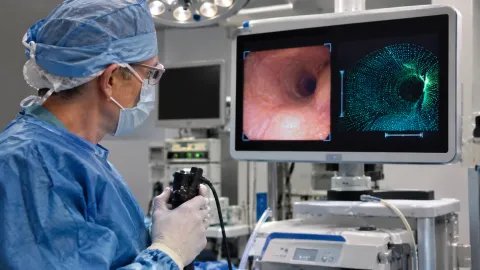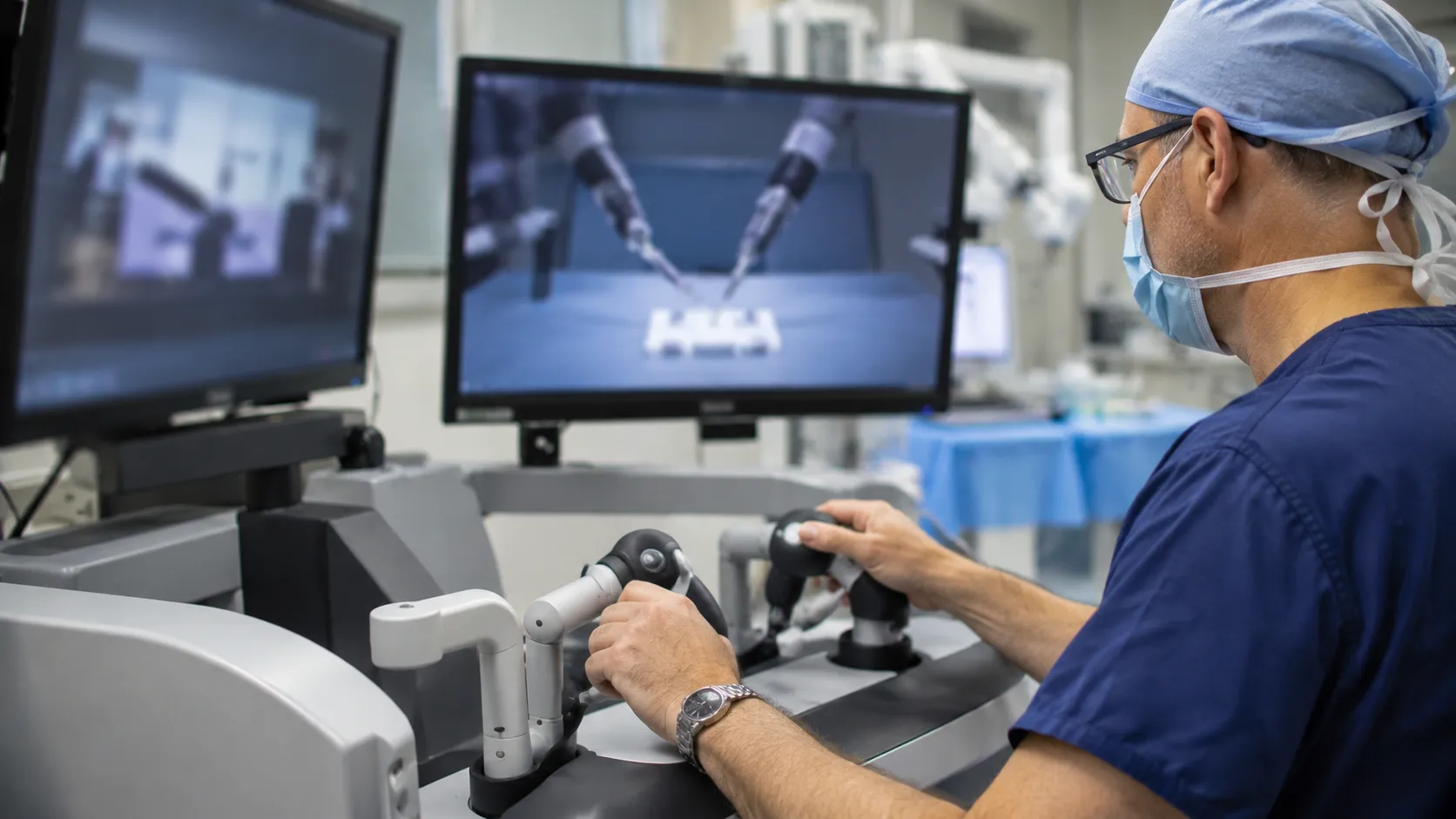
The FDA is asking clinicians, patients, and manufacturers how to assess the benefits and risks of telesurgery and autonomous medical robots. Its Nov. 6 discussion paper opens a public consultation, with comments due Jan. 5, 2027.
The agency is also organising a December workshop to examine the technology and its use in healthcare settings. The paper does not introduce new requirements, propose policy changes or authorise any device for commercial use.
Telesurgery and autonomy pose different questions.
Remote teleoperation allows a clinician to control a robot without being in the room with the patient. Autonomy describes a system that makes decisions and carries out tasks without the user intervening at each step.
A remotely operated robot can therefore remain under direct human control. Conversely, a device with autonomous functions may work beside a clinician who supervises it and can take over.
The FDA’s discussion paper extends beyond surgery to diagnostic, therapeutic and rehabilitation applications. Examples include remotely controlled ultrasound equipment and potential systems that could collect blood or respond to internal bleeding.
For autonomous devices, the agency identifies possible gains in accuracy, consistency and workflow efficiency. It also highlights incorrect actions, reduced human vigilance, and difficulty adapting to unexpected conditions as risks that require examination.
The agency is requesting feedback on:
-
Terminology describing autonomous and remotely operated systems.
-
Potential benefits and risks.
-
Evidence needed to assess performance.
-
Methods for reducing patient harm.
A Florida study illustrates the safeguards involved
Telesurgery is already being investigated in the United States under research authorisation. AdventHealth reported that urologist Dr Vipul Patel performed a robotic prostatectomy between two Florida hospitals on Oct. 25.
Patel operated from AdventHealth Celebration while the patient and a bedside surgical team were at AdventHealth Minneola, about 35 miles away. Another physician was present with the patient and available to intervene.
The procedure took place under an FDA-approved investigational device exemption. That permission covered the research and did not establish commercial clearance or prove the system’s safety and effectiveness.
Researchers are evaluating clinical outcomes alongside network performance, cybersecurity, alarms and contingency procedures. AdventHealth said trained staff, backup systems and plans for local intervention were in place.
Those practical requirements also feature in TechAmerica’s coverage of telerobotic surgery. Connecting a distant specialist is only one part of the process; hospitals must also prepare for interruptions and emergency care.
Network failures and human handoffs need scrutiny.
For telesurgery and other remote procedures, the FDA asks how quickly a local team could switch to manual care when necessary. It also raises questions about available expertise and whether an emergency would require moving the patient to another facility.
Combining autonomy with remote control can introduce additional problems. A delayed connection could hinder intervention after an autonomous error, while unreliable transfers of control could create unexpected failures.
The discussion paper says no remotely teleoperated or fully autonomous robotic device systems had U.S. marketing authorisation as of July 2026. That dated statement should not be confused with a claim that all existing medical robots lack autonomous features.
The consultation is separate from the agency’s work on surgical robot guidance. Manufacturers should distinguish this request for early feedback from recommendations being developed for premarket submissions.
December workshop precedes the comment deadline.
The FDA’s public workshop will run Dec. 2–3, with sessions from 10 a.m. to 4 p.m. Eastern each day. Participants can attend online or at the agency’s White Oak campus in Silver Spring, Maryland.
Registration is free, with in-person places available until Nov. 23 or until capacity is reached. Virtual registration will remain open afterwards, and the agency plans to publish an archived webcast.
The preliminary agenda for telesurgery and autonomous robotics includes patient perspectives, hospital readiness, insurance coverage, cybersecurity and risk mitigation. Its scope reflects the operational questions surrounding these devices as well as their technical performance.
The FDA is seeking input from the robotics community and the public, MedTech Dive reported. Comments should be submitted through Regulations.gov under docket FDA-2026-N-13135 by Jan. 5, 2027.