Electric Plant AI model Bombadil interprets electrical signals inside living plants, giving growers information about water, nutrients, and environmental stress. The startup has raised $11.2 million in seed funding to bring its sensors and AI technology to market.
Onto Ventures and Climactic led the round. Other investors included Ponderosa, Endeavor Catalyst, Ludlow, Michigan Rise, The Fund, Schox VC and Dug Song.
Founded by CEO Justin Mast and neuroscientist Lee von Kraus, Electric Plant has spent three years collecting biological data. Its technology aims to give farmers a more direct way to understand plant health.
Mast’s interest began with an experimental plant-robot hybrid called Elowan. The research project demonstrated how a houseplant’s electrical responses to light could control a motorized platform. A video of the experimental plant shows the system moving toward a light source.
How the Electric Plant AI Model Decodes Plant Signals
Plants generate small electrical signals in response to changing environmental conditions. Electric Plant developed Bombadil to analyze these signals and identify patterns associated with physiological stress.
The company says its model can interpret signals across approximately 125 plant species, including tomatoes, ferns, redwoods and dahlias. The technology draws on plant electrophysiology research, which examines electrical activity in living plant tissues.
Unlike conventional agricultural monitoring systems, Bombadil measures changes within the plant itself. Soil sensors, satellite imagery and handheld instruments provide useful information but may not capture immediate physiological responses.
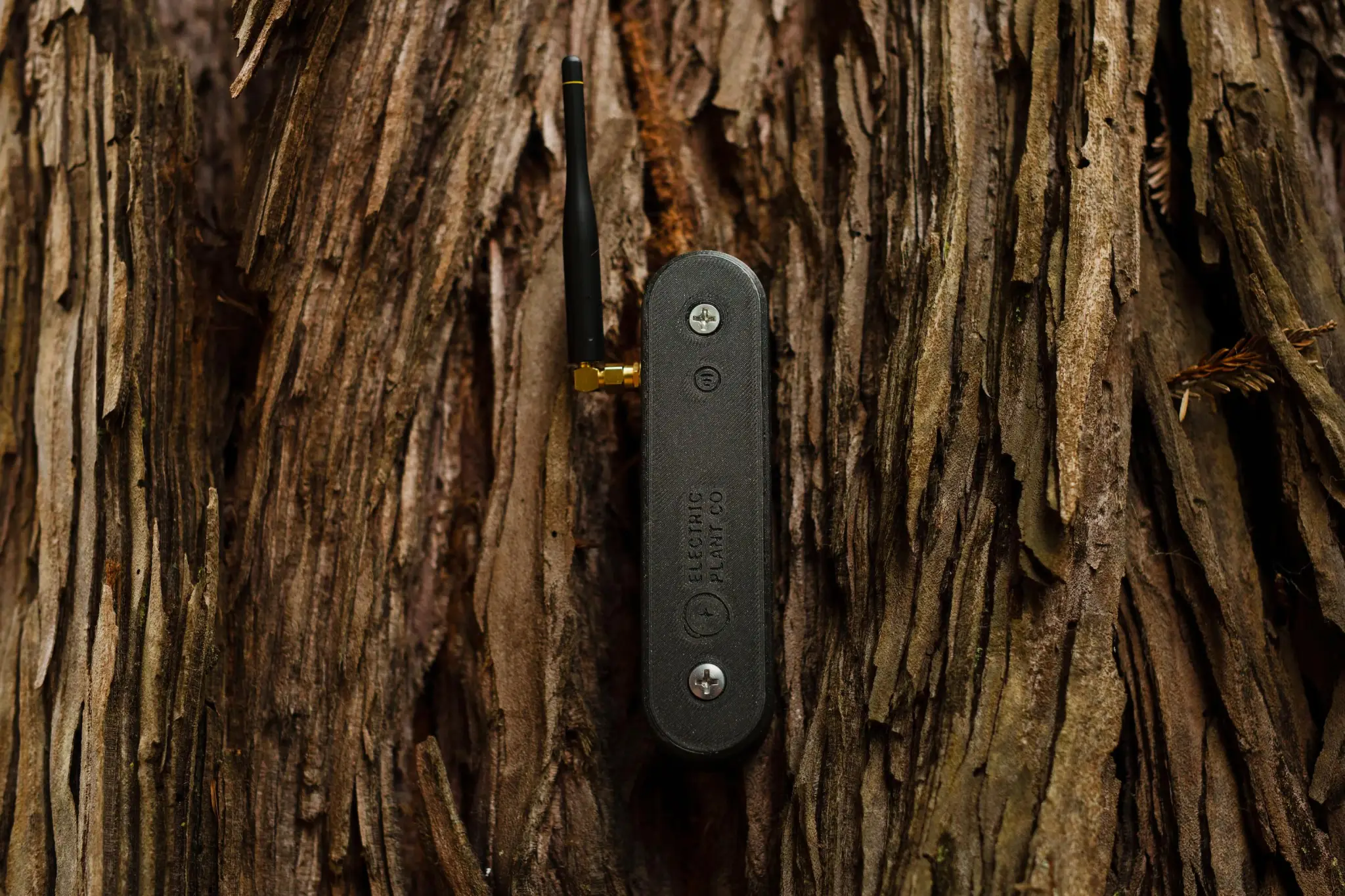
Electric Plant uses compact sensors attached to plant stems or trunks. Stainless steel screws penetrate living tissue beneath the bark, allowing the devices to detect tiny electrical changes.
The sensors transmit readings through a low-power wireless network to a base station. Bombadil then processes the information in the cloud and delivers insights to growers.
Farmers could use those readings to adjust irrigation, fertilizer application and other growing conditions before visible symptoms appear.
Affordable Sensors Could Help Farmers Reduce Water Use
Electric Plant says its sensors cost tens of dollars, far less than some agricultural monitoring instruments that cost thousands. Mast also claims that approximately two sensors per acre can provide useful measurements.
The company estimates its technology could reduce water consumption by at least 20% while improving crop yields. However, those performance claims have not been independently established across different agricultural settings.
The Electric Plant platform targets agricultural growers, forestry operators, and other businesses that manage living plants. Potential applications include monitoring orchard conditions, identifying plant stress,s and improving irrigation decisions.
Although the founders hope future technology could enable two-way interactions with plants, Bombadil currently focuses on interpreting electrical signals. It does not translate a literal plant language or allow plants to communicate in human speech.
Electric Plant has not publicly identified its initial customers. The new funding will support the commercial development of Bombadil and its sensor technology as the company expands its work across plant species and growing environments.