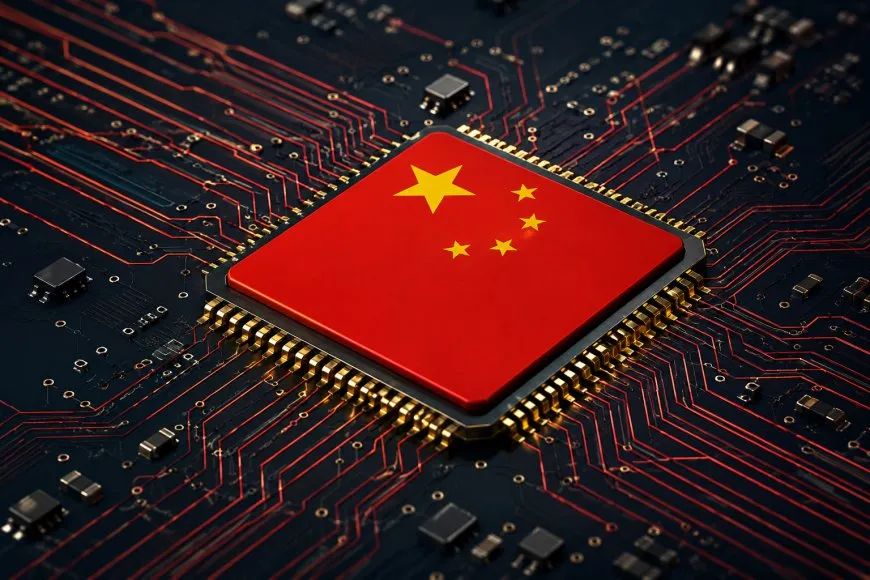
The United States is considering new measures against Chinese artificial intelligence developers, with Treasury Secretary Scott Bessent warning that sanctions could be imposed if investigations find evidence that Chinese open source AI models have benefited from intellectual property theft. The comments reflect Washington’s growing focus on protecting American AI companies as competition from Chinese developers accelerates.
Speaking on Fox Business, Bessent said the administration supports the development of open source AI models but drew a clear distinction between open innovation and the alleged misuse of proprietary technology. He said the government would examine Chinese models for signs that they had improperly copied technology from leading US AI companies and stressed that sanctions remain an available option if such activity is confirmed.
The remarks come as Chinese AI developers continue to narrow the performance gap with their American counterparts. Models such as Moonshot AI’s recently introduced Kimi K3 have attracted attention for their capabilities, increasing competitive pressure on companies including OpenAI and Anthropic. The rapid improvement of Chinese models has also raised concerns about the long-term business models of US frontier AI firms and their ability to secure the investment needed to continue developing increasingly advanced systems.
Washington weighs tougher restrictions.
Bessent’s comments follow reports that the Trump administration is evaluating broader restrictions on Chinese open source AI models. Earlier this week, Axios reported that officials were considering a sweeping ban, although the claim has since been disputed by other sources familiar with the discussions. Regardless of the final policy outcome, Washington’s latest statements suggest the administration is exploring additional tools to slow China's progress in artificial intelligence beyond existing export controls.
The US government has already imposed restrictions on advanced semiconductor exports to China and tightened controls on AI-related technologies. Targeting AI models themselves would represent another significant step in the technological rivalry between the world's two largest economies. Officials have repeatedly stated that maintaining America's leadership in artificial intelligence remains a strategic priority.
Debate continues over model distillation.
One of the central issues in the dispute is model distillation. This widely used AI development technique enables developers to transfer some capabilities from a larger model into a smaller, more efficient version. Some American AI companies argue that unauthorised distillation of proprietary models amounts to intellectual property theft, particularly when the resulting systems closely replicate the performance of commercial products.
Not everyone in the industry shares that interpretation. Earlier this month, Microsoft Chief Executive Satya Nadella questioned whether companies should place strict limitations on distillation after benefiting from broad access to publicly available data during AI training. He argued that it was inconsistent for developers to rely on fair use principles when building their own models while later imposing restrictive rules on techniques used by others.
Legal questions surrounding AI training continue to evolve as courts examine how developers obtain and use copyrighted material. This week, Anthropic received approval to begin compensating authors under a $1.5 billion settlement after a judge ruled that the company had illegally downloaded and stored millions of copyrighted books for AI training purposes. The case illustrates the growing legal scrutiny facing AI developers regardless of their country of origin.
Research strength is also driving China’s progress.
Some industry leaders argue thatChina’ss recent advances cannot simply be explained by model distillation or intellectual property concerns. Hugging Face Chief Executive Clem Delangue said distillation represents only a small part of successful AI development and noted that companies worldwide, including many in the United States, routinely use similar techniques. According to Delangue, China’s progress is primarily the result of highly skilled research teams and a more collaborative approach to open source AI development.
As the competition between American and Chinese AI developers intensifies, policymakers, technology companies and researchers continue to debate where legitimate innovation ends and intellectual property violations begin. Any future sanctions targeting Chinese AI models would likely deepen geopolitical tensions while reshaping the rapidly evolving global artificial intelligence landscape.