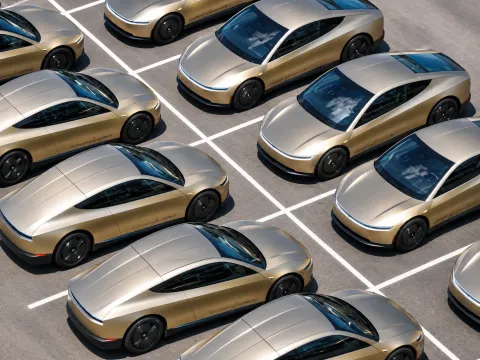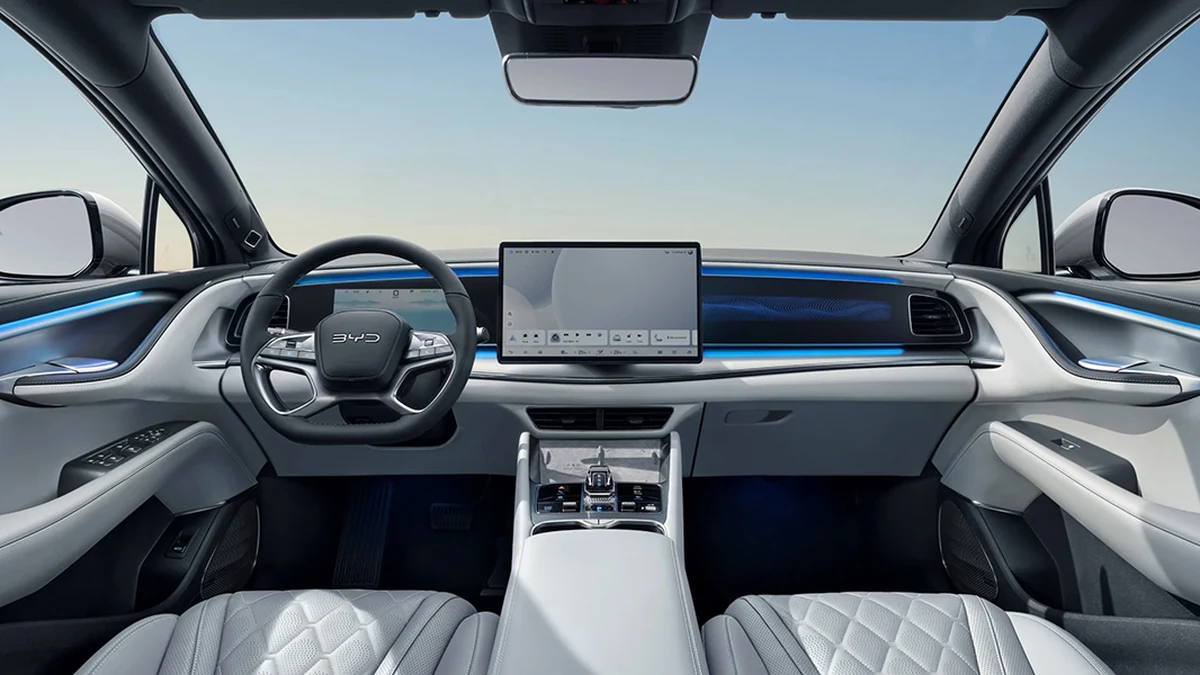
BYD introduced a new generation of electric vehicle batteries, expanded ultra-fast charging technology and launched additional models across Europe during the first 11 months of 2026. The Chinese automaker also reported rising quarterly revenue and stronger battery-electric vehicle sales, although its total vehicle sales through October remained below the previous year’s level.
The company’s most significant technical announcement came in March with Blade Battery 2.0 and FLASH Charging, a system designed to reduce charging times under supported conditions substantially. BYD subsequently brought the technology to European vehicles and demonstrated an integrated solar, battery storage and automated charging system in November.
BYD’s October sales disclosure showed it sold 3.62 million new energy vehicles in the first 10 months of 2026. Its third-quarter financial report recorded approximately 221.49 billion yuan in revenue and 10.02 billion yuan in net profit attributable to shareholders.
January: BYD Extends Blade Battery Warranty in Europe
BYD began 2026 by extending its Blade Battery warranty for eligible European vehicles to eight years or 250,000 kilometers.
The January 15 announcement addressed the high-voltage batteries used across the company’s electric and plug-in hybrid vehicle ranges.
According to BYD’s official announcement, the coverage reflected its expectations for long-term battery durability.
Blade Battery technology uses lithium iron phosphate, commonly known as LFP, chemistry. The design avoids nickel and cobalt in the cathode and uses long, narrow battery cells to support efficient packaging.
Warranty coverage remains subject to the manufacturer’s terms, applicable markets and qualifying vehicle conditions. A longer warranty does not mean that batteries are immune to capacity degradation.
March: BYD Introduces Blade Battery 2.0 and FLASH Charging
On March 5, BYD announced its second-generation Blade Battery and FLASH Charging technology in Shenzhen, China.
The system was developed to address charging speed and low-temperature performance, two technical challenges affecting electric vehicle usability.
According to BYD’s technical announcement, compatible vehicles can charge from 10% to 70% in approximately five minutes and from 10% to 97% in nine minutes under specified conditions.
BYD also reported a 20% to 97% charge in approximately 12 minutes at minus 30 degrees Celsius under its demonstration conditions.
The technology uses charging equipment capable of delivering up to 1,500 kilowatts through a single connector in its Chinese-market configuration.
Such power levels require specialized charging infrastructure and compatible battery hardware. They should not be confused with the performance available from ordinary public DC chargers.
BYD said it had installed 4,239 FLASH Charging stations in China as of March 5 and was targeting 20,000 by the end of 2026. That target was a future deployment plan, not a confirmed year-end total.
April: DENZA Expands Beyond China
BYD introduced DENZA as an international premium vehicle brand at an event in Paris on April 8.
The initial overseas models included the electric Z9GT shooting brake and the D9 DM-i multi-purpose vehicle.
According to the company’s announcement, DENZA planned to expand across more than 30 European countries by the end of 2026, supported by a developing retail network.
The Z9GT incorporated Blade Battery 2.0 and FLASH Charging, bringing BYD’s newly announced charging technology into its international premium vehicle lineup.
The brand’s European rollout was initially centered on major markets, including Germany, France, Italy, Spain and the United Kingdom.
Planned market coverage and retail locations should not be interpreted as evidence that every dealership and model was available immediately in April.
May: BYD Announces Additional Intelligent Parking Coverage
On May 29, BYD announced an expanded damage coverage policy involving its intelligent parking and urban navigation-assisted driving systems.
The policy was presented as a response to concerns about responsibility when automated vehicle functions are operating.
Driver-assistance systems can help with steering, parking and navigation tasks, but their capabilities depend on the hardware, software, operating environment and applicable rules.
Insurance coverage and manufacturer-backed protection do not establish that a vehicle can operate fully autonomously under every road condition.
June: DM 5.0 Super Hybrid Reaches Europe
BYD introduced the latest version of its DM 5.0 Super Hybrid technology to European customers through the DOLPHIN G DM-i.
The vehicle was presented in June as a compact plug-in hybrid designed specifically for European markets.
In its June 16 announcement, BYD described improvements in powertrain efficiency, thermal management and electrical integration.
The company listed a combined range of up to 1,040 kilometers and weighted fuel consumption of 1.4 liters per 100 kilometers under the stated test conditions.
Plug-in hybrid efficiency varies considerably depending on battery charge, driving distance, ambient temperature and how frequently the vehicle is connected to external electricity.
The introduction reinforced BYD’s strategy of offering both fully electric vehicles and plug-in hybrids rather than relying exclusively on one powertrain category.
July: DENZA BAO 5 and New Vehicles Appear at Goodwood
BYD used the 2026 Goodwood Festival of Speed to present additional vehicles from its BYD, DENZA and YANGWANG brands.
The July announcements included the European debut of the DENZA BAO 5, a plug-in hybrid SUV designed for more demanding driving conditions.
According to BYD’s official release, the BAO 5 uses an off-road-oriented dual-mode hybrid powertrain and an electronically controlled suspension system.
The company cited approximately 90 kilometers of electric driving range and up to 835 kilometers of combined range under its stated measurement conditions.
BYD also presented sports cars, additional hybrid models and vehicles intended for future European distribution.
The event highlighted the group’s expanding model range, although show appearances did not establish that every vehicle had entered retail production or delivery.
September: BYD Joins the United Nations Global Compact
BYD formally joined the United Nations Global Compact on September 14.
The initiative encourages participating organizations to align their operations with principles involving human rights, labor, environmental protection and anti-corruption.
According to BYD’s announcement, the membership formed part of its broader sustainability and international governance activities.
Participation represents a commitment to the initiative’s framework. It is not, by itself, independent certification that every operation or product meets a particular environmental or labor standard.
October: ATTO 8 Brings FLASH Charging to a Seven-Seat SUV
BYD introduced the ATTO 8 at the Paris Motor Show on October 12, expanding its European SUV lineup.
The seven-seat SUV features a second-generation Blade Battery and supports FLASH Charging.
In its official announcement, BYD described a 115-kilowatt-hour battery and a maximum combined WLTP range of up to 653 kilometers for a specified configuration.
The company also identified different powertrain options, including rear-wheel-drive and all-wheel-drive versions.
The ATTO 8 was announced for introduction in the European market in the first quarter of 2027. Its October 2026 presentation was therefore a product announcement, not a completed customer rollout.
October: BYD Reports Higher Quarterly Revenue and Profit
BYD published its third-quarter financial results on October 29.
The company’s official quarterly filing reported revenue of approximately 221.49 billion yuan, up 13.59% from the same period in 2025.
Net profit attributable to listed-company shareholders reached approximately 10.02 billion yuan, up 28.08% year over year.
For the first nine months of 2026, revenue totaled approximately 566.30 billion yuan, essentially unchanged from the comparable period a year earlier.
Net profit attributable to shareholders over those nine months was approximately 22.34 billion yuan, down 4.24%.
The figures show that BYD’s third-quarter performance improved even though its year-to-date results were more mixed.
Quarterly growth should not imply that all vehicle categories or geographic markets performed equally well.
November: October Vehicle Sales Reach 490,168 Units
On November 1, BYD published its October production and sales figures.
According to its Hong Kong Stock Exchange announcement, the company sold 490,168 new energy vehicles in November, compared with 441,706 in October 2025.
Battery-electric passenger vehicle sales totaled 305,743 units in October, up from 222,559 a year earlier.
Plug-in hybrid passenger vehicle sales totaled 177,382, down from 214,297 in October 2025.
From January through October, BYD sold 3,621,744 new energy vehicles, down 2.16% year over year.
Battery-electric passenger vehicle sales rose 5.86% during the period, while plug-in hybrid passenger vehicle sales fell 11.02%.
The company separately reported 170,194 new energy vehicle exports for October.
The figures illustrate the different trends within BYD’s electric and hybrid businesses. They also show why total new energy vehicle sales should not be presented as entirely battery-electric sales.
November: BYD Demonstrates Solar-Powered Automated Charging
BYD announced an integrated charging system in Abu Dhabi on November 8, combining solar electricity generation, battery storage, FLASH Charging and robotic charging functions.
According to the official announcement, the demonstration linked renewable energy infrastructure with automated vehicle movement and high-power charging equipment.
The system is designed to let a compatible vehicle move to a designated charging location and complete supported charging operations with less manual intervention.
Combining solar generation and battery storage can help manage the high instantaneous power demands associated with ultra-fast vehicle charging.
However, the environmental and economic performance of such an installation depends on electricity sources, storage losses, equipment utilization and local grid conditions.
BYD also announced a target of 6,000 FLASH Charging stations worldwide by the end of 2027.
The Abu Dhabi installation was a technology demonstration and should not be described as proof that automated charging had become widely available across the company’s international network.
Vehicle Safety and European Regulation Remain Important
BYD’s international expansion also brought greater exposure to regional vehicle standards and legal requirements.
European rules address vehicle certification, battery safety, environmental performance, cybersecurity and consumer protection.
In February, TechAmerica.ai examined China’s new mechanical door-handle requirements in its report on hidden electronic car door handles. BYD was among the automakers involved in the regulatory standards process.
The planned Chinese requirements matter for vehicle design because electronically operated doors must still provide safe access and emergency release when electrical systems fail.
Separately, a November European design-rights dispute involving a BYD SUV raised questions about the legal risks associated with bringing new vehicle models into additional markets. A preliminary court order and an automaker’s appeal should be distinguished from a final resolution of the underlying dispute.
BYD’s 2026 Strategy Connects Batteries, Vehicles and Infrastructure
Between January and November 21, BYD’s developments showed an effort to connect battery engineering, charging infrastructure and a growing international vehicle portfolio.
Blade Battery 2.0 and FLASH Charging were major technical announcements, while the expansion of DENZA and additional hybrid models widened the company’s European offering.
Third-quarter financial results showed improved revenue and profit, but cumulative vehicle sales remained slightly below the previous year’s level through October.
The Abu Dhabi demonstration extended BYD’s charging strategy beyond conventional plug-in equipment toward systems combining renewable electricity, storage and vehicle automation.
By November 21, BYD had expanded its product and charging technology while navigating differences in electric vehicle demand, regional regulation and the practical infrastructure needed to support high-power charging.