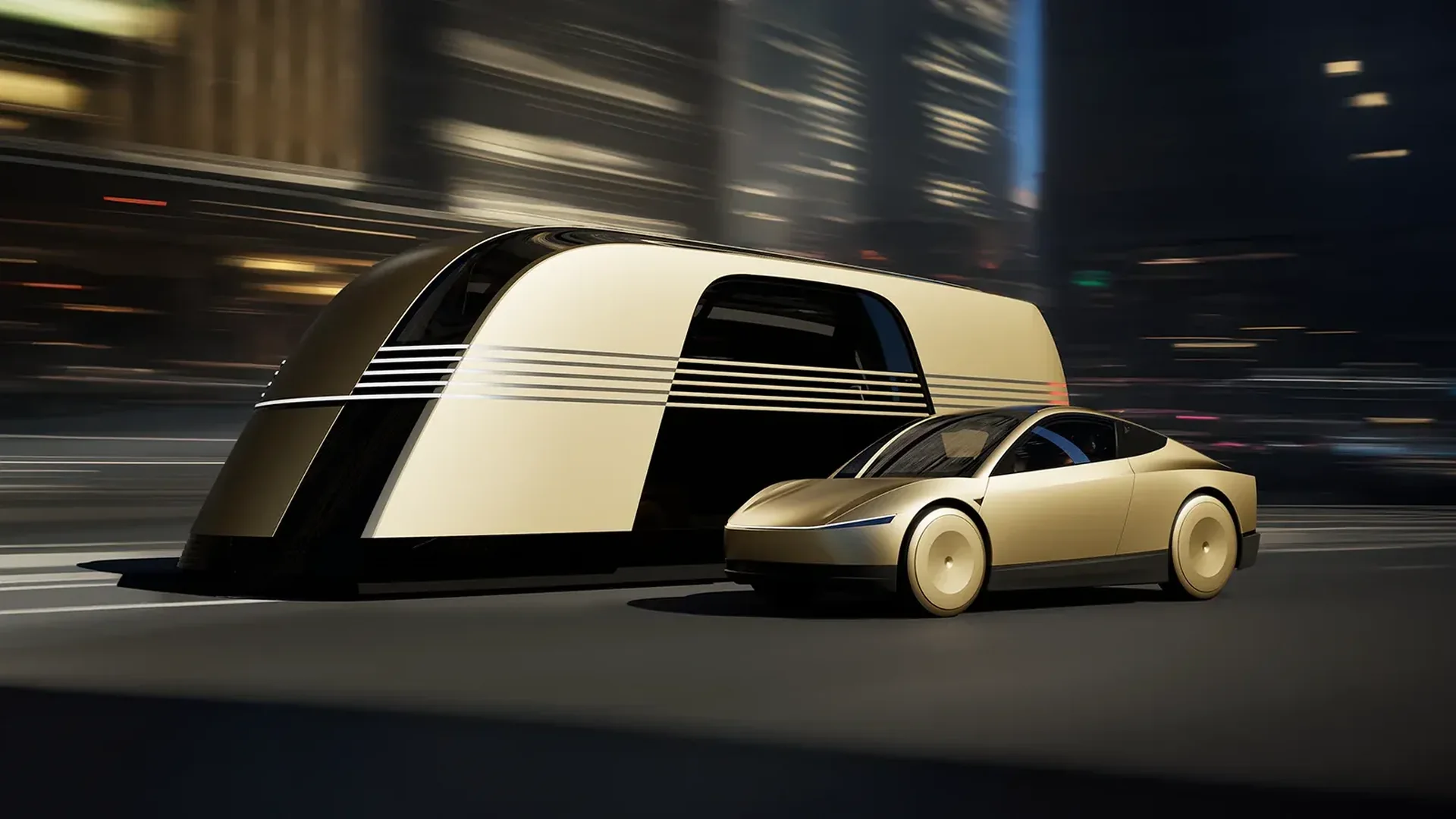
Tesla expanded its autonomous ride-hailing operations, introduced driverless Cybercab vehicles into commercial service and increased investment in humanoid robotics during the first 11 months of 2026. The company also advanced electric truck production and battery storage manufacturing, even as higher development costs and federal safety investigations complicated its plans.
The developments marked a shift in Tesla’s business priorities. Electric vehicles remained its largest source of revenue, but the company directed more resources toward artificial intelligence, automated transportation, battery systems and the Optimus humanoid robot.
By November 21, Tesla had reported three quarters of financial results, expanded Robotaxi service in several U.S. markets and begun production-related activities for Cybercab, Tesla Semi and Optimus. However, manufacturing progress and the availability of commercial services remained subject to regulatory, technical and operational limitations.
January: Tesla Reports Record Energy Storage Deployment
Tesla opened 2026 by publishing its fourth-quarter 2025 vehicle production and delivery figures on January 2.
The company reported more than 418,000 vehicle deliveries during the final quarter of 2025 and 14.2 gigawatt-hours of energy storage deployments, a quarterly record at the time.
According to Tesla’s official announcement, the figures covered operations completed before the start of 2026. They formed part of the company’s reporting and planning for the new year.
The energy results reflected demand for large battery systems and residential storage equipment. Vehicle deliveries, by contrast, remained sensitive to pricing, production schedules and regional demand.
January: Tesla Outlines Cybercab, Semi and Optimus Plans
Tesla released its fourth-quarter and full-year 2025 financial update on January 28, setting out manufacturing priorities for 2026.
The company identified Cybercab, Tesla Semi, and Megapack 3 as products it expected to advance into volume production during the year.
It also described plans to install production lines for Optimus, a humanoid robot intended to perform physical tasks using computer vision, motion planning and automated control systems.
The plans were forward-looking manufacturing targets, not completed production milestones. Tesla subsequently revised the timing and scale of some programs as the year progressed.
April: First-Quarter Deliveries Reach 358,023 Vehicles
On April 2, Tesla reported producing 408,386 vehicles and delivering 358,023 during the first quarter of 2026.
Model 3 and Model Y accounted for 341,893 deliveries, while other models contributed 16,130.
Energy storage deployments totaled 8.8 gigawatt-hours.
In its official production report, Tesla cautioned that deliveries and battery deployments alone do not determine financial performance.
Revenue also depends on vehicle prices, product mix, production costs and additional business activities.
Tesla published its full first-quarter financial results on April 22.
May: Federal Regulators Examine Driver-Assistance Technology
Automated driving technology remained central to Tesla’s products and its regulatory exposure during 2026.
In May, the National Highway Traffic Safety Administration announced new testing benchmarks for advanced driver-assistance systems.
The agency reported that a later-production 2026 Tesla Model Y had passed the benchmark, which evaluated defined aspects of driver-assistance performance.
According to NHTSA’s announcement, the tests addressed selected driving-assistance capabilities.
Passing a specific benchmark does not establish that a vehicle can operate without human supervision in every environment.
Tesla’s Full Self-Driving (Supervised) system remained a driver-assistance product requiring an attentive human driver, distinct from Tesla’s more narrowly deployed commercial driverless services.
July: Tesla Reports Stronger Vehicle Deliveries
Tesla reported second-quarter production and delivery figures on July 2.
The company produced 451,758 vehicles and delivered 480,126, a substantial increase over the preceding quarter.
Model 3 and Model Y accounted for 467,762 deliveries.
Energy storage deployments rose to 13.5 gigawatt-hours.
The official quarterly report showed improved production and deliveries following a weaker first quarter.
These figures reflected vehicles delivered during the quarter rather than confirmed retail sales in every national market.
July: Tesla Revises Its Manufacturing Outlook
Tesla published its second-quarter financial results on July 22, providing additional details about spending on artificial intelligence, manufacturing and robotics.
The company reported about $28.2 billion in revenue for the quarter while operating profitability came under pressure as development expenses rose.
Its updated outlook emphasized building and preparing manufacturing capacity rather than promising immediate high-volume production across every new product.
Cybercab, Tesla Semi and Megapack 3 remained important production programs, while Optimus required additional work to establish efficient manufacturing processes.
TechAmerica.ai separately reported on Tesla’s revised manufacturing targets and the implications for AI, robotics and electric vehicle investment.
The difference between beginning production and achieving volume manufacturing matters because new factories may require substantial testing, equipment adjustments and improvements before reaching planned output.
September: Cybercab Begins Carrying Passengers in Austin
Tesla introduced Cybercab vehicles into commercial Robotaxi service in Austin, Texas, on September 3.
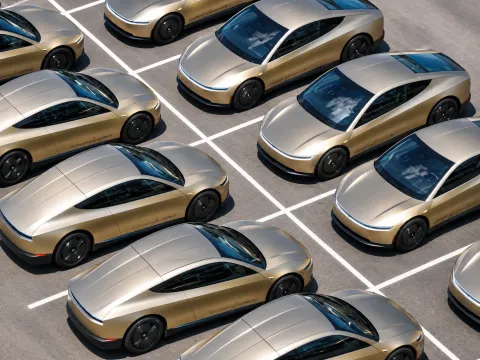
Cybercab is a purpose-built two-seat autonomous vehicle without conventional steering-wheel or pedal controls.
Unlike Tesla’s ordinary customer-owned vehicles using FSD (Supervised), Cybercab is designed around driverless operation within supported service areas.
Tesla’s official Cybercab documentation explains passenger procedures and operational features.
The deployment was an important milestone, but it did not establish that Cybercab could immediately operate on every public road or in every U.S. state.
September: NHTSA Opens Cybercab Safety Certification Investigation
On September 4, the National Highway Traffic Safety Administration announced an investigation into Tesla’s Cybercab certification under federal vehicle safety standards.
The official NHTSA announcement identified questions about whether the vehicle complies with applicable Federal Motor Vehicle Safety Standards.
Federal vehicle regulations include requirements covering occupant protection, vehicle equipment and safety performance. Autonomous vehicles without traditional controls can raise questions about how those requirements apply.
Automakers generally certify that their vehicles comply with applicable federal standards, subject to government review and enforcement.
The investigation did not determine that Cybercab violated federal law. Its outcome could nevertheless affect production, commercial deployment or future customer deliveries.
TechAmerica.ai later examined Tesla’s Cybercab delivery plans and the federal investigation.
October: Third-Quarter Deliveries Reach 486,532 Vehicles
Tesla reported third-quarter production and delivery results on October 2.
The company produced 464,391 vehicles and delivered 486,532, including 478,237 Model 3 and Model Y vehicles.
Energy storage deployments reached 13.7 gigawatt-hours.
The figures, published in Tesla’s official quarterly announcement, represented higher vehicle deliveries than in either of the first two quarters of 2026.
Across the first nine months of the year, Tesla delivered approximately 1.32 million consumer vehicles and deployed 36 gigawatt-hours of energy storage products.
Production and deliveries remained different measures. Deliveries count vehicles transferred to customers under Tesla’s reporting methodology and should not be confused with factory capacity.
October: Tesla Revenue Holds Steady as Net Income Declines
Tesla released its third-quarter financial results on October 21.
The company reported $28.046 billion in revenue, compared with $28.095 billion in the corresponding quarter of 2025.
Net income attributable to common stockholders declined to $787 million from $1.373 billion a year earlier.
According to Tesla’s Form 10-Q filed with the Securities and Exchange Commission, research and development expenses rose 69% year over year to $2.76 billion.
The filing attributed higher research spending partly to Optimus, semiconductor development, battery technologies and new vehicle programs.
Tesla reported capital expenditures of $13.01 billion for the first nine months of 2026, compared with $6.13 billion over the same period in 2025.
These figures demonstrate increased investment but also the effect of higher operating costs on profitability.
October: Tesla Semi and Optimus Advance Into Manufacturing
During its October quarterly update, Tesla reported progress in manufacturing Tesla Semi and Optimus.
Tesla Semi is a battery-electric Class 8 truck designed for heavy commercial transportation. Its performance and operating costs depend on factors including payload, route, charging infrastructure and energy consumption.
Optimus is a humanoid robot project intended to perform physical tasks using AI-based perception, control systems and purpose-built mechanical hardware.
Tesla identified Optimus and its semiconductor development programs as significant contributors to increased research spending.
The company also reported progress in preparing large-scale robotics manufacturing.
These activities should not be interpreted as evidence that Optimus had already achieved mass-market deployment or that Tesla Semi had reached every planned production target.
October: Megapack and Energy Infrastructure Remain Important
Tesla continued expanding battery storage manufacturing during 2026, including work associated with Megapack production facilities.
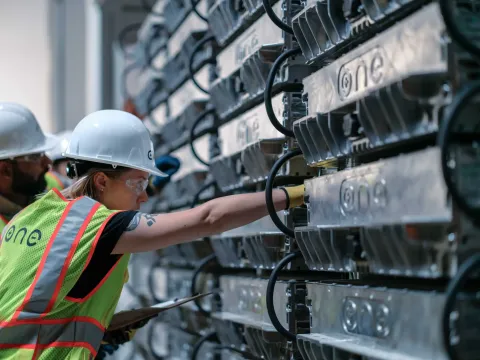
Megapack is a large battery storage system used for grid-related applications, renewable energy integration and other large electricity-storage projects.
The systems can store electricity and discharge it when needed, although their economic benefits depend on installation costs, grid conditions and charging and discharging patterns.
Tesla’s third-quarter SEC filing reported that energy generation and storage revenue declined 16% year over year despite increased Megapack deployments.
The company attributed the revenue decline to factors including lower average Megapack selling prices, changes in Powerwall and solar deployments, and certain tariff-related effects.
The distinction between deployment volume and revenue matters because higher battery-capacity installations do not necessarily generate proportionally higher sales.
November: Tesla Expands Robotaxi Service in Texas
Tesla announced the expansion of its Robotaxi service into San Antonio, Texas, on November 9.
The service added another market to the company’s growing autonomous ride-hailing network.
However, Tesla did not publicly specify the full initial fleet size, operating boundaries or whether every vehicle would operate without an onboard safety monitor.
TechAmerica.ai reported on the San Antonio Robotaxi launch and the operational questions surrounding its expansion.
Tesla’s official Robotaxi support page describes passenger bookings, service areas and the vehicles used in supported operations.
Availability within a metropolitan area does not necessarily mean the service covers every neighborhood or operates throughout the day.
Tesla Faces Continuing Autonomous Driving Oversight
Tesla’s autonomous-driving strategy remained under federal oversight in 2026.
Separate from the Cybercab certification inquiry, NHTSA continued reviewing aspects of FSD performance and whether the system adequately identifies certain hazardous driving conditions.
One federal engineering analysis examined how vehicles equipped with FSD respond to reduced visibility and whether the system provides sufficient warning for the driver to intervene.
Such investigations can involve crash reports, technical information and testing. Opening an investigation is not the same as announcing a recall or establishing a final safety defect.
The distinction between FSD (Supervised) and commercial driverless Robotaxi operation also remained central to how Tesla should describe its products.
Tesla’s 2026 Strategy Combines Electric Vehicles, AI and Energy
Between January and November 21, Tesla’s most consequential developments involved the interaction between its established electric vehicle business and its newer autonomous-driving and robotics programs.
Vehicle deliveries recovered from their first-quarter level, while Cybercab entered limited commercial operation and Robotaxi services expanded to additional markets.
The company increased research and capital spending on robotics, computing hardware and manufacturing. Those investments raised costs, making the future economics of its AI-related projects an important issue for investors.
Energy storage remained another major business, although revenue and deployment trends did not always move together.
Federal safety investigations also demonstrated that wider deployment of autonomous vehicles depends on more than technical performance claims. Vehicle certification, operational safety and compliance requirements remain significant factors.
By November 21, Tesla had advanced several major product programs, but the scale, profitability, and future availability of its newest autonomous and robotic technologies remained uncertain.