






















Tesla Delays Volume Production Targets as Spending Rises on AI, Robotics and EV Projects
Tesla delayed volume production targets for the Cybercab, Semi and Megapack 3 while increasing spending on AI, robotics and battery manufacturing despite higher revenue.
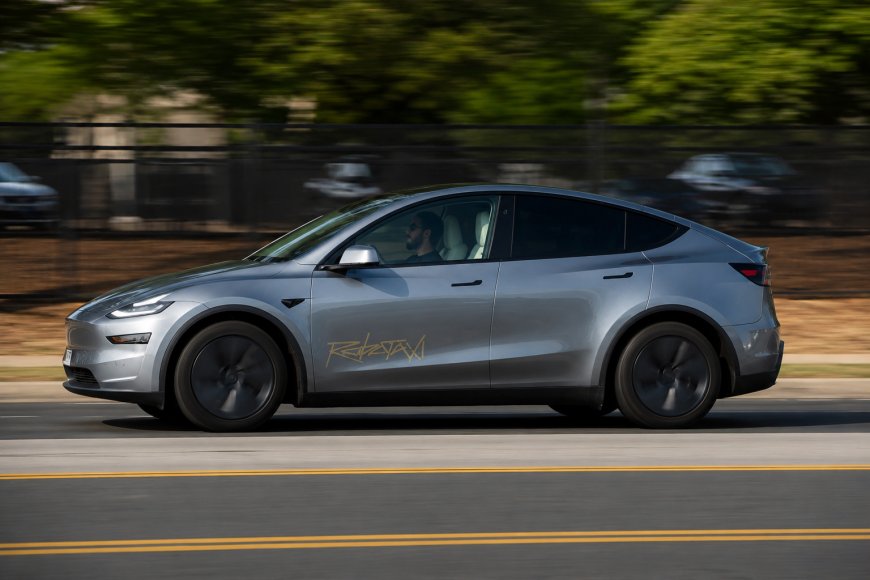
Tesla has pushed back its timeline for reaching volume production of several of its newest products, signalling that thecompany’ss ambitious expansion into artificial intelligence, robotics and next-generation transportation will take longer than previously expected. In its second-quarter shareholder letter released Wednesday, Tesla said the Cybercab, Tesla Semi and Megapack 3 commercial energy storage system are no longer expected to reach volume production in 2026. The company also removed earlier guidance that suggested its Optimus humanoid robot would achieve volume production within that timeframe.
The updated outlook reflects Tesla’s continued focus on expanding manufacturing capacity while investing heavily in new technologies. The automaker said it is working to increase production of its 4680 battery cells, which are needed to support large-scale manufacturing of both the Cybercab and the Tesla Semi. Tesla did not explain why the Megapack 3 production schedule had also been delayed.
Tesla continues preparing factories for next-generation products
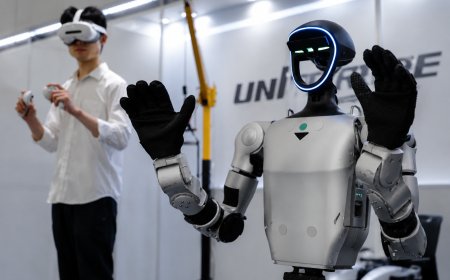
During the company’s earnings conference call, CEO Elon Musk described Optimus as one of the most difficult manufacturing challenges Tesla has ever undertaken. He said every component used in the humanoid robot is newly designed, making large-scale production significantly more complex than previous Tesla products.
"This is going to be the hardest product to scale manufacturing that we've ever made at Tesla, because everything on the robot is new," Musk said.
Tesla has already begun producing the first Cybercab vehicles at its Austin, Texas, factory. However, the company said it is still building manufacturing lines for both the Tesla Semi and Optimus. As recently as January, Tesla had indicated that the Cybercab, Semi and Megapack 3 would all enter volume production during 2026.
Revenue rises despite growing costs.
The revised production timeline comes as Tesla significantly increases spending to support its transformation from an electric vehicle manufacturer into a company focused on AI, robotics and autonomous transportation. While second-quarter revenue increased, profitability came under pressure as operating expenses climbed and investments accelerated.
Tesla reported second-quarter revenue of $28.2 billion, up 26% from $22.5 billion in the same period a year earlier and higher than the previousquarter’ss $22.38 billion. Automotive revenue reached $20.5 billion, compared with $16.6 billion a year ago, supported by deliveries of more than 480,000 vehicles during the quarter. That represented an increase of more than 120,000 vehicles from the first quarter and marked Tesla’s strongest delivery performance since the third quarter of last year.
According to the shareholder letter, record vehicle sales in markets including South Korea, Australia, Colombia, Japan, Taiwan, Thailand, Portugal, the Philippines, Chile, Slovenia and Lithuania helped drive the improvement. Tesla also reported that revenue from its energy storage and solar business increased 13% to $3.1 billion.
Subscriptions and energy business continue to grow.
Tesla said subscriptions to its Full Self-Driving (Supervised) software continued to expand, reaching 1.48 million during the quarter, a 56% increase from the same period last year. The company continues working toward a future version of the software capable of handling driving without human intervention, although it remains marketed as a supervised driver-assistance system.
Despite stronger revenue, Tesla’s bottom line weakened as spending increased. Net income declined 5% year over year to $1.1 billion, while operating expenses rose 47% to $4.3 billion. The company reported negative free cash flow of $1 billion during the quarter, compared with positive free cash flow of $1.44 billion in the previous quarter and $146 million during the same period last year. Operating income also fell 57% to $398 million.
Investment strategy remains unchanged.
Tesla has repeatedly said it is investing aggressively to support its long-term transition toward AI, robotics and autonomous mobility. The company expects capital expenditures to reach approximately $25 billion in 2026, roughly three times its historical spending levels.
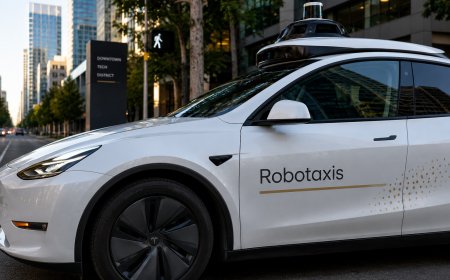
Earlier this year,r Tesla ended production of the Model S sedan and Model X SUV at its Fremont, California, factory to make room for Optimus manufacturing. At the same time, the company has continued expanding its Robotaxi service to additional cities with a limited fleet while encouraging customers to subscribe to Full Self-Driving (Supervised), which remains a key part oTesla’s's long-term strategy.
What's Your Reaction?
 Like
0
Like
0
 Dislike
0
Dislike
0
 Love
0
Love
0
 Funny
0
Funny
0
 Angry
0
Angry
0
 Sad
0
Sad
0
 Wow
0
Wow
0