






























Starcloud Raises $250M at $2.3B Valuation for Orbital AI Data Centres
Starcloud raised $250 million at a $2.3 billion valuation to expand its orbital AI data centres, manufacturing capacity, and future satellite launches.
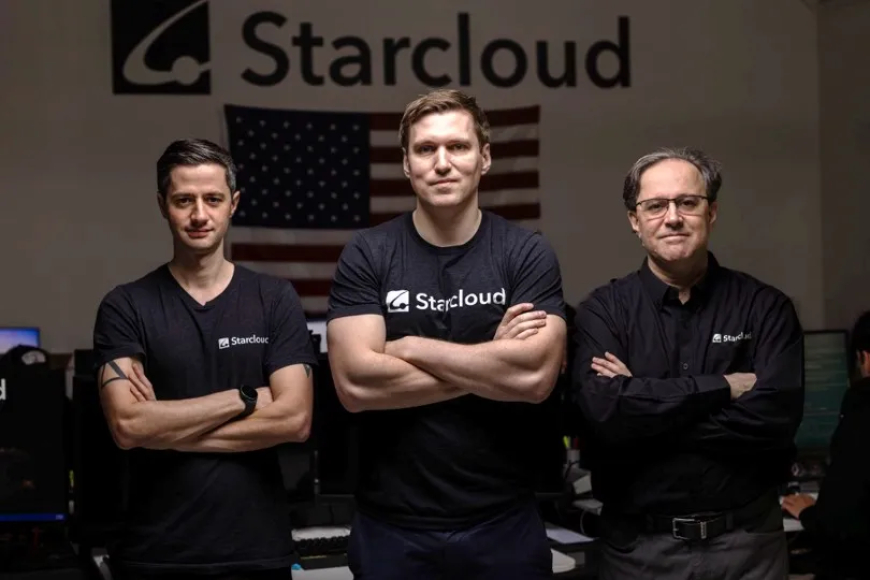
Starcloud has raised a $250 million extension to its $170 million Series A, valuing the orbital data centre startup at $2.3 billion as it prepares to expand manufacturing and secure scarce launch capacity.
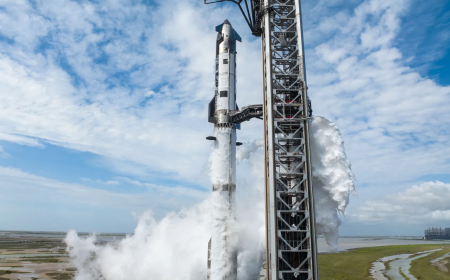
The new financing will support a larger production operation and development of Starcloud-3, the company’s biggest planned orbital computing spacecraft. Starcloud ultimately intends to launch Starcloud-3 using SpaceX’s Starship rocket.
Launch capacity is becoming a major constraint.
CEO Philip Johnston said Starcloud expects to require substantial launch capacity as it expands. The company has already asked the Federal Communications Commission for authorisation covering a proposed constellation of 88,000 spacecraft.
Starcloud is trying to lock in future launch contracts as available rocket capacity becomes increasingly competitive. Falcon 9 remains a key option, but Starcloud’s longer-term plans depend heavily on Starship achieving a flight rate and cost structure that can support much larger orbital infrastructure.
Alternative heavy-lift options remain limited. BlueOrigin’ss New Glenn and United Launch Alliance’s Vulcan are not yet flying at the frequency required for large-scale satellite deployments, while Rocket Lab’s Neutron has not yet begun launches.
Starcloud-2 satellites are planned for 2027
Before Starcloud-3, the company plans to launch two 8-kilowatt Starcloud-2 computing satellites on rideshare missions in 2027. They are expected to perform AI inference in orbit for customers, including U.S. government agencies.
Starcloud is also considering purchasing a dedicated Falcon 9 mission for additional spacecraft and signing agreements with other launch providers to reduce its dependence on a single rocket.
Starship remains central to the company’s longer-term economics. SpaceX CEO Elon Musk said this week that an attempt to catch a returning Starship with the launch tower would likely come in a few months, while the first reflight of a Starship vehicle is targeted for late 2026 or early 2027.
Nvidia and Cisco join the funding round.
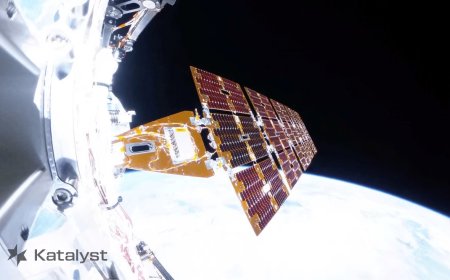
Manhattan West Ventures led the Series A extension, with Nvidia and Cisco among the new investors. Existing backers,s including Benchmark, EQT, Soma, NF, X, and 77,6, also participated, alongside Cedar Capital, Goanna Capital,l and Standard Capital. Starcloud’s relationship with Nvidia dates to Starcloud-1, which carried an Nvidia H100 data centre GPU into orbit in November 2025. The spacecraft subsequently ran AI inference and became the first spacecraft to train a language model using a data centre-class GPU in orbit.
The companies are now working around Nvidia’s Space-1 Vera Rubin hardware, which is being developed specifically for space computing. Starcloud hopes to fly the technology in late 2028 while its engineers study challenges including radiation protection, launch vibration and the radiator capacity required to remove heat from high-performance chips.
Starcloud is also developing production lines at a 100,000-square-foot facility in Woodinville, Washington. The company currently has about 25 employees and is expanding as it moves from experimental orbital computing toward larger-scale spacecraft production.
What's Your Reaction?
 Like
0
Like
0
 Dislike
0
Dislike
0
 Love
0
Love
0
 Funny
0
Funny
0
 Angry
0
Angry
0
 Sad
0
Sad
0
 Wow
0
Wow
0