


























Viral TikTok Gadgets Tested: Which Ones Are Actually Worth Buying?
Viral TikTok gadgets can look indispensable in a 20-second video, but real-world usefulness is another matter. Here is what separates genuinely useful gadgets from clever products you may never use again.
TikTok has become remarkably good at making ordinary products look indispensable.
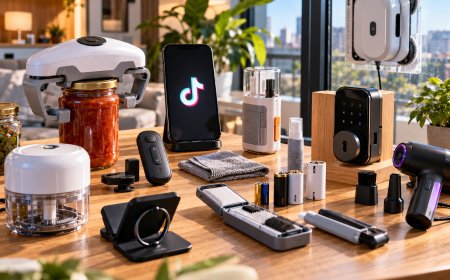
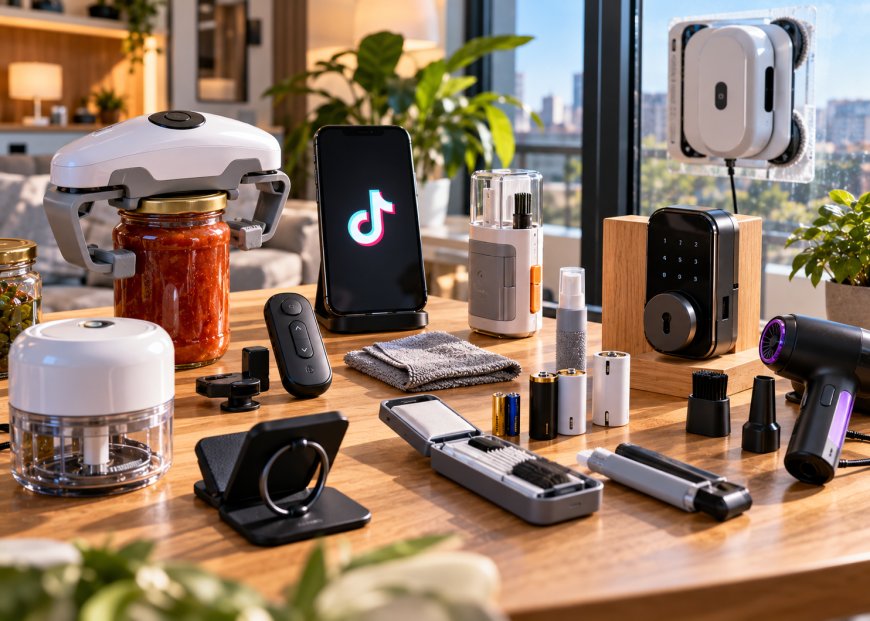
A gadget appears for 20 seconds, solves one annoyingly specific problem and racks up millions of views. The demonstration is usually clean, visual and immediate: a jar opens itself, a wardrobe suddenly holds twice as many clothes, a drink stays fizzy for days, or a tiny remote eliminates the effort of swiping through videos.
That format is perfect for selling products. It is less useful for answering the question that matters after the package arrives: does this thing deserve a permanent place in your life?
A hands-on test of viral TikTok gadgets ranging from screen cleaners and wardrobe organisers to smart locks, nasal irrigation systems, and automatic jar openers produced a surprisingly mixed answer. Some products were far more useful than their novelty suggested. Others worked exactly as advertised and still felt unnecessary.
The difference rarely came down to how sophisticated the gadget looked. It came down to whether the product solved a recurring problem better than the simpler alternative.
Virality Rewards the Demo, Not the Ownership Experience
TikTok commerce is built around discovery. Products often reach shoppers before they're actively looking for them, and research into TikTok purchasing behaviour continues to show a strong link between platform engagement and impulse buying. A 2026 study of active U.S. TikTok users examined how gratification and trust contribute to impulse purchases and found that the platform environment can push consumers toward unplanned spending.
That helps explain why unusual gadgets perform so well on short-form video. The best TikTok product is not necessarily the most useful one. It is the product with a function that can be understood almost instantly.
A magnetic device cleaning both sides of a window at once is visually satisfying. A robot gripping a stubborn jar lid and rotating it automatically needs no explanation. A hanger that collapses vertically demonstrates its entire value proposition within seconds.
Long-term annoyances are much harder to show. Does the product fit naturally into a home? Is it annoying to clean? Will it survive a year? Does it require proprietary refills? Does the app remain connected? Is there a simpler tool that does the same job?
Those questions often arrive after the viral video ends.
The Simplest Gadgets Often Made the Strongest Case
One of the most effective products in the source testing was also one of the least technological: an adapter that lets AAA batteries fit inside devices designed for AA cells.
The adapter does not increase the battery’s electrical capacity or transform it into a true AA battery. It simply changes the physical dimensions while preserving the same nominal 1.5-volt output found in standard alkaline AAA and AA cells. In a low-drain device, that can be enough to get hardware working when the correct battery size is unavailable.
During testing, the adapters fitted an old handheld console and worked immediately. There was no setup, charging, app or maintenance burden.
An automatic jar opener succeeded for a similar reason. The device grips the lid and container, then automatically applies twisting force. The idea may look like novelty technology when demonstrated by someone who can already open a jar comfortably, but the use case changes for people with arthritis, limited grip strength or reduced mobility.
The product tested in the transcript cost about $20 and successfully opened a jar that had been deliberately made difficult to loosen.
That is where gadget design becomes useful rather than merely entertaining. The product targets a real physical limitation, requires little behaviour change and performs a job that can otherwise be frustrating.
Some Viral Products Work but Still Solve the Wrong Problem
Other gadgets passed the functional test but failed the broader usefulness test.
A Bluetooth-controlled cocktail glass could continuously mix a drink and guide the user through recipes. It worked. It also added Bluetooth pairing and another powered object to a task normally done with a spoon or shaker.
The transcript’s reviewer reached essentially the same conclusion after successfully making a drink: the product mixed properly but didn't provide enough benefit to justify regular use.
A self-heating cooking pot designed to make food beside a bed suffered from the same problem more dramatically. The device became hot enough to cook, but the user still needed ingredients, water, utensils and eventually cleanup. The convenience of not walking to a kitchen was offset by the questionable wisdom of operating a very hot cooking appliance on or near bedding.
This is a recurring flaw in novelty technology. A manufacturer identifies one movement inside a larger task and automates it without considering whether the surrounding process becomes any easier.
Good convenience products remove friction. Weak ones relocate it.
Viral Claims Still Need Independent Verification
Short-form videos can also turn unverified marketing claims into accepted facts.
One product in the source was presented as the cleaning fluid Apple supposedly uses in its stores. The cleaner performed well in the hands-on test, quickly removing heavy fingerprints from a phone screen.
That does not make it Apple’s official cleaning product.
Apple’s current public guidance recommends a soft, lint-free cloth and generally advises lightly dampening it with water for displays. For difficult marks on supported products, Apple permits a 70% isopropyl alcohol solution in certain circumstances. Apple does not identify WHOOSH or another commercial screen-cleaning fluid as its official cleaning solution in that guidance.
The distinction may sound minor, but it illustrates how viral retail works. A claim attached to a familiar company makes an ordinary cleaning product far more compelling, even when the company itself does not publicly recommend it.
Health-related gadgets deserve even more scrutiny.
The transcript tested a powered nasal irrigation system and reported noticeably clearer breathing afterwards. Nasal rinsing is a legitimate practice, and the FDA says properly used devices can be safe and effective for congestion, allergies and dry nasal passages. But the water matters. The agency specifically warns against using ordinary tap water and recommends distilled, sterile or previously boiled and cooled water because organisms harmless when swallowed can cause serious infections if introduced through the nose.
The saline mixture is also not simply an antiseptic, as the transcript suggests. The FDA explains that saline helps water pass through delicate nasal tissue with less irritation.
A health gadget can therefore produce a good result while still requiring more careful instructions than a viral demonstration suggests.
Views Tell You Almost Nothing About Product Quality
The most revealing pattern in the source was that view count had almost no relationship with usefulness.
Some relatively modest viral products performed extremely well. Some gadgets with millions of views were awkward, badly designed or solved problems that barely existed. The automatic door closer worked. The timed phone-locking case technically worked, but it remained easy enough to use that it undermined its own purpose. A magnetic window cleaner looked ingenious but struggled on thicker glazing because the magnetic connection weakened too much.
That should not be surprising.
TikTok views measure attention. They do not measure durability, safety, long-term satisfaction or value for money. In some cases, a bad product may spread more because watching it fail is entertaining.
The platform is still useful for product discovery. TikTok has exposed consumers to clever tools that traditional retail shelves might never surface, and many genuinely practical products have benefited from that visibility.
The mistake is treating virality as validation.
A better test is what happens after the first week. Does the gadget remove a recurring frustration? Does it do something substantially better than a cheaper alternative? Does it avoid creating extra maintenance? Would its absence actually be noticed?
If the answer to those questions is yes, the product may deserve its popularity.
If not, millions of views mean millions of people enjoyed watching the same demonstration.
What's Your Reaction?
 Like
0
Like
0
 Dislike
0
Dislike
0
 Love
0
Love
0
 Funny
0
Funny
0
 Angry
0
Angry
0
 Sad
0
Sad
0
 Wow
0
Wow
0