






















Claude Opus 5.5 Is Turning Code Into a Motion Graphics Studio
Claude Opus 5.5 powers a new kind of AI motion graphics workflow, using code, web technologies, and programmable video tools to build polished animations rather than generating video frames directly.
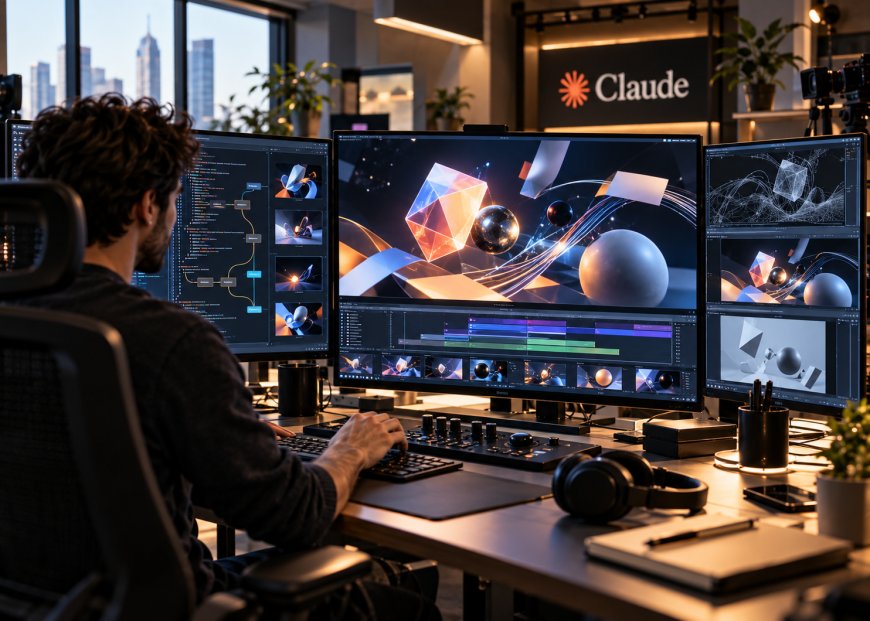
Some of the most striking videos being attributed to Claude Opus 5.5 were never generated by a video model at all. They were programmed.
Since Anthropic released Opus 5.5 on September 22, developers and designers have been experimenting with an unusual workflow in which Claude writes the animation logic, assembles visual assets, controls timing and helps render finished motion graphics through ordinary web and video tools. The results range from animated software interfaces and product launch films to elaborate showreels with synchronised typography, sound effects and transitions.
That distinction matters because Claude Opus 5.5 does not natively output an MP4 video. Anthropic lists text and images as supported inputs while the model’s outputs remain text, including code and other text-based artefacts. Creators are instead using Claude more like a programmer, motion designer, and production coordinator rolled into one.
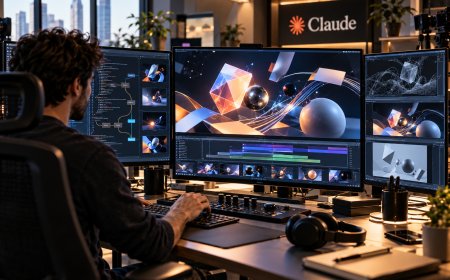
The workflow described in one recent demonstration illustrates how far that idea can be pushed. Rather than asking Claude to “make a video” and receiving a generated clip, users give the model a creative brief, screenshots, design references and production instructions. Claude can then write HTML, CSS, JavaScript or React-based animation code and hand the result to a browser or rendering framework that turns it into actual frames.
The Video Is Code Before It Becomes Video
This approach is fundamentally different from using a text-to-video generator. A diffusion or generative video model synthesises visual frames directly. Claude is instead constructing a deterministic software project that happens to produce animation.
That opens several possible production paths. A relatively simple motion graphic can be drawn with SVG, CSS and JavaScript inside an HTML page. A headless browser can then render the animation frame by frame, after which software such as FFmpeg can encode those frames into a conventional video file. More elaborate projects can use frameworks built specifically for programmable video.
Remotion is a clear example. It treats each video frame as the output of a React component, letting developers control animation, text, graphics, and timing through code. Once the composition is complete, Remotion can render it into formats including MP4, WebM and ProRes.
This is where Opus 5.5 becomes useful. Anthropic describes the model as a major improvement for difficult coding and long-running agentic work, and says early testers have used it on unusually large engineering jobs. Motion graphics give those same capabilities a visual outlet: instead of writing application code, the model writes the system that controls what appears on screen at each moment.
In practice, creators are finding that Opus 5.5 will sometimes build the animation directly rather than reaching for an established video framework. The source workflow describes examples in which the model produced a self-contained HTML project, rendered it through a headless browser and used FFmpeg to produce the final media file.
That makes the phrase “AI-generated video” slightly misleading. Claude may handle much of the creative and technical work. However, browsers, rendering engines, video codecs, and conventional production software still generate and encode the frames.
The Prompt Is Only a Small Part of the Result
The biggest misconception surrounding these demonstrations is that the best videos come from finding a magical one-sentence prompt.
Social posts often present AI work that way. Someone shows a polished 15-second launch film and says it came from one prompt or took only a few minutes to start. Someone else copies a similar instruction and gets a generic animation dominated by centred typography, gradients, and predictable transitions.
The missing piece is the production environment around the model. The transcript behind this article describes the prompt as only a small portion of the final result, with most of the quality coming from the “harness”: the rules, references, tools, files and feedback systems surrounding Claude.
That is increasingly how advanced coding agents work in general. A strong model placed in an empty directory with a vague command has to invent both the objective and the process. Give the same model brand guidelines, screenshots, component specifications, animation rules, reference material and a defined review process, and the problem becomes much more constrained.
For motion design, creators are turning those instructions into persistent project files. A style guide can establish typography, palettes, transition behaviour, and texture. A component specification can define how buttons, charts, loaders and other UI elements should look. A shot plan can decide what appears on screen and for how long before Claude begins writing animation code.
The workflow becomes even more structured when references are involved. One example asks Claude to examine a reference film frame by frame, identify its palette, typography, shot duration, transitions and camera movement, and then use that visual grammar to construct a new product film with different content and assets.
That is much closer to briefing a motion designer than prompting an image generator.
It also introduces familiar creative-industry questions around attribution and imitation. Extracting general ideas such as pacing, transition density, or camera rhythm differs from reproducing copyrighted artwork, characters, logos, or distinctive creative elements. As AI production systems become better at analysing reference media, creators and companies will need clearer rules on what counts as inspiration and what crosses into replication.
Better Results Often Come From Iteration, Not One-Shot Generation
The most impressive examples also undermine the idea that high-end AI motion graphics are effortless.
One project highlighted in the source was described publicly as having begun from a spoken prompt, followed by Claude working for roughly 12 hours. Another sophisticated example required 163 model calls and nearly seven hours of iteration to reach the desired quality.
That is not the same thing as pressing a button and waiting for a finished commercial.
The more effective process resembles an automated creative review. Claude generates a version, examines the result, scores aspects of the animation, identifies weak areas and revises the project. The loop can repeat until elements such as visual depth, consistency or timing reach an acceptable threshold.
This feedback model is particularly interesting because programmatic video can be inspected in ways that conventional generative video cannot. Every transition has a duration. Every element has coordinates. Every animation has timing values. The model can modify those variables directly, rather than regenerating an entire visual sequence and hoping a problem disappears.
Audio can be treated the same way. A project can define a musical tempo, generate a beat map, and synchronise interface movements, transitions, and sound effects to specific moments. Instead of adding music after the visuals are finished, the timeline itself can become shared data used by both the animation and sound layers. The source demonstration describes one workflow that creates a beat file containing timing information and then aligns clicks, whooshes, logo impacts and other events around it.
Motion Design Is Becoming Another Coding-Agent Workflow
The larger significance is not that Claude has suddenly become a replacement for After Effects or professional motion designers. Experienced designers still bring judgment around composition, pacing, hierarchy, brand identity and storytelling that cannot be reduced to a long prompt. Opus 5.5 shows how much production work you can delegate once those decisions are made.
A designer can describe a system instead of manually animating every element. A startup can feed an agent its product screenshots and brand assets and have it assemble several launch-video concepts. An agency can turn a successful production workflow into a reusable template that asks for a website, format and duration before generating the underlying project.
Remotion already demonstrates why that idea is technically practical. Its compositions are software, meaning content and metadata can be changed programmatically and the resulting project rendered again with different inputs.
Claude Opus 5.5 adds a capable agent on top of that programmable foundation.
The result is less a new AI video generator than a new way of automating motion-production work. The polished clips spreading online may look as though Claude dreamed them into existence. Still, the reality is more interesting: the model can increasingly assemble the code, assets, timing rules, rendering tools, and revision loops that video production requires.
For now, the best results still depend heavily on the person designing that system. That may be the most useful lesson behind the Opus 5.5 motion-graphics boom. Better models matter, but a sophisticated creative workflow still beats a clever prompt.
What's Your Reaction?
 Like
0
Like
0
 Dislike
0
Dislike
0
 Love
0
Love
0
 Funny
0
Funny
0
 Angry
0
Angry
0
 Sad
0
Sad
0
 Wow
0
Wow
0