





































10 AI Healthcare Tools Changing Patient Care and Clinical Workflows in 2026
Explore 10 AI healthcare tools that help doctors and hospitals improve clinical workflows, medical imaging, documentation, and personalised patient care in 2026.
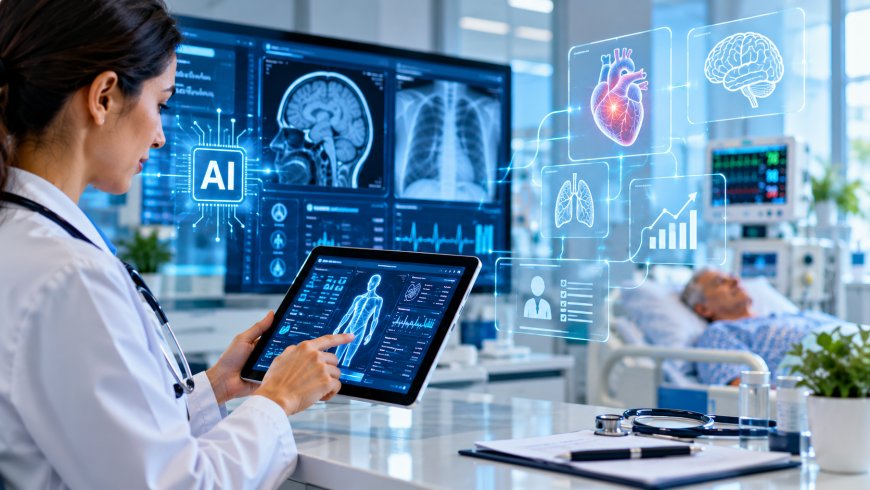
Artificial intelligence is becoming a practical part of healthcare, moving beyond research projects into tools that support doctors, hospitals and medical researchers.
In 2026, healthcare AI is being applied across several areas, including clinical documentation, medical imaging, pathology, precision medicine and patient monitoring.
These systems are not designed to replace healthcare professionals. Instead, they are being developed to help clinicians manage increasing workloads, analyze complex medical information and spend more time on patient care.
From AI assistants that help physicians prepare medical notes to platforms that analyze scans and biological data, healthcare companies are building tools that address some of modern medicine’s biggest challenges.
Here are 10 AI healthcare tools and platforms helping shape the future of clinical workflows in 2026.
1. Abridge AI Clinical Documentation Assistant
One of the fastest-growing uses of AI in healthcare is clinical documentation.
Physicians often spend significant time writing notes after patient visits, reducing the time available for direct patient interaction.
Abridge developed an AI-powered clinical documentation platform designed to help healthcare professionals capture conversations and generate medical notes.
The system uses AI to analyze clinician-patient conversations and create structured documentation for physicians to review.
Read Abridge healthcare AI platform.
The company has focused on integrating AI documentation into healthcare workflows rather than creating a separate tool that requires additional steps.
The technology is part of a wider shift toward ambient clinical AI, where software works in the background to reduce administrative tasks.
2. Microsoft Dragon Copilot AI Assistant for Healthcare Professionals
Microsoft has expanded its healthcare AI strategy through Dragon Copilot, combining speech recognition technology with generative AI capabilities.
The platform is designed to help clinicians with documentation tasks and reduce the administrative burden associated with medical records.
Read Microsoft healthcare AI solutions.
Microsoft’s healthcare AI tools build on Nuance’s long history in medical speech recognition technology.
The company’s approach focuses on supporting physicians during daily workflows, including capturing clinical information and creating documentation.
The challenge for healthcare AI assistants is maintaining accuracy while handling sensitive medical conversations.
3. Aidoc AI Medical Imaging Platform
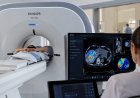
Medical imaging is one of the most established areas for healthcare AI.
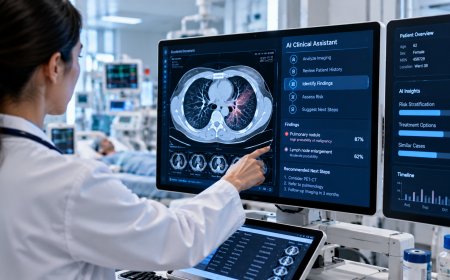
Aidoc develops AI solutions that help radiologists analyse medical images and prioritise urgent findings.
Read about the Aidoc AI imaging platform.
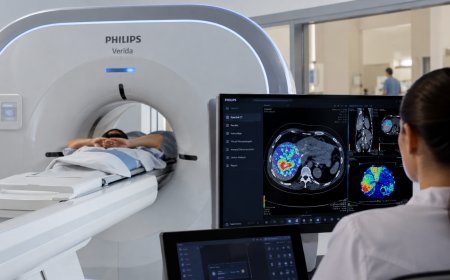
Radiology departments handle large volumes of imaging studies every day. AI systems can help identify patterns and highlight cases that may require faster review.
The technology does not replace radiologists.
Instead, it supports clinicians by helping them manage complex imaging workflows.
4. Viz.ai AI Care Coordination Platform
In emergency medicine, timing can significantly affect patient outcomes.
Viz.ai develops AI-powered care coordination technology designed to help healthcare teams identify certain conditions and communicate faster.
Read about Viz.ai’s healthcare AI platform.
The company is known for applications in areas such as stroke and cardiovascular care, where faster communication between specialists can influence treatment decisions.
AI in this area focuses less on replacing medical judgment and more on improving coordination between healthcare teams.
5. HeartFlow AI-Powered Cardiac Analysis
Cardiovascular care is another important area where AI is being adopted.
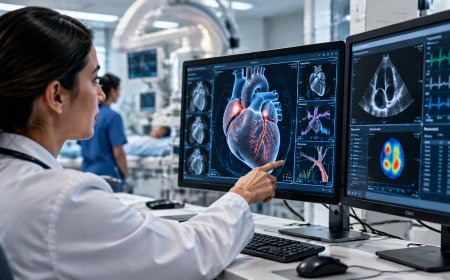
HeartFlow developed an AI-based platform that analyses coronary CT angiography scans and creates personalized digital models of coronary arteries.
Read HeartFlow technology information.
The system is designed to provide additional information to physicians evaluating coronary artery disease.
Instead of replacing traditional imaging review, AI analysis adds another layer of information that can support clinical decisions.
The growth of cardiovascular AI reflects a broader healthcare trend toward using existing medical data more effectively.
6. Tempus AI for Precision Medicine
Precision medicine relies on understanding the relationship between a patient’s biology and treatment options.
Tempus AI uses artificial intelligence with clinical and molecular data to support research and personalized healthcare approaches, particularly in oncology.
Read about the Tempus AI healthcare platform.
The company combines data analytics, genomic information and AI models to help researchers and healthcare providers better understand disease patterns.
Large-scale healthcare data is becoming increasingly important as medicine moves toward more personalized approaches.
7. PathAI AI Digital Pathology Platform
Pathology is another field where AI is gaining attention.
PathAI develops AI tools that analyze pathology images and support researchers and pathologists.
Read PathAI technology information.
Digital pathology creates large collections of high-resolution tissue images.
AI can help analyze these images, identify patterns and support more efficient workflows.
However, pathology AI still requires careful validation because medical decisions depend on accuracy and clinical context.
8. Butterfly Network AI-Assisted Ultrasound
Ultrasound is becoming more accessible through portable devices and AI-assisted technology.
Butterfly Network develops handheld ultrasound systems that combine imaging hardware with software tools designed to support healthcare professionals.
Read about Butterfly Network technology.
AI assistance can help make ultrasound technology easier to use, especially in environments where specialist imaging expertise may not always be available.
The broader trend is toward bringing advanced medical tools closer to the point of care.
9. Nabla Copilot AI Healthcare Assistant
Nabla developed an AI assistant to reduce administrative work for healthcare professionals.
Its Copilot platform helps clinicians create documentation from patient conversations.
Read about Nabla’s healthcare AI platform.
Like other clinical AI assistants, the goal is to reduce repetitive tasks while allowing physicians to maintain control over medical decisions.
Healthcare organizations are increasingly exploring these tools as they look for ways to address physician workload challenges.
10. NVIDIA Healthcare AI Platform: AI Infrastructure for Medicine
Healthcare AI depends not only on software applications but also on the computing infrastructure behind them.
NVIDIA provides AI computing platforms and software technologies used by healthcare researchers, medical technology companies and developers building AI applications.
Read NVIDIA healthcare AI solutions.
The company’s healthcare work includes AI development for medical imaging, drug research and clinical applications.
As healthcare AI models grow more complex, computing power has become a key part of the ecosystem.
The Challenges Facing Healthcare AI Adoption
Despite rapid growth, healthcare AI still faces important challenges.
Medical AI systems must demonstrate reliability, protect patient data and integrate into existing clinical workflows.
Healthcare providers also need evidence that these tools improve efficiency or patient outcomes.
A successful AI healthcare system is not only about technical performance.
It must work in real hospitals, support healthcare professionals and provide measurable value.
Regulatory approval and clinical validation will continue to shape which AI tools become widely adopted.
The Future of AI Healthcare Tools
Healthcare AI in 2026 is moving toward practical applications.
The most successful tools are not replacing doctors. They help them manage information, reduce administrative work, and use available medical data more effectively.
Clinical documentation, imaging, pathology, cardiovascular care and precision medicine are all areas where AI is becoming part of everyday healthcare workflows.
As healthcare organizations continue adopting digital technologies, AI tools will likely become an increasingly common part of how medical professionals deliver care.
What's Your Reaction?
 Like
0
Like
0
 Dislike
0
Dislike
0
 Love
0
Love
0
 Funny
0
Funny
0
 Angry
0
Angry
0
 Sad
0
Sad
0
 Wow
0
Wow
0