

























Teradar Reveals Its First Terahertz-Band Vision Sensor for Cars
Teradar unveils its first terahertz-band automotive vision sensor at CES 2026, aiming to advance autonomous driving technology.
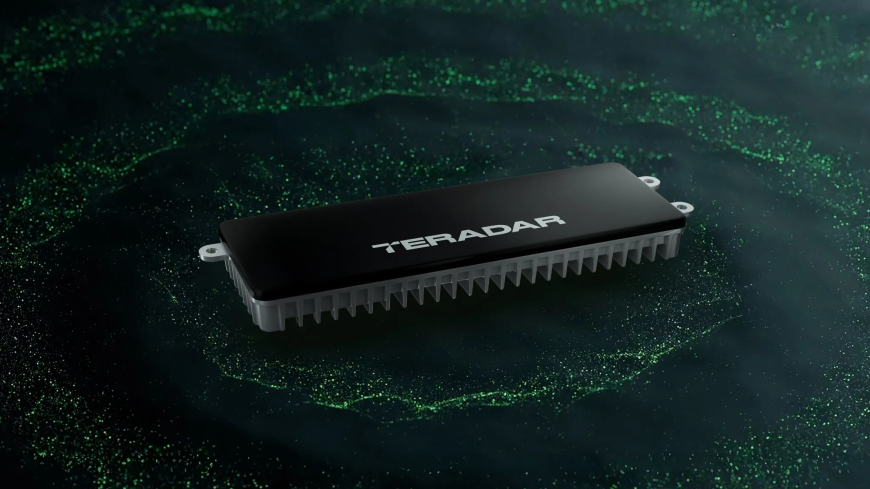
Just two months after emerging from stealth with a $150 million fundraising round, Boston-based Teradar is unveiling its first flagship terahertz-band vision sensor at the Consumer Electronics Show 2026.
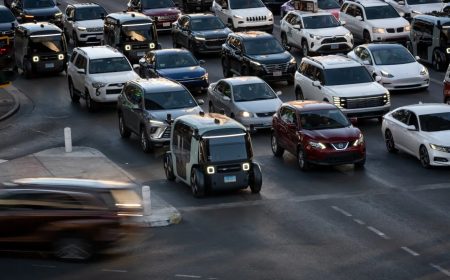
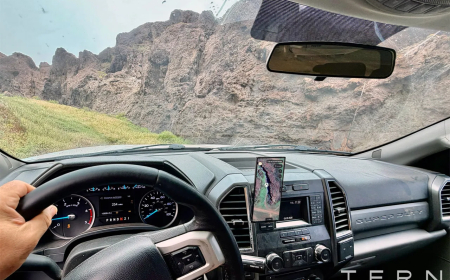
The new sensor, called Summit, is positioned as the first long-range, high-resolution terahertz sensor designed for automotive use. Teradar says its technology is designed to operate reliably in all weather conditions, addressing limitations of traditional radar and lidar systems.
If Teradar secures production agreements with automakers, Summit is expected to begin shipping in 2028. The company believes the sensor could help manufacturers introduce advanced driver-assistance systems and potentially partial or full autonomous driving capabilities.
Teradar's technology is based on the terahertz band of the electromagnetic spectrum, which sits between microwaves and infrared and has largely gone unused in commercial sensing applications. Summit is also a solid-state sensor, meaning it has no moving parts. According to the company, this approach aims to combine the strengths of lidar and radar while minimising their drawbacks.
The proposition could appeal to automakers concerned about the cost of lidar systems or the performance limits of conventional radar. Teradar says it is already validating its technology with five leading automakers in the U.S. and Europe, as well as three Tier 1 automotive suppliers.
The company's market debut comes at a sensitive time for automotive sensor manufacturers. In December, U.S. lidar firm Luminar filed for bankruptcy protection after deals with Volvo and Mercedes-Benz collapsed amid automakers' reconsideration of their lidar strategies. Luminar attributed part of the pressure to growing low-cost competition from China, where lidar adoption remains strong. Chinese sensor maker Hesai said in October that it produced more than 1 million lidar units in 2025.
Other U.S. players, such as Ouster—which merged with Velodyne following industry consolidation—have expanded beyond automotive into areas like robotics and smart infrastructure.
Teradar is also looking past the automotive sector. Its recent Series B round included backing from Lockheed Martin's venture arm and VXI Capital, a defence-focused investment fund led by a former chief technology officer of the U.S. military's Defence Innovation Unit.
Despite setbacks in some segments, lidar has not disappeared entirely from automotive roadmaps. In December, Rivian said it plans to integrate a roof-mounted lidar sensor—supplied by an undisclosed vendor—into its upcoming R2 SUV, signalling continued interest in advanced sensing technologies as costs come down.
Teradar CEO Matt Carey said the company believes its terahertz approach can meet automakers' performance and affordability requirements.
"Our main job is to make sure our sensor gets on all automobiles," Carey said previously. "And whatever the best way to do that is, that's what we're going to pursue."
What's Your Reaction?
 Like
0
Like
0
 Dislike
0
Dislike
0
 Love
0
Love
0
 Funny
0
Funny
0
 Angry
0
Angry
0
 Sad
0
Sad
0
 Wow
0
Wow
0