






























South Korea’s Edenlux Prepares U.S. Debut of Eye-Strain Wellness Device
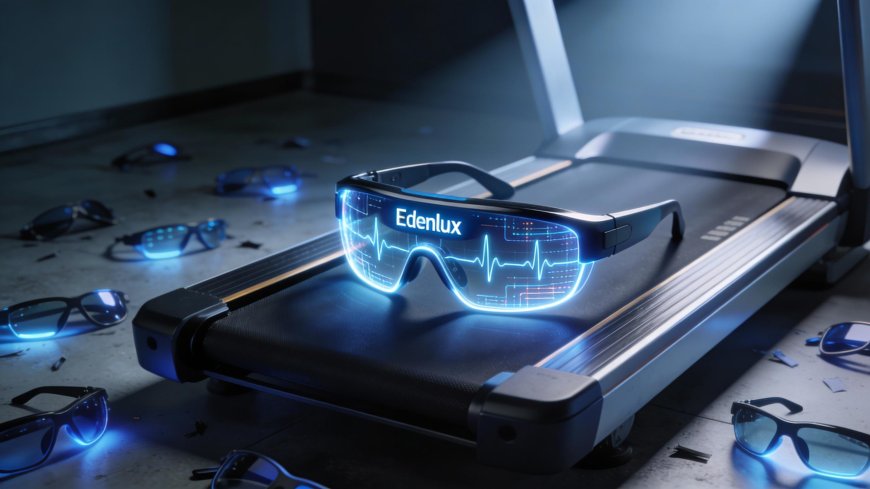
South Korea–based startup Edenlux is preparing a U.S. launch of Eyeary, a wellness device designed to reduce eye strain and support visual recovery from prolonged screen use.
People worldwide now spend significant portions of their day on smartphones. Average daily smartphone usage exceeds three hours, and for many adults, overall screen time stretches to six hours or more, according to research. Prolonged close-range screen exposure has been associated with a growing range of eye-related problems, including dryness, irritation, eye strain, blurred vision, headaches, and the progression of nearsightedness, according to multiple reports.
Edenlux, a South Korean startup, has developed technology to address eye and ear health challenges linked to screen-intensive digital habits.
The company’s origins are deeply personal. Edenlux founder and CEO Sungyong Park experienced vision impairment firsthand. While serving as a military physician, Park received a muscle relaxant injection to treat severe neck stiffness. The injection caused a rare side effect — temporary paralysis of the eye muscles responsible for focusing. Doctors advised that there was little treatment available beyond waiting for recovery.
Park chose a different path. He imported specialised ophthalmic equipment and began retraining his eye muscles on his own. Over time, his vision slowly returned. The experience reshaped his understanding of eye health and ultimately led Park, a medical doctor turned entrepreneur, to develop technology designed to help people protect and recover their vision in an increasingly screen-driven world.
Edenlux is now preparing to introduce its second wellness device, Eyeary, to the U.S. market. The company plans to launch the product on Indiegogo toward the end of March. Eyeary is positioned as a daily visual recovery tool and falls under the FDA’s wellness category rather than being classified as a medical device, allowing it to be marketed for vision training and general eye health. Park said the company chose crowdfunding over venture financing because Edenlux already has sufficient cash reserves to support operations for several years.
Edenlux’s first product, Otus, debuted in 2022 across South Korea, Singapore, Japan, and Taiwan. The device, which resembles a bulky VR headset, uses specialised lenses to alternately contract and relax the ciliary muscle. Otus has generated $10 million in cumulative revenue, and Edenlux says Eyeary is designed to deliver similar benefits in a more efficient and user-friendly format.
“With Otus, most users needed about 12 months to reduce their reliance on reading glasses,” Park said. “Eyeary could potentially cut that timeframe to around six months.”

image credits: edenlux
Park described Eyeary as a significant design evolution. The device resembles standard eyewear, is lighter and more comfortable, and features a lens system with 144 diopter focal points, enabling finer focus control and more precise eye-muscle training. By comparison, Otus uses five diopter focal points. Eyeary connects to a mobile app via Bluetooth, collecting usage data that is sent to Edenlux’s servers. The company analyses data across age groups, gender, and vision profiles, using AI to estimate improvement timelines and personalise training programs.
Extended screen use continuously strains the ciliary muscle, which controls the lens of the eye. “When people are young, that muscle is strong enough to handle constant focusing,” Park said. “But sustained smartphone use keeps it contracted for long periods, and over time, it can weaken, causing fatigue and vision issues.”
Edenlux has built a broader product portfolio addressing specific eye and hearing conditions. In addition to Otus and Eyeary for visual recovery, the lineup includes Tearmore for dry eye, Lux-S for strabismus, Lumia for myopia prevention, and Heary for auditory recovery. Park said Tearmore, Lux-S, Lumia, and Heary are expected to launch across Asian markets.
Park compares Edenlux to companies like Oura, which collect biometric data and deliver insights through subscription-based software. While Oura focuses on metrics such as heart rate and sleep, Edenlux concentrates on vision and hearing health.
The company’s target audience includes anyone who frequently uses smartphones and earphones. “Our goal is to tackle the root causes of eye and hearing issues that stem from digital device overuse,” Park said.
Edenlux raised $39 million in Series A funding in 2020, followed by $60 million in Series B financing in 2022. The company has recently set up a U.S. subsidiary in Dallas, Texas, where final device assembly will take place.
Although Edenlux currently handles development and manufacturing internally, it is exploring partnerships with major technology companies such as Apple and Samsung to integrate its vision-protection technology into smartphones.
By combining firsthand medical insight, scientific research, and consumer hardware, Edenlux sees eye health in the digital era as more than a wellness trend — positioning it as a growing segment of consumer technology.
What's Your Reaction?
 Like
0
Like
0
 Dislike
0
Dislike
0
 Love
0
Love
0
 Funny
0
Funny
0
 Angry
0
Angry
0
 Sad
0
Sad
0
 Wow
0
Wow
0