






























SpaceX completes acquisition of xAI, signaling Musk’s push toward space-based AI data centers
SpaceX has officially acquired xAI, uniting Elon Musk’s space and AI ambitions in a deal valued at $1.25 trillion, with plans focused on building space-based data centres.

SpaceX has formally acquired xAI, Elon Musk’s artificial intelligence company, in a deal that creates what is now the most valuable private company in the world. The spaceflight firm made the announcement Monday.
Elon Musk, who serves as CEO of SpaceX, explained the rationale behind the merger in a memo published on the company’s website. According to Musk, the combination is driven primarily by his growing focus on building data centres in orbit — a concept he has increasingly emphasised in recent months.
In the memo, Musk argued that the rapid progress of artificial intelligence depends heavily on massive Earth-based data centres that consume extraordinary amounts of electricity and require extensive cooling. He said global power demand driven by AI cannot realistically be met on the ground in the near future without placing significant strain on local communities and the environment. This concern comes as xAI has faced criticism for the impact of its terrestrial data centres on neighbourhoods near its facilities in Memphis, Tennessee.
People familiar with the transaction told Bloomberg News that the merger values the combined company at approximately $1.25 trillion. Bloomberg was the first outlet to report that the deal had been finalised. SpaceX has reportedly been laying the groundwork for an initial public offering as early as June, though it remains unclear whether the acquisition will alter those plans. Musk did not address any potential IPO timing in his public statement.
The deal brings together two Musk-led companies, each facing distinct financial pressures. xAI is currently spending close to $1 billion per month, according to Bloomberg. SpaceX, on the other hand, derives a significant portion of its revenue — as much as 80%, according to Reuters — from launching and operating its own Starlink satellites.
Last year, xAI also acquired X, another Musk-owned company, with Musk stating at the time that the combined valuation of the two businesses was $113 billion.
In his memo, Musk said that creating functional data centres in space would require a continuous flow of satellites, though he did not specify an exact number. Such a requirement would, in effect, guarantee a long-term and steady revenue stream for SpaceX. That model becomes even more compelling given that satellites must typically be de-orbited within five years under rules set by U.S. regulators.
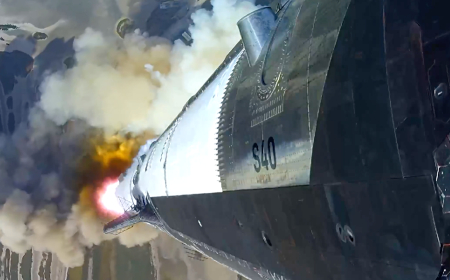
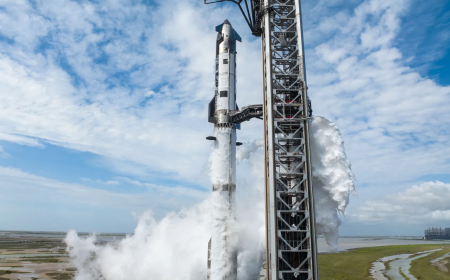
While orbital data centres are positioned as part of the long-term vision, SpaceX and xAI remain focused on very different short-term goals. SpaceX is working to demonstrate that its Starship rocket can safely transport astronauts to the Moon and eventually Mars. At the same time, xAI is racing to compete with established artificial intelligence leaders such as Google and OpenAI.
The pressure on xAI has intensified as competition in the AI sector accelerates. According to reporting from The Washington Post, Musk recently relaxed certain safeguards on xAI’s chatbot, Grok. Those changes contributed to Grok being misused to generate non-consensual sexual images involving both adults and children.
Beyond SpaceX and xAI, Musk also leads Tesla, The Boring Company, and Neuralink. Both Tesla and SpaceX have previously invested $2 billion each into xAI, underscoring how closely Musk’s various ventures are now financially and strategically intertwined.
What's Your Reaction?
 Like
0
Like
0
 Dislike
0
Dislike
0
 Love
0
Love
0
 Funny
0
Funny
0
 Angry
0
Angry
0
 Sad
0
Sad
0
 Wow
0
Wow
0