





























This Startup Plans to Send 1,000 People’s Ashes to Space for $249 in 2027
Space Beyond will launch a CubeSat carrying the ashes of up to 1,000 people into orbit in 2027, offering space memorials starting at $249 through a SpaceX rideshare mission.
A new startup is preparing to offer a space-bound memorial unlike anything most families have seen before — and it plans to do it at a price point far lower than what the industry has historically charged.
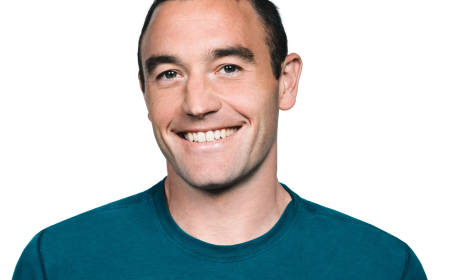
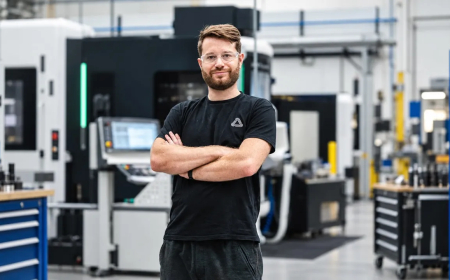
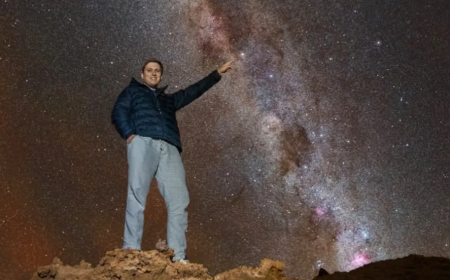
Ryan Mitchell, the founder of Space Beyond, traces the idea back to a quiet moment under the stars. While camping at a state park, Mitchell found himself staring at the night sky and reflecting on what his next chapter should be. A manufacturing engineer by training, he had previously worked on NASA’s Space Shuttle program before spending nearly a decade at Blue Origin, Jeff Bezos’ private space company.
During that time, Mitchell witnessed firsthand how dramatically the cost of getting to Space had fallen — driven mainly by advances from competitors such as SpaceX. As launch prices dropped, Space no longer felt impossibly distant. Looking up at the stars that night, Mitchell thought they felt closer than ever.
The concept for Space Beyond truly came together during a far more personal moment: a family member’s ash-spreading ceremony.
“When it was over, we were kind of like, ‘now what?’” Mitchell told TechCrunch. “The moment was gone.” He recalls thinking about how fleeting the experience felt — and asking himself a simple question: “How could I do this better?”
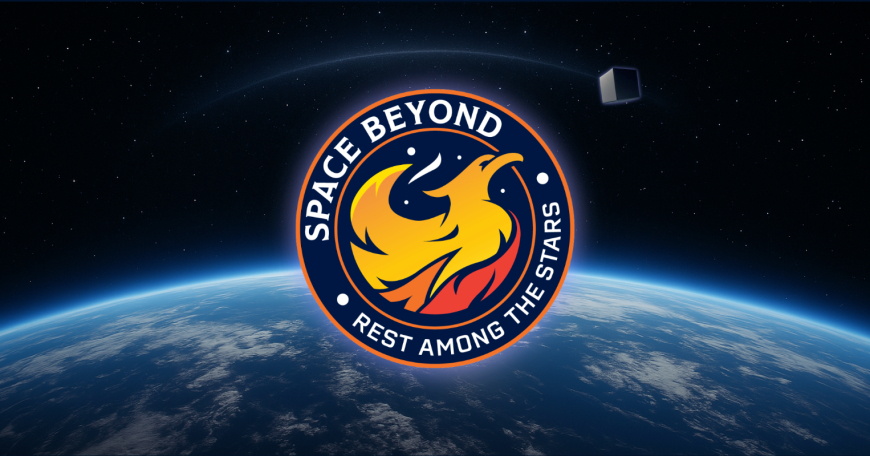
That question became the foundation of Space Beyond and its flagship offering, called the “Ashes to Space” program. The company plans to send the cremated remains of up to 1,000 people into orbit aboard a single CubeSat — a small, cube-shaped satellite commonly used for scientific and commercial missions.
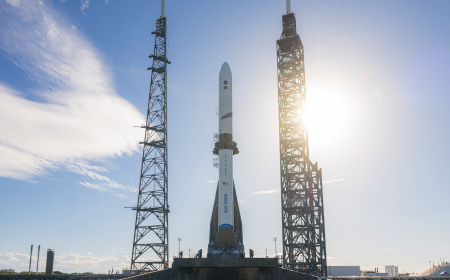
On Thursday, Space Beyond announced that it has signed a launch services agreement with Arrow Science and Technology, which will integrate the CubeSat onto a SpaceX Falcon 9 rideshare mission scheduled for October 2027.
Memorial flights to Space aren’t a new concept. Companies such as Celestis have been offering similar services since the 1990s. What Mitchell argues sets Space Beyond apart is affordability. The company’s entry-level option starts at $249 — a stark contrast to competing services that often run into the thousands of dollars. Customers, however, will still need to arrange cremation separately.
According to Mitchell, keeping prices low comes down to a few key decisions. The most important is leveraging the rideshare model, which has transformed access to orbit. Rather than paying for an entire launch, small spacecraft like CubeSats can be integrated into larger missions, dramatically reducing costs. This model has unlocked a wave of new scientific experiments and small commercial projects — including unconventional ones like space-based memorials.
Space Beyond is also entirely bootstrapped, with no outside investors pushing for outsized returns.
“I’ve been told I’m not charging enough for this service,” Mitchell said, especially considering how the funeral industry often prices services during moments of emotional vulnerability. “But I’m not looking to take over the world, and I’m not looking to make a billion dollars doing this.”
There are technical constraints, of course. Because of the CubeSat’s limited size and mass allowances, each customer will be able to send only about one gram of ashes into Space. That restriction allows Space Beyond to accommodate hundreds of participants on a single mission — and reflects the continued importance of weight limits, even in an era of cheaper launches.
The mission also won’t be permanent. Space Beyond’s CubeSat is expected to remain in orbit for approximately five years. After that, it will gradually descend and burn up during atmospheric re-entry.
Mitchell sees meaning in that ending. The satellite will be placed into a sun-synchronous orbit at roughly 550 kilometres (about 341 miles) above Earth, allowing it to pass over nearly every part of the globe. With modern satellite-tracking tools, families will be able to locate the CubeSat and know when it’s visible in the night sky from their own location.
When the mission eventually ends, the aluminium CubeSat — along with the ashes inside — will disintegrate in a fiery re-entry. While there’s no guarantee the event will be visible from the ground, Mitchell describes the conclusion as symbolically fitting rather than tragic.
One thing Space Beyond will not do is release ashes directly into Space. Mitchell called that idea “almost a nightmare scenario,” since free-floating particles could create debris hazards for other spacecraft. Instead, the ashes will remain sealed inside the CubeSat throughout the mission. With only a small portion sent to orbit, families are free to memorialise the rest of a loved one’s remains however they choose.
After leaving Blue Origin last year, Mitchell said he filled several notebook pages with ideas for what might come next — everything from joining another launch team to abandoning aerospace altogether and becoming a Kava bartender. Yet this idea kept resurfacing.
“I tried to talk myself out of it for a long time,” he said. “I thought it would be too expensive or too difficult.” But every time he applied detailed engineering analysis — breaking down requirements, costs, and feasibility — the concept held up. The business case made sense, and the technical hurdles proved manageable.
It also became clear how deeply the idea had taken hold. As Mitchell recalled with a laugh, his wife eventually pointed it out plainly: “I could have told you that weeks ago. You can’t stop talking about this.”
What's Your Reaction?
 Like
0
Like
0
 Dislike
0
Dislike
0
 Love
0
Love
0
 Funny
0
Funny
0
 Angry
0
Angry
0
 Sad
0
Sad
0
 Wow
0
Wow
0