



































Sierra Space’s spaceplane faces a reinvention after NASA contract change
Sierra Space’s Dream Chaser spaceplane faces a pivot after NASA dropped guaranteed ISS cargo flights, forcing the company to seek defense and commercial markets.
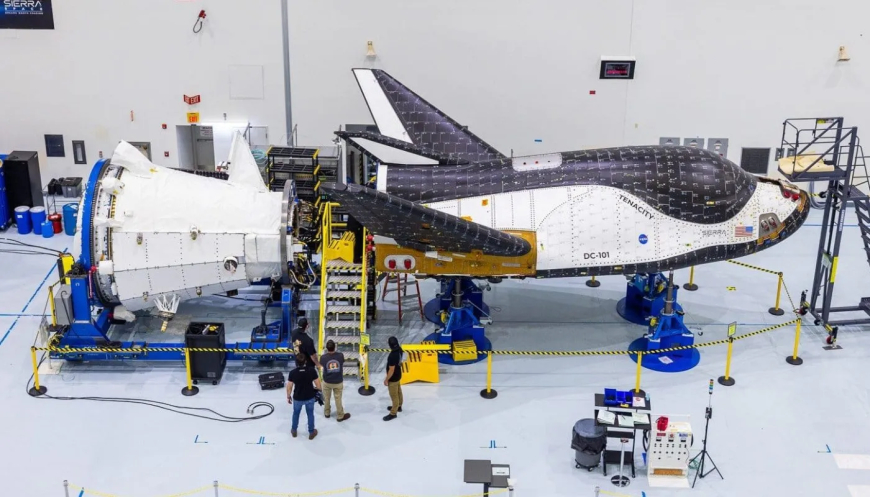
When Sierra Space secured a contract nearly a decade ago to deliver cargo to the International Space Station (ISS), the company promised a groundbreaking achievement: a privately built, reusable spaceplane capable of landing on commercial runways.
That plan has now shifted. In a recent contract modification, NASA and Sierra Space agreed to remove the agency’s guarantee to purchase ISS cargo flights. Instead, the Dream Chaser spaceplane will perform a free-flying demonstration in late 2026 — without docking to the station.
NASA said it will offer only “minimal support” for the test flight and will decide afterwards whether to order resupply missions.
The change is a setback for the Dream Chaser program, which, like most spacecraft efforts, has relied heavily on government contracts to offset the immense cost of development. SpaceX, for instance, received billions through NASA’s Commercial Orbital Transportation Services and Commercial Crew programs to build its Dragon capsule and Falcon 9 rocket.
Dream Chaser had initially been positioned as a dedicated resupply vehicle for the ISS under NASA’s Commercial Resupply Services program, alongside SpaceX’s Dragon and Northrop Grumman’s Cygnus. Those contracts carry a combined value ceiling of $14 billion. So far, NASA has obligated about $1.43 billion to Sierra Space, but that may be the extent of its commitment.
With guaranteed NASA income off the table, Sierra Space must now rebrand Dream Chaser as a dual-use platform, appealing to both commercial space stations and defence markets.
In a statement, Executive Chair Fatih Ozmen said the pivot would enable Sierra to deliver “unique capabilities to meet the needs of diverse mission profiles, including emerging and existential threats and national security priorities that align with our acceleration into the Defence Tech market.”
While mid-program pivots are uncommon in the aerospace industry, they are becoming more frequent as space startups navigate shifting government priorities and the challenge of proving commercial demand. Sierra argues that Dream Chaser’s reusability and ability to land on runways make it more adaptable than traditional spacecraft.
The upcoming free-flying demo could highlight Dream Chaser’s versatility by showcasing different payloads and mission types without requiring ISS docking.
But time is running short. The ISS is expected to deorbit around 2030, leaving Dream Chaser only a few years to prove itself as a cargo solution. If successful, the spacecraft could establish a valuable niche as the market’s only winged orbital vehicle, serving multiple customers beyond NASA.
What's Your Reaction?
 Like
0
Like
0
 Dislike
0
Dislike
0
 Love
0
Love
0
 Funny
0
Funny
0
 Angry
0
Angry
0
 Sad
0
Sad
0
 Wow
0
Wow
0