
































Former SpaceX engineers bring rocket-grade software to factories with Sift
Two former SpaceX engineers launch Sift, bringing advanced manufacturing software from rocket systems to factory floors for improved efficiency.
The phrase “atoms, not bits!” — often used to describe Silicon Valley’s growing focus on physical manufacturing instead of purely digital products — gained renewed attention last week following reports that Jeff Bezos is assembling a $100 billion fund aimed at consolidating and automating factories.
Yet, transforming factories is no longer just about hardware. Increasingly, it relies on advanced software and AI-driven systems, a shift redefining how companies approach industrial infrastructure.
Karthik Gollapudi, CEO of Sift, based in El Segundo, California, says this transition has significantly influenced his company’s direction in recent months. Sift develops tools that support the design and production of complex systems such as spacecraft and automobiles.
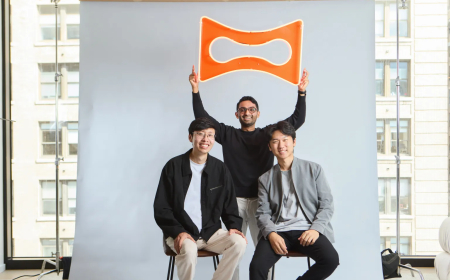
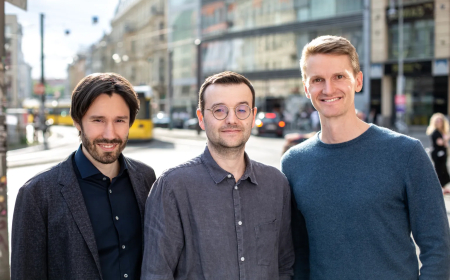
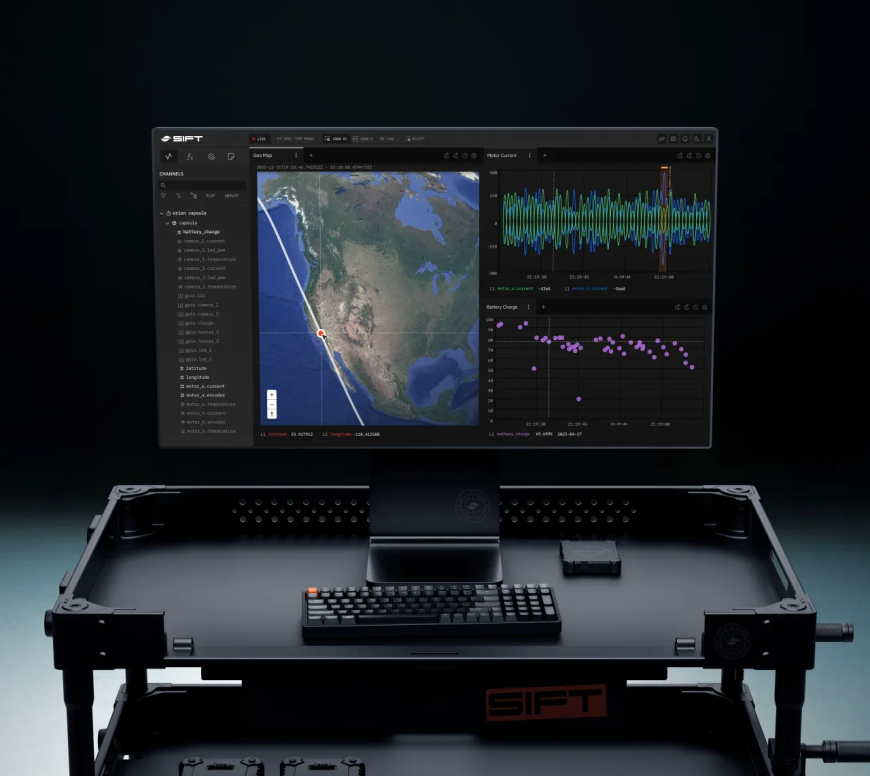
Gollapudi and his co-founder and CTO, Austin Spiegel, launched the company in 2022 after working at SpaceX. There, they built software to handle large volumes of telemetry data — real-time performance information generated by sensors embedded in physical systems during testing, manufacturing, and deployment.
Traditionally, companies working on advanced machinery have relied on generic database solutions or internally developed scripts, often written in Python. Sift identified an opportunity to offer a more specialised, scalable platform. Its customer base now includes organisations such as United Launch Alliance, as well as defence contractors, robotics firms, and power grid technology startups.
However, the rapid rise of AI-powered data analysis tools has forced Sift to evolve. Workflows that once distinguished the company have become more common in an AI-driven environment. At the same time, the importance of managing and structuring data infrastructure has increased significantly.
Gollapudi explained that developments expected to unfold over several years have accelerated dramatically, reshaping the company’s priorities. Today, Sift is focused on handling the massive streams of data generated by modern, software-intensive machines. Some of the systems it supports include vehicles equipped with more than 1.5 million sensors, all transmitting data simultaneously across different formats and time scales.
Organising and storing this data in a way that makes it accessible for AI systems has become central to Sift’s mission. Gollapudi emphasised that much of the value lies in making data machine-readable so that AI agents can analyse it, identify issues, and support decision-making in manufacturing and testing processes.
Jeff Dexter, vice president of software at Astranis, highlighted the importance of this capability. His company uses Sift to manage data across testing, manufacturing, and operations, running millions of automated software tests daily. He noted that storing and managing such large volumes of data can become extremely costly, making efficient infrastructure critical.
According to Gollapudi, Sift raised $42 million in a Series B funding round in 2025, achieving a post-money valuation of $274 million. The round was led by StepStone, with participation from GV, Riot Ventures, Fika Ventures, and CIV.
As manufacturing continues to integrate more software and AI, companies like Sift are positioning themselves at the centre of this transformation, helping bridge the gap between physical systems and the data-driven intelligence required to operate them efficiently.
What's Your Reaction?
 Like
0
Like
0
 Dislike
0
Dislike
0
 Love
0
Love
0
 Funny
0
Funny
0
 Angry
0
Angry
0
 Sad
0
Sad
0
 Wow
0
Wow
0