





































Skyroot becomes India’s first space tech unicorn ahead of orbital mission
Skyroot has emerged as India’s first space tech unicorn as the company prepares for its upcoming orbital launch and expands private space innovation.
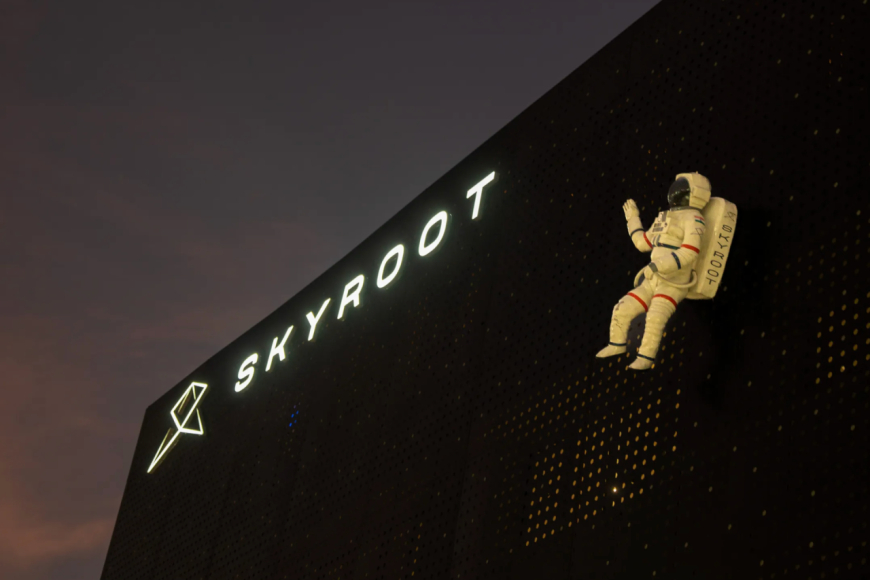
Skyroot Aerospace has become India’s first space technology unicorn after raising $60 million in a fresh funding round ahead of the planned maiden orbital launch of its Vikram-1 rocket in the coming weeks.
The Hyderabad-based startup said the new investment values the company at $1.1 billion on a pre-money basis. The funding round included nearly $50 million in primary equity co-led by Sherpalo Ventures and GIC, along with around $10 million in structured debt managed by funds affiliated with BlackRock.
The investment comes as Skyroot prepares for what is expected to be the first orbital launch attempt by a private Indian company. The company shipped the Vikram-1 rocket to India’s spaceport located on the southern island of Sriharikota in April, and it is currently targeting a June launch after completing flight qualification tests and beginning launch integration and campaign activities.
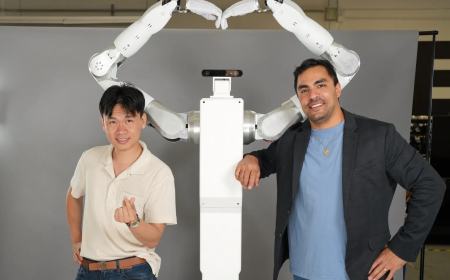
Founded in 2018 by former Indian Space Research Organisation engineers Pawan Kumar Chandana and Naga Bharath Daka, Skyroot is developing small-satellite launch vehicles similar to those built by U.S.-based companies, including Rocket Lab and Firefly Aerospace. The Vikram-1 rocket is designed to carry payloads weighing up to 350 kilograms, or roughly 772 pounds, into low Earth orbit.
The company’s latest valuation marks a sharp increase over the $500 million pre-money valuation it achieved in its 2023 funding round, reflecting rising investor interest in India’s growing private space sector.
The funding round also attracted participation from Playbook Partners, Arkam Ventures, and the founders of Greenko Group. Sherpalo Ventures founder and Alphabet board member Ram Shriram will also join Skyroot’s board following the investment.
Skyroot did not disclose specific revenue figures or customer backlog numbers, though the company said demand for dedicated launches from small satellite operators remains strong. According to the startup, roughly one-third of expected demand comes from Indian customers, while the remainder comes from international markets.
The company first gained national attention in November 2022 after launching Vikram-S, a suborbital mission that became the first privately developed rocket launch in India.
Skyroot said the newly raised capital will be used to expand manufacturing operations, increase the launch frequency of Vikram-1 missions, and support development of its next launch vehicle, Vikram-2, which is expected to debut in 2027.
Vikram-2 is being designed as a one-ton-class rocket powered by a cryogenic stage, which would enable Skyroot to support more advanced satellite missions and compete more aggressively in the global small-satellite launch market.
Skyroot’s rapid rise comes as India works to expand its role in the global space economy by opening the sector to private companies and using lower manufacturing and launch costs as a competitive advantage. India’s space economy is currently estimated at $8.4 billion and is projected to grow to $44 billion by 2033. Government estimates also suggest that India had nearly 400 space-tech startups as of early 2026.
The company’s upcoming Vikram-1 mission arrives at a time when India is seeking to build additional commercial launch capacity alongside state-run ISRO, which has recently faced setbacks, including two consecutive launch failures.
Since 2020, reforms introduced by the Indian government have allowed private companies to access ISRO infrastructure and participate in end-to-end space activities. Those changes have helped accelerate the growth of startups working on launch systems, satellites, propulsion technology, and related space applications.
What's Your Reaction?
 Like
0
Like
0
 Dislike
0
Dislike
0
 Love
0
Love
0
 Funny
0
Funny
0
 Angry
0
Angry
0
 Sad
0
Sad
0
 Wow
0
Wow
0