






































Former DeepMind Poker AI Team Turns Quant Trading Into a $500M Success
Three former DeepMind researchers behind the groundbreaking poker AI have transformed their expertise into quantitative trading. Learn how EquiLibre Technologies reached a $500 million valuation by applying advanced AI to hedge fund strategies.
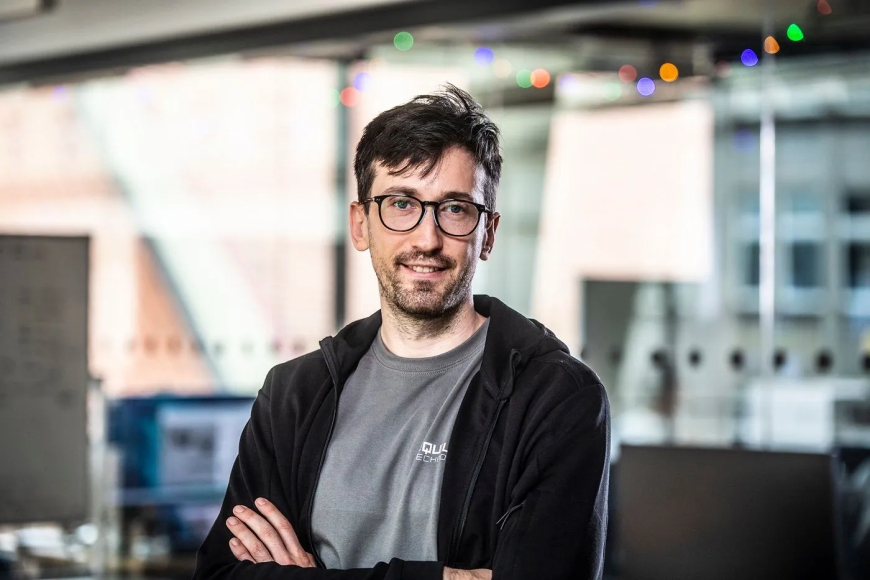
Three former DeepMind researchers who developed an artificial intelligence system capable of defeating professional poker players have successfully adapted the same underlying technology to stock market trading, and the strategy appears to be delivering strong results. Their Prague-based startup, EquiLibre Technologies, has reached a $500 million valuation after securing an undisclosed Series A funding round.
Venture capital firm Creandum led the investment. Although neither the company nor the investor disclosed the amount raised, Creandum vice president Cameron Sellers said the financing represented the largest single investment the firm has ever made in a single company in a single funding round.
The connection between poker and financial markets lies in reinforcement learning, an artificial intelligence training technique in which models improve their decision-making through reward-based learning. According to EquiLibre CEO Martin Schmid, trading provides an ideal environment for this type of AI because measuring success is straightforward. “The nice thing about trading and markets is that the scoring is super simple: how much money did the agent make?” Schmid said.
The company’s technology is already being deployed in real financial markets rather than simulations. Working alongside quantitative trading firm Tower Research Capital, EquiLibre’s AI systems execute trades worth billions of dollars in daily trading volume across the S&P 500 and Nasdaq. The startup says its trading agents first proved themselves in cryptocurrency markets during 2025 before expanding into equities, where they claim to have maintained “a perfect record of zero negative months since inception,” meaning every month has ended with positive overall investment performance.
By focusing on quantitative hedge funds, EquiLibre has entered a financial sector where automation has long been standard practice and even modest performance improvements can translate into substantial financial returns. According to Sellers, that commercial potential made the company particularly attractive as an investment opportunity.
“The potential total addressable market of trading in the financial markets is one of the biggest on earth, and there have been countless funds over the years that have generated quantums of profit that make most venture-backed successes look small,” Sellers said. He also noted that EquiLibre continues to describe itself primarily as “a lab first, not a finance firm.”
Schmid and his fellow founders—Chief Technology Officer Rudolf Kadlec and Chief Science Officer Matej Moravcik—do not come from traditional financial backgrounds. Instead, Schmid says their motivation has always been to advance artificial intelligence rather than to transform financial markets.
“I’m not doing this because I’m excited about making markets efficient. I’m doing this because we are all excited about building new things that have never been built before, and this is a lot of fun to build,” Schmid explained.
Artificial intelligence startups founded by former DeepMind researchers have become a major focus for venture capital investors in recent years. One recent example is Ineffable Intelligence, which recently secured $1.1 billion in funding. While many DeepMind spinouts are headquartered in the United Kingdom, EquiLibre represents one of the more notable exceptions.
The company’s three founders originally joined DeepMind as visiting PhD students at the company’s first international AI research office in Edmonton, Alberta, Canada, before Alphabet shut down the facility in 2023. During their time there, they created DeepStack, widely recognised as the first artificial intelligence system to defeat professional players in no-limit Texas Hold ’em poker.
The founders also collaborated with several leading academics who now serve on EquiLibre’s advisory board, including Rich Sutton, who received the 2024 Turing Award for his pioneering contributions to reinforcement learning.
When it came time to establish their own company, the founders chose to return to their home country, Czechia, rather than remain in North America.
“This is where we had a lot of people we had worked with, and there was a large Czech diaspora at Google and other places,” Schmid said. “These were our friends, so we told them, ‘Hey, guys, we are moving back to Prague- do you want to join us?’”
That decision helped EquiLibre assemble its original team in 2022 and grow to its current workforce of approximately 25 employees. Schmid believes the company’s Prague location continues to offer strategic advantages.
Compared with San Francisco, “It’s much easier to keep the good people here, because there’s not a new sexy AI thing happening every two months,” he said.
Even so, EquiLibre is not the only prominent AI startup based in the city. Another fast-growing company, BottleCap AI, operates from the same building.
Nevertheless, EquiLibre has become one of the region’s most recognised AI employers and is now preparing to expand its computing infrastructure significantly. The company plans to build what it expects will become one of the largest AI computing clusters anywhere in Central and Eastern Europe.
Although EquiLibre declined to reveal the total amount of capital it has raised since its launch, Schmid confirmed that the company completed two prior funding rounds before the current Series A. Early investors included Central and Eastern Europe-focused venture capital firm Credo, which has also backed companies such as ElevenLabs and UiPath. According to Dealroom data, EquiLibre’s previous $10 million seed financing was led by Blossom Capital at an approximately $140 million valuation.
Sellers confirmed that the latest $500 million valuation represents a substantial increase from the company’s previous funding round. He attributed part of that growth to changing industry attitudes toward reinforcement learning, particularly in financial trading.
“When we started, people were sceptical,” Schmid said. Today, however, reinforcement learning has become a widely accepted standard across the industry. “Because we started four years back, we believe we are ahead.”
Despite its progress, EquiLibre still faces competition from much larger and well-funded trading firms. Jane Street, for example, has publicly stated that it already combines reinforcement learning with large language models and other AI technologies whenever appropriate. The company also says it operates tens of thousands of high-end GPUs, while EquiLibre is pursuing a different strategy focused on maximising performance from a comparatively smaller computing infrastructure. As Schmid explained, the company’s objective is to “get more from less.”
Given Jane Street’s scale and profitability, EquiLibre will need to continue executing its strategy successfully if it hopes to establish itself as what Schmid describes as “the AI lab in trading.” Even so, he believes the market offers room for multiple successful companies rather than producing a single dominant winner.
“This is not a winner-takes-all market,” Schmid said.
What's Your Reaction?
 Like
0
Like
0
 Dislike
0
Dislike
0
 Love
0
Love
0
 Funny
0
Funny
0
 Angry
0
Angry
0
 Sad
0
Sad
0
 Wow
0
Wow
0