
































SpaceX Launches V3 Starlink Satellites Despite Booster Failure
SpaceX successfully deployed its first third-generation Starlink satellites during Starship’s 13th test flight, but the Super Heavy booster failed during its planned simulated landing.
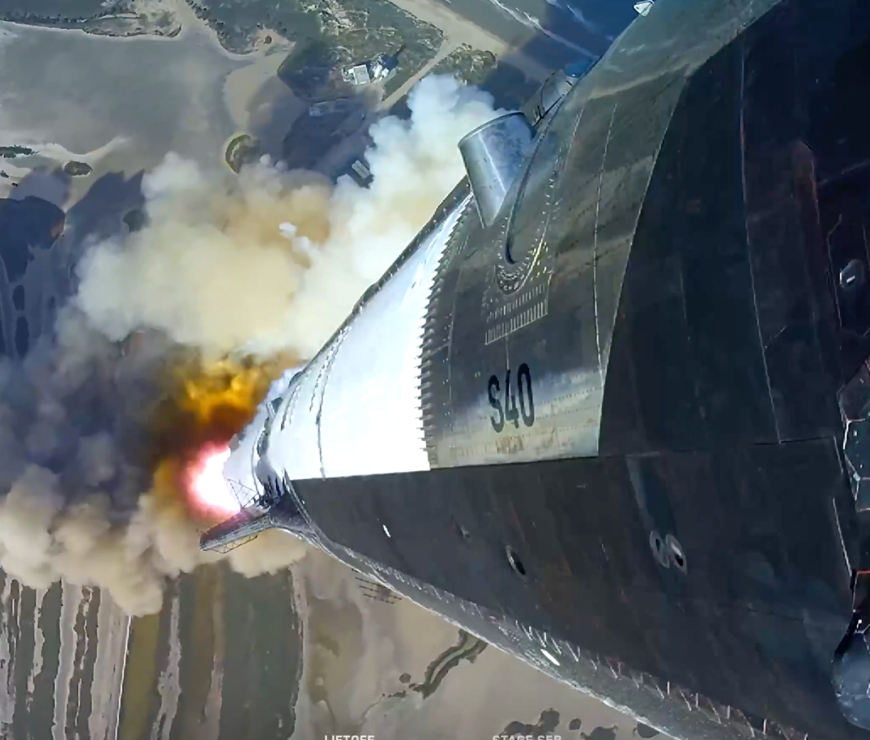
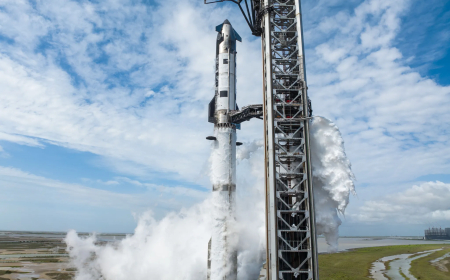
SpaceX successfully deployed its first third-generation Starlink satellites on Friday during the 13th test flight of its upgraded Starship rocket, marking an important milestone for the company’s next-generation satellite internet network. However, the mission also ended with another setback after the Super Heavy booster failed during a planned simulated landing in the Gulf of Mexico.
The launch represented the second flight of the Starship V3 configuration. During the first V3 mission in May, the Super Heavy booster encountered a failure shortly after separating from the upper stage. While the upper stage completed its objectives during Friday’s mission, the booster again failed to complete its recovery profile.
The mission came just over a week after SpaceX was forced to abort its previous launch attempt immediately after engine ignition because of multiple engine failures. Ahead of Friday’s flight, the company said it had replaced six engines to resolve those issues.
Booster fails during landing attempt.
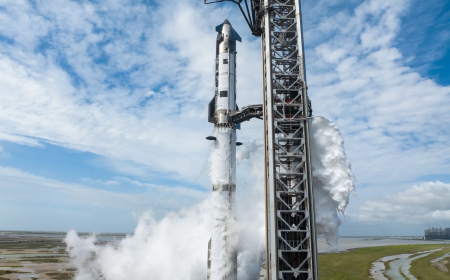
Friday’s launch progressed further than the earlier V3 mission, with the Super Heavy booster completing most of its planned ascent. However, during the simulated landing sequence, the booster was unable to restart all of the engines required for its landing burn.
As a result, the rocket struck the water faster than planned and exploded after impact in the Gulf of Mexico, marking another unsuccessful recovery attempt for SpaceX’s reusable booster system.
Despite the setback, the upper stage continued its planned mission without major issues. Unlike the May flight, when the Ship lost a rocket engine, the latest mission completed its ascent and successfully deployed the new V3 Starlink satellites.
Upper stage reaches mission objectives.
After releasing the satellites, the Starship upper stage survived atmospheric reentry and completed a simulated landing in the Indian Ocean roughly one hour after liftoff.
In another positive sign for the program, the vehicle remained intact after touching down in the water. Unlike previous Starship flights that ended with the Ship breaking apart after landing, this vehicle floated long enough for SpaceX to dispatch a drone to inspect the heat shield tiles covering its underside closely.
The newly deployed V3 Starlink satellites remained operational for about 20 minutes before burning up in Earth’s atmosphere because Starship has not yet reached orbital capability. SpaceX said it maintained communication with all of the satellites during their time in space, providing another successful test for the next-generation spacecraft.
Starlink economics remain tied to reusability.
The V3 Starlink satellites are expected to significantly improve the economics of SpaceX’s satellite internet business, which remains the company’s only profitable division. According to SpaceX, a single Starship carrying 60 V3 satellites could deliver as much as twenty times the downlink capacity of a Falcon 9 mission carrying current-generation Starlink satellites.
However, those benefits depend heavily on fully reusing both stages of Starship. SpaceX has previously stated in regulatory filings that without a fully reusable launch system, expansion of the Starlink network would proceed at a slower pace and at a higher cost.
The latest mission also marked the first Starship launch since SpaceX completed its historic public listing in June. Investor sentiment has remained volatile following the IPO. Shares fell after last week’s aborted launch attempt and continued their broader decline after Friday’s flight. The stock closed at $115 before slipping another 2% in after-hours trading following news of the booster failure, although it later recovered part of those losses.
What's Your Reaction?
 Like
0
Like
0
 Dislike
0
Dislike
0
 Love
0
Love
0
 Funny
0
Funny
0
 Angry
0
Angry
0
 Sad
0
Sad
0
 Wow
0
Wow
0