








































CivilGrid Raises $26 Million to Build a Google Maps for Underground Infrastructure
CivilGrid raises $26 million to map underground infrastructure, helping utilities and engineers identify buried assets before construction.
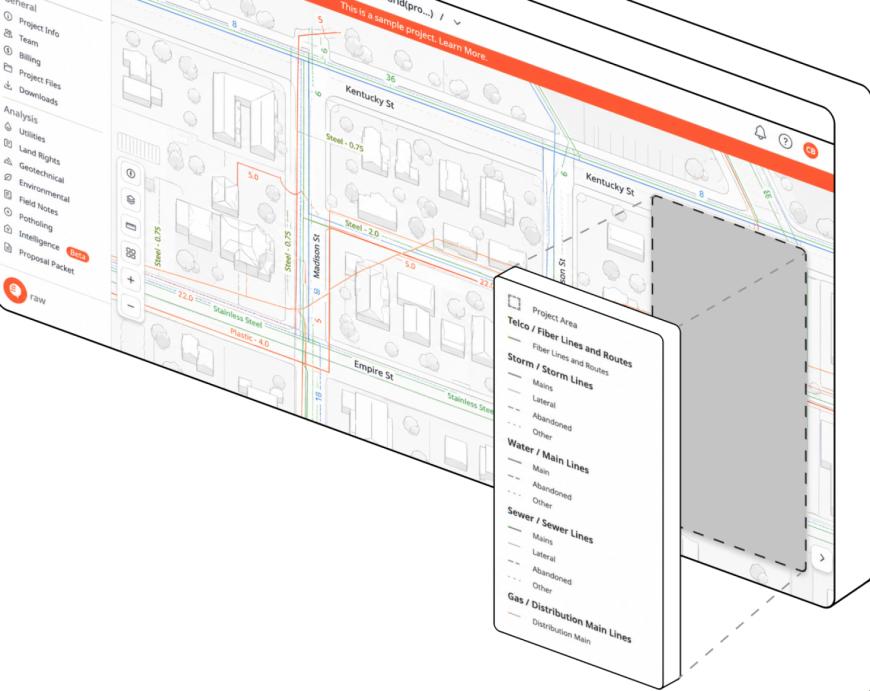
Former Pacific Gas and Electric engineer Josh Mackanic is building a platform designed to solve a long-standing infrastructure problem: understanding what is buried underground before construction begins. His startup, CivilGrid, is creating what he describes as a “Google Maps for what’s underground” by combining scattered data about utility assets, property ownership, and environmental requirements.
Mackanic founded CivilGrid in 2020 after seeing firsthand how difficult it can be for utility companies and construction teams to identify underground infrastructure. During his time at PG&E, one project was delayed after workers discovered an unknown pipe in an excavation.
The team eventually determined who owned the pipe and what it contained, but the process took three days and caused a $60,000 delay. The experience highlighted a broader challenge across the infrastructure industry: companies often maintain detailed records of their own assets but have limited visibility into underground systems owned by others.
CivilGrid maps hidden infrastructure data
Underground infrastructure includes networks managed by different organisations, such as electric lines, gas pipes, water systems, and sewage systems. The lack of shared visibility contributes to thousands of utility strikes each year, creating safety risks and expensive project delays.
CivilGrid collects and organises information from multiple sources to give engineers, governments, utilities, and construction teams a clearer view of underground conditions before projects begin.
The company recently raised $26 million in a Series A funding round led by Spark Capital, with additional investment from Afore, A*, Ford Street Ventures, SNR, and Energy Impact Partners.
PG&E has also used CivilGrid’s platform in a case study that identified $60 million in potential savings in paving costs across 1,600 planned gas distribution projects.
Startup aims to automate infrastructure planning
Mackanic said CivilGrid’s current focus is helping engineers make better decisions by providing access to the right information earlier in the planning process. The company’s longer-term goal is to automate more parts of infrastructure development, including recommendations and permitting workflows.
With a growing dataset of underground infrastructure information, CivilGrid plans to help users identify suitable project locations and potentially handle additional administrative steps before construction begins.
Mackanic said the challenge was not simply recognising the need for better underground mapping, but building a system that could collect, organise, and securely manage the necessary data while creating partnerships with organisations that need it.
The company’s approach reflects a broader effort to modernise infrastructure planning by bringing more visibility to systems that have traditionally remained difficult to track. For utilities and engineers, better underground information can help reduce delays, avoid unnecessary costs, and improve project safety.
What's Your Reaction?
 Like
0
Like
0
 Dislike
0
Dislike
0
 Love
0
Love
0
 Funny
0
Funny
0
 Angry
0
Angry
0
 Sad
0
Sad
0
 Wow
0
Wow
0