


































WindBorne Wins U.S. Air Force Weather Data Contract Worth Up to $48.7M
WindBorne secures a U.S. Air Force contract worth up to $48.7 million for weather balloon data, with $1.7 million ordered so far for military forecasting.
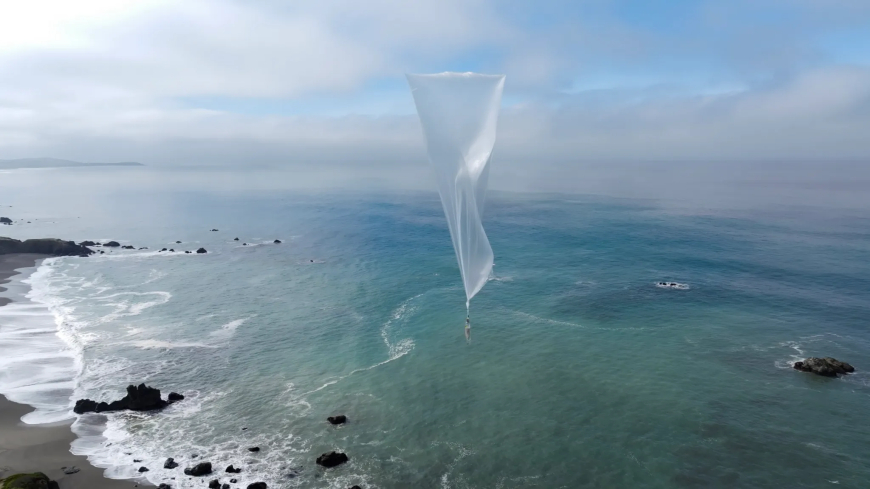
The U.S. Air Force has awarded weather-technology startup WindBorne Systems a contract worth up to $48.7 million to supply atmospheric data collected by its fleet of autonomous balloons. The agreement lets the military buy weather observations for specific locations and periods rather than committing to the full contract value upfront.
The Air Force has initially ordered approximately $1.7 million in data, with additional purchases expected, according to the company. The award is WindBorne Systems’ largest government contract to date; the company operates roughly 700 weather balloons worldwide and uses their measurements to support AI-powered forecasting.
Air Force Contract Supports WindBorne’s Global Balloon Network
WindBorne’s balloons collect atmospheric measurements across remote regions, including areas where conventional weather observations are limited. The company supplies this information to customers and incorporates it into its own deep-learning forecasting system.
Unlike traditional weather balloons, which typically make a single ascent, WindBorne’s autonomous systems can remain airborne for weeks and change altitude to collect repeated measurements. By releasing gas or dropping sand ballast, the balloons move between wind currents that carry them toward targeted locations.
WindBorne co-founder and Chief Technology Officer Andrey Sushko said the Air Force agreement will support expansion of the balloon network and research to improve its hardware and performance. The government awarded the contract without competitive bidding, with Sushko saying it determined WindBorne uniquely met its requirements for global atmospheric data collection.
The startup has previously worked with the National Weather Service, the U.S. Air Force, and the Navy. In August, CEO John Dean announced a $37 million Series B funding round to support further business expansion.
WeatherMesh 6 Advances AI Weather Forecasting
WindBorne also develops WeatherMesh, a deep-learning forecasting model that combines atmospheric observations with AI-based predictions. WindBorne released its latest version, WeatherMesh 6, earlier this year, designed to compete with established forecasting systems.
The company claims WeatherMesh 6 delivers more accurate predictions than the European Centre for Medium-Range Weather Forecasts’ traditional physics-based model. WindBorne publishes forecast-accuracy benchmarks comparing its performance with ECMWF systems, though results vary by weather variable and forecast period.
AI forecasting has gained attention as deep-learning models can generate predictions faster than conventional numerical weather systems. Platforms such as Operational WeatherBench compare operational forecasting models, helping assess performance across approaches.
Traditional weather models remain important because atmospheric conditions and forecasting tasks vary considerably. AI systems are also being evaluated for hurricane prediction, where accurate storm-movement forecasts are especially important for emergency planning.
WindBorne Demonstrates Balloon Navigation Inside a Typhoon
In August, WindBorne demonstrated its ability to guide an unpowered weather balloon into the eye of Typhoon Dolphin to collect atmospheric measurements. The company described the flight as the first time an unpowered system deliberately reached a typhoon’s centre to collect data.
The operation required accurate wind forecasts and carefully managed altitude adjustments to steer the balloon through changing atmospheric conditions. Sushko said the mission showed how deep-learning forecasts could support real-world navigation decisions, not just generate weather predictions.
Under the Air Force contract, WindBorne can expand its data collection while providing targeted measurements for military forecasting and mission planning. Theagreement’s eventual value will depend on how much additional data the government orders.
What's Your Reaction?
 Like
0
Like
0
 Dislike
0
Dislike
0
 Love
0
Love
0
 Funny
0
Funny
0
 Angry
0
Angry
0
 Sad
0
Sad
0
 Wow
0
Wow
0