








































Amazon Ends Data Center NDAs as Community Backlash Intensifies
Amazon says AWS has stopped using nondisclosure agreements with government agencies for data centre projects in response to growing concerns about transparency, energy use, water use, and local costs.
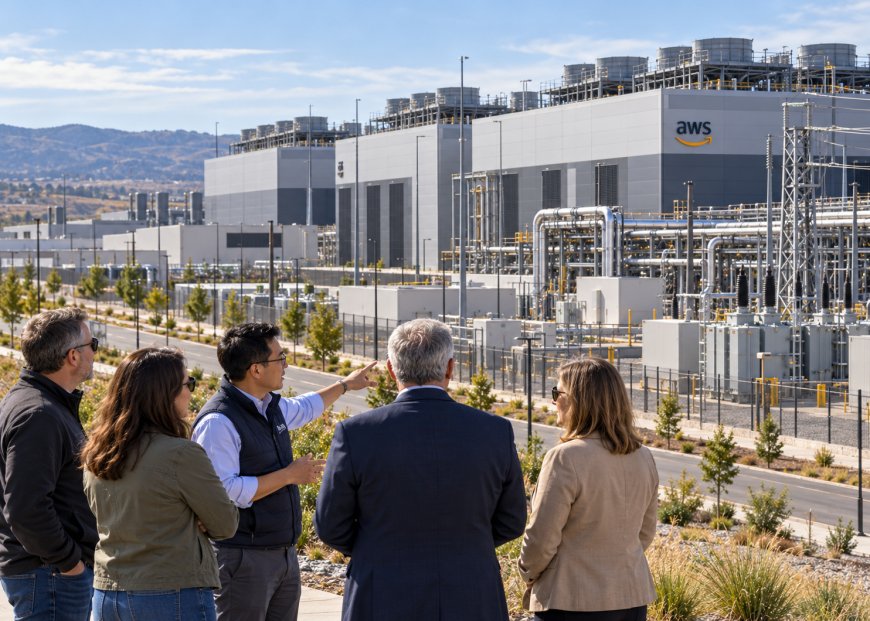
Amazon is changing how it deals with local governments around new data centre projects as opposition to the rapid expansion of AI infrastructure spreads across the United States.
Amazon Web Services CEO Matt Garman says the company no longer uses nondisclosure agreements with government agencies involved in its data centre developments. The change addresses one of the most persistent complaints from communities facing large new projects: residents sometimes learn about developments only after negotiations between technology companies and local officials are already well advanced.
Amazon is pairing the transparency pledge with a new commitment to invest more than $1 billion over five years in U.S. communities that host its data centres.
The announcements arrive at a difficult moment for the industry. Artificial intelligence is driving demand for enormous amounts of computing capacity, electricity, land and supporting infrastructure, while local resistance is slowing or reshaping projects in several parts of the country.
Amazon outlined the new commitments in an October 2 statement from Garman.
Amazon Data Centre NDAs Are Being Dropped
The NDA decision is one of the clearest changes in Amazon’s approach.
Garman said Amazon no longer uses nondisclosure agreements with government agencies it works with on data centre projects. The company has also promised more community engagement and public information as developments move forward.
NDAs have become a focal point in the national data centre debate because they can prevent local officials from discussing negotiations. At the same time, companies evaluate land, tax incentives, utility agreements and other details.
Critics argue that secrecy can leave residents with little opportunity to understand a project’s potential effects before important decisions have already been made.
TechAmerica.ai previously reported on environmental advocate Erin Brockovich’s criticism of secrecy surrounding AI data centre expansion. Brockovich said transparency was the most common issue raised in thousands of submissions she received from communities around the country.
Amazon’s decision directly addresses that part of the backlash, although it does not settle wider disputes over electricity prices, water use, emissions, land development and tax incentives.
Amazon Is Putting Another $1 Billion Into Host Communities
Alongside the change on NDAs, Amazon announced a program called Built Together.
The company says it will invest more than $1 billion over the next five years in U.S. communities where it has significant data centre operations. The money is intended to support areas including education, workforce training, energy affordability, water and energy conservation, and other locally determined priorities.
Amazon says communities will help decide how the funding is used.
The company also says it has already contributed more than $1 billion to U.S. data centre communities during the previous three years.
Reuters reported that the new five-year commitment comes as communities raise growing concerns about electricity demand, water use and the local impact of large data centre projects.
The investment is substantial, but it must be viewed against the scale of Amazon’s infrastructure business.
Amazon says it invested about $276 billion in U.S. data centre infrastructure between 2011 and 2025. Spending is accelerating as AWS builds additional capacity for cloud computing, generative AI and large-scale machine-learning workloads.
Data Centre Opposition Is Becoming Harder to Ignore
Amazon’s announcement comes as data centre projects face more scrutiny from local governments and residents.
Concerns vary by location, but electricity demand is often near the top of the list. Large AI facilities can require hundreds of megawatts of power, forcing utilities to add generation, transmission and other grid infrastructure.
Residents increasingly want assurances that those costs will not be passed on through higher household electricity bills.
Water is another concern. Some data centres use substantial amounts of water for cooling, although consumption depends heavily on facility design, climate and cooling technology.
Communities are also raising questions about backup generators, noise, construction, tax incentives and how many permanent jobs remain after a facility is built.
TechAmerica.ai has previously examined why public opposition to data centre construction is increasing, including disputes over energy demand, environmental impact and whether local benefits justify the scale of new infrastructure.
Those concerns are no longer isolated.
Garman said more than 100 data centre moratoriums are being considered around the United States. New York has already moved to restrict approvals for some large projects, while other states and municipalities are reassessing zoning, utility requirements and environmental rules.
AWS Says Data Centres Are Being Blamed for Broader Infrastructure Problems
Amazon is not simply conceding critics’ arguments.
Garman used the announcement to challenge what he described as misconceptions about data centres.
On electricity prices, he argued that higher rates in some regions stem from years of underinvestment in power grids rather than being caused solely by new data centres.
Amazon has also pledged to pay the energy costs associated with its facilities, including certain generation and grid upgrades, as part of broader commitments intended to protect residential ratepayers.
The company previously joined a White House ratepayer protection initiative. It said it would work with utilities and regulators to prevent its data centre expansion from shifting infrastructure costs onto households.
That position remains contested.
Independent researchers, consumer advocates and regulators continue to examine how rapidly growing data centre demand affects electricity prices and how to divide grid expansion costs between technology companies and other customers.
Water Claims Will Receive Similar Scrutiny
Amazon is also defending its record on water consumption.
Garman said direct data centre water use accounts for a small share of total U.S. industrial water consumption, citing Amazon’s own analysis.
But direct consumption inside a facility does not capture the full scope of a data centre’s water footprint.
Electricity generation can use water, as can semiconductor manufacturing and other parts of the technology supply chain. The impact also varies dramatically by location. Using water in a drought-prone area can raise very different concerns than using the same amount in a region with abundant supply.
This is one reason communities increasingly want project-level information rather than national averages.
A large national percentage can make an industry’s overall consumption appear modest while a specific project may still place meaningful pressure on local water infrastructure.
The $1 Billion Program Is Partly About Rebuilding Trust
Amazon’s announcement suggests that the data centre debate is shifting from a purely technical question to one of public trust.
AWS needs more facilities to support cloud services and increasingly demanding AI workloads. Yet building those facilities depends on permits, utility connections, local political support and access to land.
Opposition can turn each of those steps into a constraint.
Ending government NDAs may therefore be as important strategically as the financial commitments Amazon is making.
A community is more likely to distrust a project if negotiations appear secretive, regardless of whether the developer believes the final economic benefits will outweigh the costs.
Making information available earlier does not guarantee local approval, but it removes one argument that has become increasingly damaging to the industry’s relationship with communities.
Amazon Still Has to Prove the Commitments Locally
The next test will be implementation.
A national pledge to stop using NDAs is straightforward to understand. Promises involving energy bills, water, infrastructure, and community investment are harder because their effects will vary from one project to another.
Residents will ultimately judge Amazon’s approach by what happens where they live: how early they are informed, what information they receive, how electricity and water systems are affected, and whether promised economic benefits actually reach the surrounding community.
That is why the latest announcement should not be read as the end of the data centre backlash. It shows the backlash has grown enough to change how one of the world’s largest cloud infrastructure companies approaches new development.
Amazon still believes the United States needs to build data centres rapidly to support the next generation of cloud computing and artificial intelligence. Communities are increasingly demanding different conditions for that expansion: they want to know what is being built, what it will consume, who will pay for the supporting infrastructure, and what they will receive in return.
By dropping government NDAs and committing another $1 billion to host communities, Amazon acknowledges that the next phase of the AI infrastructure boom will require more than servers, power, and capital. It will also require public trust.
What's Your Reaction?
 Like
0
Like
0
 Dislike
0
Dislike
0
 Love
0
Love
0
 Funny
0
Funny
0
 Angry
0
Angry
0
 Sad
0
Sad
0
 Wow
0
Wow
0