































HackerRank AI Interviewer Chakra Is Rethinking the Technical Job Interview
HackerRank is rolling out Chakra, an AI interviewer that conducts technical interviews, watches how candidates work with AI and produces structured evaluations for hiring teams.
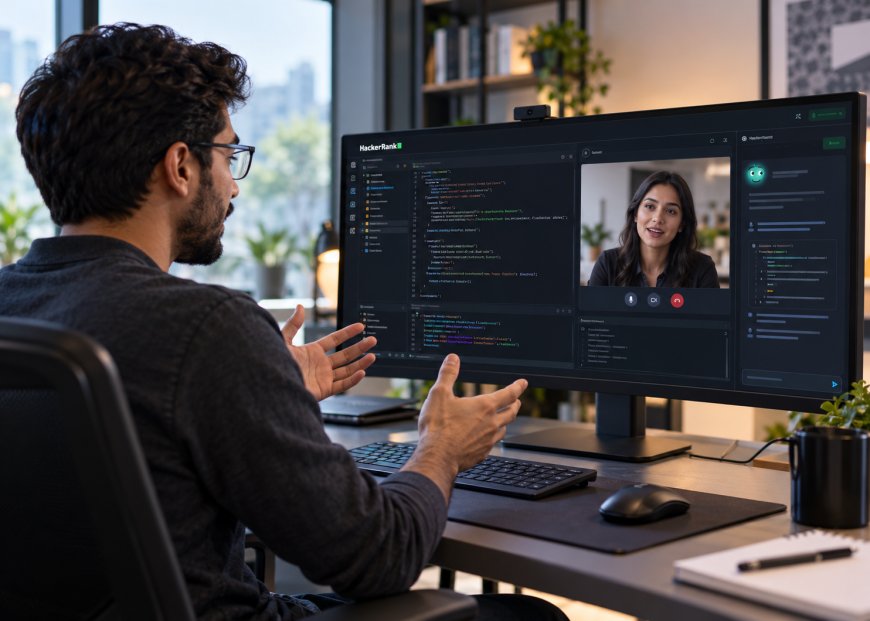
HackerRank’s AI interviewer is moving out of beta with an ambitious idea for technical hiring: instead of judging developers mainly on whether they reach the correct answer, it watches how they think, how they respond when a problem changes, and how effectively they work with AI.
The system is called Chakra. After roughly six months of testing, HackerRank is making the AI interviewer generally available to customers. The company says Chakra conducted more than 500,000 interviews during its beta period, with organisations including Snowflake, Snorkel and Capgemini among those that tested it.
For a company whose name became closely associated with coding assessments, Chakra represents a notable change in direction. Generative AI has made it increasingly easy to produce working code, making the old question of whether a candidate can solve an isolated programming challenge less useful on its own. HackerRank now wants employers to examine the process behind the answer.
TechCrunch reported on Chakra’s general availability on October 5.
How the HackerRank AI Interviewer Works
Chakra begins before the candidate enters the interview. A hiring team can give the system a job description or explain the role it is trying to fill. HackerRank says Chakra uses that information to prepare an interview plan containing sections, evaluation goals, timing and sample questions. Recruiters can review and modify the plan before using it with candidates.
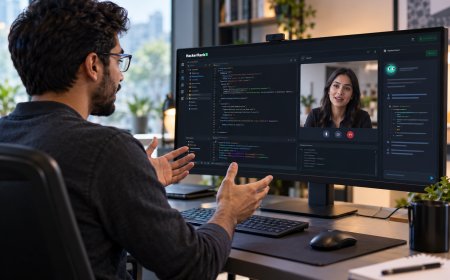
During the interview, the experience can go beyond a conventional sequence of scripted questions. Chakra can listen to a candidate’s response, follow the flow of the conversation, and ask follow-up questions when an answer needs more detail.
In technical interviews, candidates can work with code while the AI observes their approach and questions the reasoning behind their decisions. HackerRank has also added an in-line code editor for coding exercises. Candidates can write and run code while Chakra follows the session.
Once a solution is submitted, the AI can ask why a candidate chose a particular approach or how they might respond to a different constraint. That makes the interview feel more like a working session than an automated questionnaire.
HackerRank explains how its AI interviewer works and says the system can create a structured interview plan from a role description while adapting its questioning based on what happens during the session.
AI Fluency Is Becoming Part of the Evaluation
One of the most interesting changes is what HackerRank wants employers to measure.
Traditional coding assessments were built around the assumption that a developer should solve a problem largely on their own. That assumption is becoming harder to maintain as tools such as GitHub Copilot, Claude Code, Codex, and other AI coding systems become part of everyday software development.HackerRank’s newer interview environments can allow candidates to use AI while they work. The hiring team can then see how the candidate asks for help, interprets AI-generated code and decides what to accept, modify or reject.
HackerRank describes this ability as AI fluency.
That changes the definition of technical skill. Producing code remains important, but employers may increasingly care about whether a developer can recognise when an AI-generated answer is wrong, ask a model a useful question and understand the software well enough to take responsibility for the final result.
A candidate who unquestioningly accepts generated code may therefore reveal something very different from a candidate who uses the same tool but challenges its output and improves it.
The shift also reflects the broader rise of AI agents and autonomous AI systems, which are increasingly being used to carry out multi-step software and business tasks rather than answer questions.
HackerRank Is Moving Away From the Classic Coding-Test Model
The shift is particularly striking because coding tests helped build HackerRank’s business.
The company launched in 2012 and became known for standardised programming challenges employers use to screen developers. HackerRank now says it serves thousands of business customers and has a developer community numbering in the tens of millions.
AI has put pressure on that model because a coding assistant can quickly produce solutions to many conventional programming exercises. An assessment that measures only the final code risks measuring access to AI as much as engineering ability.
Chakra takes the opposite approach. Instead of trying to remove AI entirely, HackerRank can allow it into the interview and observe what the candidate does with it.
HackerRank has been rebuilding its broader interview environment around the same principle. Its newer Agentic Development Environment is designed to resemble the AI-assisted tools developers increasingly use at work rather than an empty code editor where AI is forbidden.
That may better reflect modern engineering jobs, though it also makes evaluation more complex.
One AI Interview Could Replace Several Early Hiring Rounds
HackerRank also sees Chakra as a way to compress the hiring process.
CEO and co-founder Vivek Ravisankar told TechCrunch that a process that previously might have included a recruiter screening, a take-home assessment and a later technical interview can potentially be combined into one Chakra session.
For employers processing large numbers of applicants, the appeal is obvious. Senior engineers no longer need to spend as much time on repetitive first-round interviews, while candidates can be evaluated at scale.
Chakra produces post-interview reports for hiring teams, including scores and supporting evidence. HackerRank has added full session playback, transcripts and section-level scoring so recruiters can review what happened rather than seeing only a final grade.
The company says the AI is designed to score and evaluate candidates, not make the ultimate hiring decision. Human employers remain responsible for deciding who gets hired, an important distinction as automated hiring becomes more common.
Letting Candidates Use AI May Reduce Hidden Cheating
Allowing an AI assistant into a technical interview sounds, at first, like making cheating easier. HackerRank argues that it can have the opposite effect.
Ravisankar told TechCrunch that suspicious-activity flags during Chakra interviews were roughly 70% to 80% lower than in comparable traditional HackerRank assessments, though the rate varied by factors including geography and candidate seniority.
That is a company-reported finding rather than independent evidence, but the reasoning behind it is interesting. When AI tools are prohibited, candidates have an incentive to hide their use. If an approved AI assistant is already part of the interview, the employer can watch how the person uses it instead.
The interview can then evaluate behaviour that resembles modern software work: requesting assistance, checking generated code, debugging problems and deciding when the AI should not be trusted.
AI Hiring Still Brings Difficult Questions About Bias
Automating interviews does not automatically make hiring neutral.
An AI system can apply the same evaluation framework to every candidate, but consistency and fairness are not the same thing. The model, scoring criteria, interview design and data behind an automated system can all affect its results; some jurisdictions already regulate these areas.
New York City’s rules governing certain automated employment decision tools require covered employers and employment agencies to meet requirements that include a bias audit and notice to candidates before using qualifying systems. New York City’s Department of Consumer and Worker Protection explains the requirements.
The growth of AI interviewers is likely to make questions around auditing, transparency, and human oversight more important, not less.
Employers will need to understand not only what score an AI system produces but why it produced it and how much weight that score should carry in a hiring decision. HackerRank’s emphasis on transcripts and evidence attached to interview reports appears designed in part to make those evaluations easier to review.
Technical Interviews May Start Looking More Like Real Work
For years, software developers have criticised technical interviews for testing situations that bear little resemblance to the job itself.
A developer may spend the working day reading an existing codebase, working with teammates, checking documentation, debugging systems, and now collaborating with AI. Yet the interview might still ask them to solve an isolated algorithm problem on a blank screen under a time limit.
AI coding tools make that gap harder to ignore. Chakra’s more consequential idea is therefore not that a computer can ask interview questions. Automated interview systems have existed for years. What is changing is the thing being measured.
If AI can produce code quickly, employers have stronger reasons to examine judgment, reasoning, verification and the ability to direct AI effectively. HackerRank is betting that those signals will become more valuable than simply determining whether a candidate can produce the expected answer without assistance.
That does not mean human interviewers are disappearing. HackerRank itself says the final hiring decision should remain with people.
But the early stages of technical hiring may increasingly involve AI on both sides of the interview: one helping the candidate build, and another watching how well they use it.
What's Your Reaction?
 Like
0
Like
0
 Dislike
0
Dislike
0
 Love
0
Love
0
 Funny
0
Funny
0
 Angry
0
Angry
0
 Sad
0
Sad
0
 Wow
0
Wow
0