






























Safeworld Raises $12.2M to Test Generative AI Robot Safety
Safeworld raised $12.2 million to build simulation-based safety tests for AI-powered robots operating alongside people in real-world environments.

Robotics companies are increasingly turning to generative AI to control machines in less predictable environments, creating a new safety problem: unlike traditional software, probabilistic AI systems do not always behave the same way in the same situation.
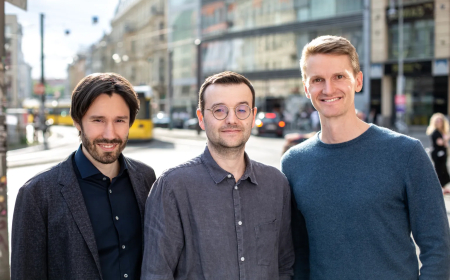
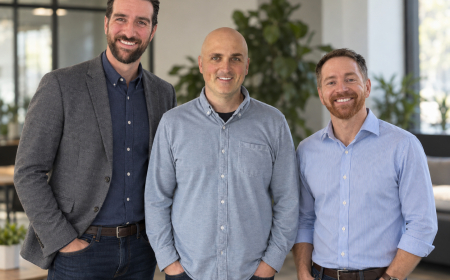
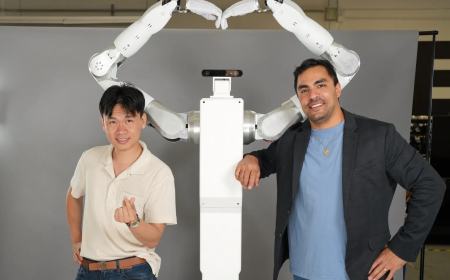
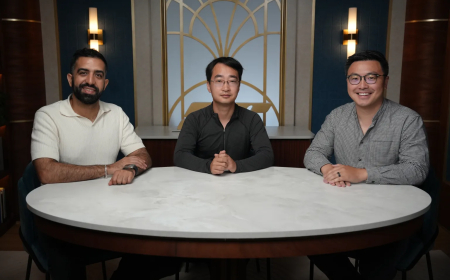
Safeworld, a startup founded by Carnegie Mellon University professor Ding Zhao, veteran startup executive Kyle Wong and machine learning engineer Simo Rachidi, is building a platform designed to test whether AI-powered robots can operate safely around people before they are deployed at scale.
The company has emerged from stealth with more than $12 million in seed funding led by Shine Capital and a16z Speedrun, with additional backing from Box Group, Carnegie Mellon University Endowment, Innovation Endeavours and SV Angel.
Safeworld tests robots against unpredictable human behaviour
Safeworld’s approach is simulation-based. Instead of evaluating a robot only in controlled demonstrations, the company creates digital versions of real environments and tests the robot’s actual control software against thousands of possible human interactions.
For example, a factory blind corner can be recreated in simulation to determine whether a robot can stop in time when a worker suddenly appears. Tests can also examine whether the system recognises someone carrying boxes, crouching, running, falling or moving in ways that are difficult to reproduce safely and repeatedly in the real world.
Safeworld can place a digital version of the robot inside simulation environments such as Genesis or MuJoCo and run variations of these scenarios at scale. The goal is to find edge cases that may not appear during ordinary testing but could become important once robots begin working around large numbers of people.
Generative AI makes robot safety harder to prove
The challenge becomes more complicated as robots rely on generative AI rather than deterministic control systems. Zhao argues that safety testing must account for both the probabilistic behaviour of the AI model and the level of trust required before businesses are comfortable putting those systems into workplaces or other human environments.
Robots also operate in more varied settings than autonomous vehicles. A machine deployed in a warehouse, construction site, or factory may face different layouts, visibility conditions, human behaviour, and safety requirements at each location.
That makes traditional formal verification difficult. Instead of mathematically proving every possible behaviour is safe, robotics companies may need to demonstrate safety empirically by testing many realistic scenarios.
Third-party validation could become part of robot deployment
Safeworld’s founders believe independent testing could be valuable even for robotics companies that already run internal simulations. A third party could provide additional validation and potentially help establish safety practices that can be compared across different robot manufacturers.
Gritt Robotics, which develops AI systems for robots used in large-scale solar construction, is already working with Safeworld on safety simulations. Its robots operate alongside human workers, making collision avoidance and reliable human detection critical parts of deployment.
Testing those systems means accounting for substantial variation in human appearance and behaviour, including differences in body position, movement, clothing, height and other characteristics. A robot that performs well in a demonstration still has to respond correctly when people behave unexpectedly around it.
Safeworld is still deciding how its business will work
The company is still determining whether it will primarily offer its technology as a software platform for robotics companies or through a more service-oriented model in which Safeworld performs testing directly.
Its broader bet is that safety validation will become necessary to deploy generative AI-powered robots in real workplaces. As these systems move from controlled demonstrations into factories, construction sites and eventually other environments shared with people, the difficulty will not be proving that a robot works once, but showing that it can keep working safely across thousands of unusual situations.
What's Your Reaction?
 Like
0
Like
0
 Dislike
0
Dislike
0
 Love
0
Love
0
 Funny
0
Funny
0
 Angry
0
Angry
0
 Sad
0
Sad
0
 Wow
0
Wow
0