




































U.S. Drone and Robot Curbs Test China’s Manufacturing Scale
U.S. restrictions target foreign drones and advanced robots, but China’s manufacturing scale could push robotics competition into more regional markets.
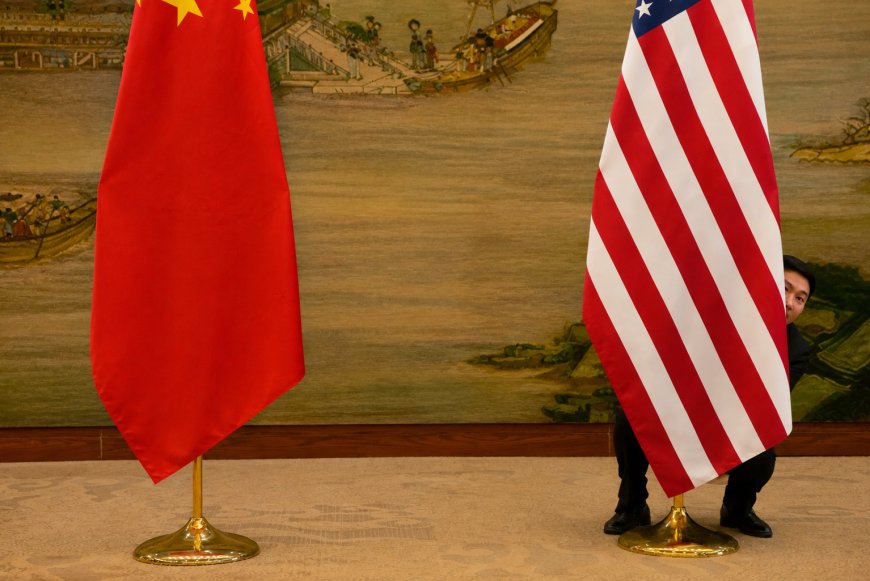
Washington is tightening its approach to foreign-made drones and advanced robotic systems. Still, the restrictions do not erase one of China’s biggest advantages in robotics: the ability to manufacture at enormous scale and increasingly aggressive prices.
During July and August, the U.S. expanded national security restrictions affecting foreign advanced robotic systems and announced new tariffs on imported drones and their components. The White House said the drone measures are intended to strengthen U.S. supply chains and address national-security concerns.
A separate presidential action covering unmanned aircraft systems and their components established the tariff framework. Drone tariffs are scheduled to begin in September, with additional component tariffs following in 2027.
U.S. Restrictions Expand From Telecom Equipment to Robotics
The moves fit into a broader effort to limit foreign technology considered sensitive to U.S. security. The Federal Communications Commission’s Covered List, established in 2021, initially focused on communications and surveillance equipment associated with companies including Huawei, ZTE and Hikvision.
The scope has since expanded to include foreign-made drones and, more recently, certain advanced robotic systems. The FCC outlined its latest action in a July announcement concerning advanced robotics equipment.
The restrictions arrive as Chinese companies hold leading positions in both drones and humanoid robots. Industry executives and analysts say U.S. policy may protect portions of the domestic market, but it does not directly eliminate China’s advantages in manufacturing capacity, supply-chain depth and cost.
China Holds a Significant Humanoid Robot Scale Advantage
China’s manufacturing lead is especially visible in humanoid robotics. Global shipments of humanoid robots reached about 22,000 units during the first half of 2026, with Chinese manufacturers accounting for the overwhelming majority, according to Counterpoint Research.
The five largest humanoid manufacturers by shipments during the period were AgiBot, Unitree, Galbot, UBTECH and Leju Robotics, all Chinese companies. Together, they represented 86% of worldwide shipments, according to Counterpoint.
Ankur Saxena, an investment director at TDK Ventures, said robotics differs from semiconductors because the industry does not depend on a single critical technology that a single country could easily control.
“The United States leads in frontier AI, software and semiconductor innovation,” Saxena said. “China leads in manufacturing scale, supply-chain depth and cost.”
That manufacturing advantage can reinforce itself. Lower-priced robots allow manufacturers to deploy more units, creating additional opportunities to collect real-world operating data. Higher production volumes can then help manufacturers further reduce costs.
Soumen Mandal, a principal analyst at Counterpoint Research, said Chinese humanoid companies are also reducing costs by bringing more components in-house and drawing on the country’s established industrial base. Unitree is developing more technology internally, while automakers such as XPeng can apply existing experience in chips and vehicle manufacturing to robotics.
“You cannot sanction your way around a cost curve. You can only out-build it, and America has yet to begin making the decade-long investment that will require,” Saxena said.
Chinese Robotics Companies Can Expand Beyond the U.S.
Losing or facing greater restrictions in the American market would not leave Chinese robotics manufacturers without markets to sell to. China itself remains a major market, while Europe, Southeast Asia, Latin America and the Middle East offer potential demand for lower-cost automation.
Mandal expects Chinese humanoid companies could follow a path similar to the country’s electric-vehicle industry: build manufacturing scale domestically, expand into overseas markets and eventually establish local production where demand justifies it.
Countries facing worker shortages and ageing populations could become particularly important markets. Manufacturing has potential early use cases: humanoids can be developed to perform repetitive tasks traditionally performed by human workers.
Drones Show How the Market Could Split
The drone industry offers an early example of how robotics could become more fragmented. Bentzion Levinson, founder and CEO of Virginia-based drone manufacturer Heven AeroTech, said the industry is increasingly bifurcating into a U.S.-led ecosystem centred on American-made, NDAA-compliant systems and a China-led ecosystem centred on high-volume, lower-cost production.
Levinson said Western companies are unlikely to defeat Chinese manufacturers primarily on price in lower-end consumer drones. Instead, U.S. and allied manufacturers may be better positioned in areas such as defence, critical infrastructure and long-range autonomous systems, where security requirements can outweigh purchasing cost.
He also expects competition to move beyond the aircraft itself. Batteries, energy systems and payload architecture could become increasingly important as drones are expected to travel farther and carry more capable equipment.
“The next battleground is over who owns the next-gen energy and payload architecture,” Levinson said.
Agility Robotics Supports the FCC Action
U.S.-based Agility Robotics welcomed the FCC’s decision, arguing that security issues involving foreign-made advanced robots should be addressed before those systems become deeply embedded in American infrastructure.
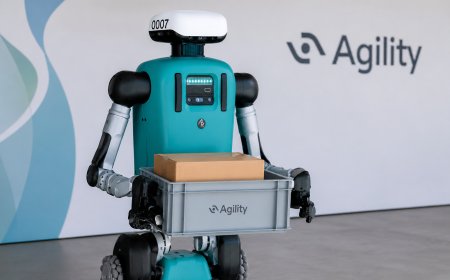
The company highlighted its Digit humanoid, which is designed and assembled in the United States. It argued that American robotics developers need continued access to technologies and tools that support research and development. Agility outlined its position in a public statement following the FCC action.
Allied Supply Chains Could Become More Important
Analysts do not expect the alternative to Chinese manufacturing to be a completely domestic American robotics supply chain. Instead, countries such as Japan, South Korea and Taiwan could play larger roles in a more diversified network.
Japan has extensive experience in industrial robotics and precision manufacturing. South Korea has strengths in electronics, batteries and automobiles, while Taiwan remains central to semiconductor production.
Those countries cannot simply replace China, however, because Chinese components remain deeply integrated into global robotics supply chains. Asian manufacturers could instead occupy a middle position between inexpensive Chinese systems and higher-cost U.S. products.
Automakers are already participating in that shift. Hyundai, which owns Boston Dynamics, and Toyota are investing in robotics while applying expertise from automobile manufacturing, autonomous systems and industrial production.
Robotics Competition May Become More Regional
Yang Fang of the California agricultural technology startup Beagle Technology expects robotics products to be increasingly shaped by regional labour conditions and customer needs. Beagle uses AI and robotics software to convert conventional agricultural equipment into autonomous machines.
Under that model, Chinese companies could increasingly design robots for their domestic market and nearby regions, while American companies focus on industries and operating conditions common across North America.
The result may therefore be more complicated than two completely separate U.S. and Chinese robotics industries. Chinese manufacturers could continue to compete on scale and cost across much of the world. At the same time, U.S. and allied companies gain stronger positions in markets where security requirements and trusted supply chains carry greater weight.
Japan, South Korea and Taiwan could also gain opportunities between those two groups. U.S. restrictions may shift where Chinese drones and robots compete, but China’s manufacturing scale means broader global competition is unlikely to disappear behind barriers around the American market.
What's Your Reaction?
 Like
0
Like
0
 Dislike
0
Dislike
0
 Love
0
Love
0
 Funny
0
Funny
0
 Angry
0
Angry
0
 Sad
0
Sad
0
 Wow
0
Wow
0