






































MMI Raises $125 Million to Expand Robotic Microsurgery
Medical Microinstruments has raised $125 million to expand its Symani robotic microsurgery system and fund additional clinical research.
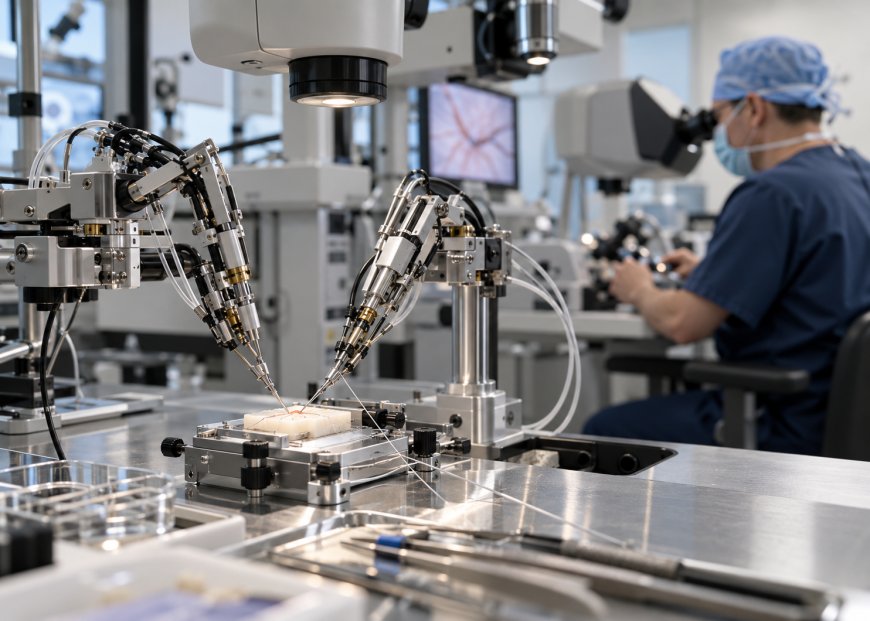
Medical Microinstruments has raised $125 million in Series D financing to expand its Symani Surgical System in the United States and other markets.
The round was led by existing investor BioStar Capital, with S3 Ventures, Angelini Ventures and an undisclosed strategic corporate investor also participating. Existing MMI investors also joined the round. The company said the financing was oversubscribed. MMI says about 50 Symani systems are now installed worldwide, and surgeons have used the platform in roughly 3,500 complex microsurgical procedures. The new funding will support commercial expansion and clinical research to find additional uses for the technology.
A robot built for microsurgery.
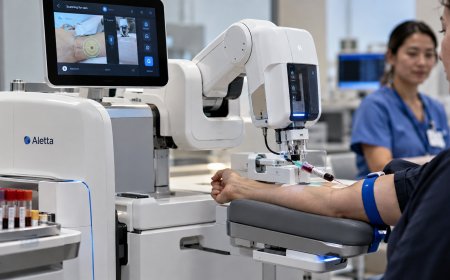
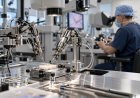
Symani targets a part of surgery where physicians work with very small blood vessels, lymphatic vessels and other delicate structures. The system translates a surgeon’s hand and wrist movements into smaller movements of its robotic instruments, using motion scaling and tremor reduction to improve control at the microsurgical level.
That puts MMI in a different part of the surgical robotics market from systems mainly associated with minimally invasive abdominal and thoracic procedures. Symani is intended for open soft tissue microsurgery, including reconstructive procedures involving blood vessels and lymphatic vessels. In Europe and the Asia Pacific region, the system is also indicated for peripheral nerve repair. MMI received FDA authorisation for Symani in the United States in 2024 through the De Novo pathway. The authorisation covered soft tissue manipulation for microsurgery. MMI later expanded the system’s U.S. capabilities with additional instruments for soft tissue dissection.
Funding expansion and clinical research.
The new financing gives MMI capital to expand its commercial presence while continuing to build clinical evidence around robotic microsurgery. The company said it will invest in the U.S. market and other key markets, as well as research and outcomes data that could support additional applications for Symani. MMI is also developing additional platform capabilities, including energy instruments and digital surgery tools. Those additions are part of a broader effort to make the system useful across more microsurgical procedures rather than relying on a single type of operation.
For a company operating in a specialised surgical market, clinical evidence will be particularly important. Wider adoption depends not only on hospitals purchasing the system, but also on surgeons having evidence that the technology provides a meaningful benefit in procedures where precision is critical.
Alzheimer’s study remains experimental.
One of MMI’s more unusual research programs is the REMIND study, which is investigating the use of robotic microsurgery in patients with Alzheimer’s disease who have confirmed lymphatic abnormalities. The study examines whether surgeons can use Symani to restore drainage pathways in the deep cervical lymph nodes. The research is based on the idea that impaired lymphatic drainage may contribute to the buildup of substances in the brain associated with neurodegenerative disease. After reviewing safety information from the initial group, the FDA allowed MMI to expand enrollment to as many as 15 patients.
The REMIND study is still focused on safety and feasibility. MMI states that the safety and effectiveness of Symani for lymphatic reconstruction related to brain disease have not been established by the FDA and that the system remains investigational for this use. That makes the Alzheimer’s program a research effort rather than evidence that robotic microsurgery can treat the disease. The study's results could help determine whether a larger clinical trial is warranted, but that question remains open.
The challenge is broader adoption.
MMI’s financing comes as Symani moves beyond its early commercial phase. With roughly 50 systems installed and thousands of procedures completed, the company has a growing base of hospitals and surgeons using the technology.
The next challenge is expanding that use beyond specialist centres. Microsurgery is a relatively narrow segment of the overall surgical market, so MMI needs to show that robotic assistance delivers enough clinical value to justify adoption across more hospitals and procedures. The $125 million gives the company room to pursue that expansion while continuing clinical research. Whether Symani becomes a widely used surgical platform will ultimately depend on how well MMI can combine commercial adoption with evidence for where robotic microsurgery offers a real advantage.
What's Your Reaction?
 Like
0
Like
0
 Dislike
0
Dislike
0
 Love
0
Love
0
 Funny
0
Funny
0
 Angry
0
Angry
0
 Sad
0
Sad
0
 Wow
0
Wow
0